

Key Takeaways
Soil pH
Soil pH is a measure of how acidic or alkaline your soil is, expressed on a scale from 0 to 14. A pH of 7 is neutral; values below 7 are acidic, and values above 7 are alkaline (also called basic). Most garden plants grow best in soil that falls somewhere between 6.0 and 7.0, where the widest range of nutrients is naturally accessible to roots.
pH stands for 'potential of hydrogen' and reflects the concentration of hydrogen ions in the soil solution. This chemical balance directly influences the solubility of minerals, which determines whether plant roots can actually absorb them.
Why pH Is the Master Switch for Soil Nutrients
You can add the finest compost, water consistently, and choose healthy transplants - and still watch plants struggle. In many cases, the culprit is soil pH. Think of pH as a dial that controls how readily nutrients become soluble in the soil solution. When the dial is set correctly for your plants, roots can access iron, manganese, calcium, phosphorus, and more. When it's off, those nutrients may be chemically locked up, no matter how much you've added.
This is why gardeners sometimes describe soil pH as a "master switch" for fertility. A nutrient that tests as present in the soil may be completely unavailable to roots if the pH is wrong. Phosphorus, for example, becomes largely insoluble in very acidic soils (below 5.5) and in highly alkaline soils (above 7.5), which means plants show phosphorus deficiency symptoms even when plenty of it exists in the ground.
6.0-7.0
Optimal pH range for most garden plants
According to university extension soil science resources, this range supports the broadest availability of essential plant nutrients.
10×
Acidity difference between each pH unit
The pH scale is logarithmic, so soil at pH 5.0 is ten times more acidic than soil at pH 6.0 - a small number shift represents a significant chemical change.
3-6 months
Typical time for lime to adjust soil pH
Cooperative extension guidelines generally recommend applying agricultural lime well before the growing season to allow adequate time for integration.
Understanding this relationship helps explain why fertilizer labels and N-P-K ratios only tell part of the story. Delivering nutrients to the soil surface is step one - pH determines whether those nutrients actually reach the plant.
The pH Scale and What Ranges Mean for Common Plants
The pH scale runs from 0 to 14, with 7.0 as neutral. Each whole number represents a tenfold change in acidity or alkalinity, meaning a soil at pH 5.0 is ten times more acidic than one at pH 6.0. For practical gardening purposes, the ranges that matter most are:
- 4.5-5.5 (strongly acidic): Ideal for blueberries, azaleas, rhododendrons, and camellias. Most vegetables and lawn grasses will underperform here.
- 6.0-6.8 (slightly acidic): The sweet spot for the majority of vegetables, herbs, and flowering annuals. Nutrient availability is broad and balanced.
- 6.8-7.2 (near-neutral): Suitable for many ornamentals and some vegetables; asparagus and brassicas often do well in this range.
- Above 7.5 (alkaline): Common in arid regions and areas with limestone-heavy soils. Iron and manganese become difficult to absorb, leading to a condition called chlorosis - yellowing between leaf veins on otherwise healthy-looking plants.
If you're incorporating native plants into your yard, keep in mind that many are adapted to your region's natural soil pH, which can make them more forgiving than introduced species.
How to Test Your Soil and Interpret Results
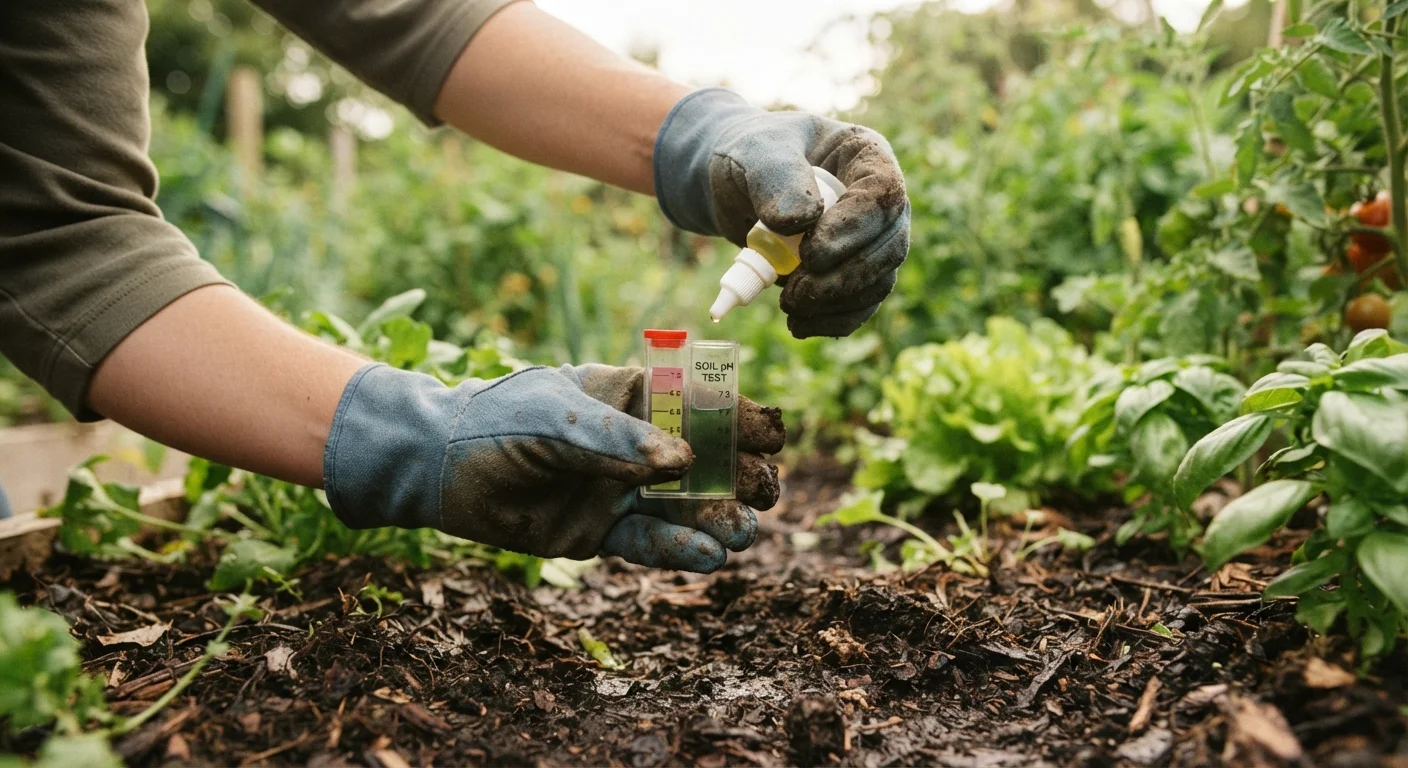
Guessing soil pH is unreliable. Soil color, texture, and the presence of certain weeds can hint at acidity, but the only accurate approach is a direct test. Home gardeners have a few options:
- Basic test kits: Widely available at garden centers, these use a chemical indicator that changes color in the presence of your soil sample. They're inexpensive and give a reasonable ballpark reading.
- Digital pH meters: Probe-style meters inserted directly into moist soil provide a quick digital readout. Accuracy varies by product quality, so follow calibration instructions carefully.
- Cooperative extension lab tests: Land-grant university extension services in most states offer low-cost or subsidized soil testing. These reports often include specific amendment recommendations based on what you intend to grow - a significant advantage over DIY kits.
When collecting samples, take small amounts from several spots across the bed and mix them together. This composite sample gives a more representative reading than a single scoop. Test in the fall if you plan to amend over winter, giving materials time to integrate before spring planting.
Test Before You Amend
Never add lime, sulfur, or other pH-adjusting materials without a current soil test in hand. Over-liming is a common mistake that locks out micronutrients and can take years to correct. Your local cooperative extension service can help you interpret results and calculate the right amendment rate for your soil type and planting goals.
Adjusting pH: Raising, Lowering, and Maintaining Balance
Once you have a pH reading, you can make targeted adjustments. The two most common scenarios are soil that is too acidic (common in the eastern United States, humid climates, and areas with pine trees) and soil that is too alkaline (prevalent in the arid West and Midwest).
Raising pH (making soil less acidic)
Ground agricultural limestone - calcitic lime or dolomitic lime - is the standard amendment. The amount needed depends on your current pH, your target pH, and your soil's texture. Clay soils require more lime than sandy soils to shift the same number of pH units. Work lime into the top six to eight inches of soil and water it in thoroughly.
Lowering pH (making soil more acidic)
Elemental sulfur is the most reliable option. Soil bacteria convert it into sulfuric acid over time, gradually lowering pH. Adding finished compost and acidic organic materials like pine needle mulch can also nudge pH lower over time, while simultaneously improving soil structure. Learn how mulch choices affect your soil beyond just moisture retention.
In both cases, avoid the temptation to over-correct. Large, rapid swings in pH stress soil biology and plant roots alike. Make incremental adjustments, retest after a season, and continue from there. Patience is part of the process.