

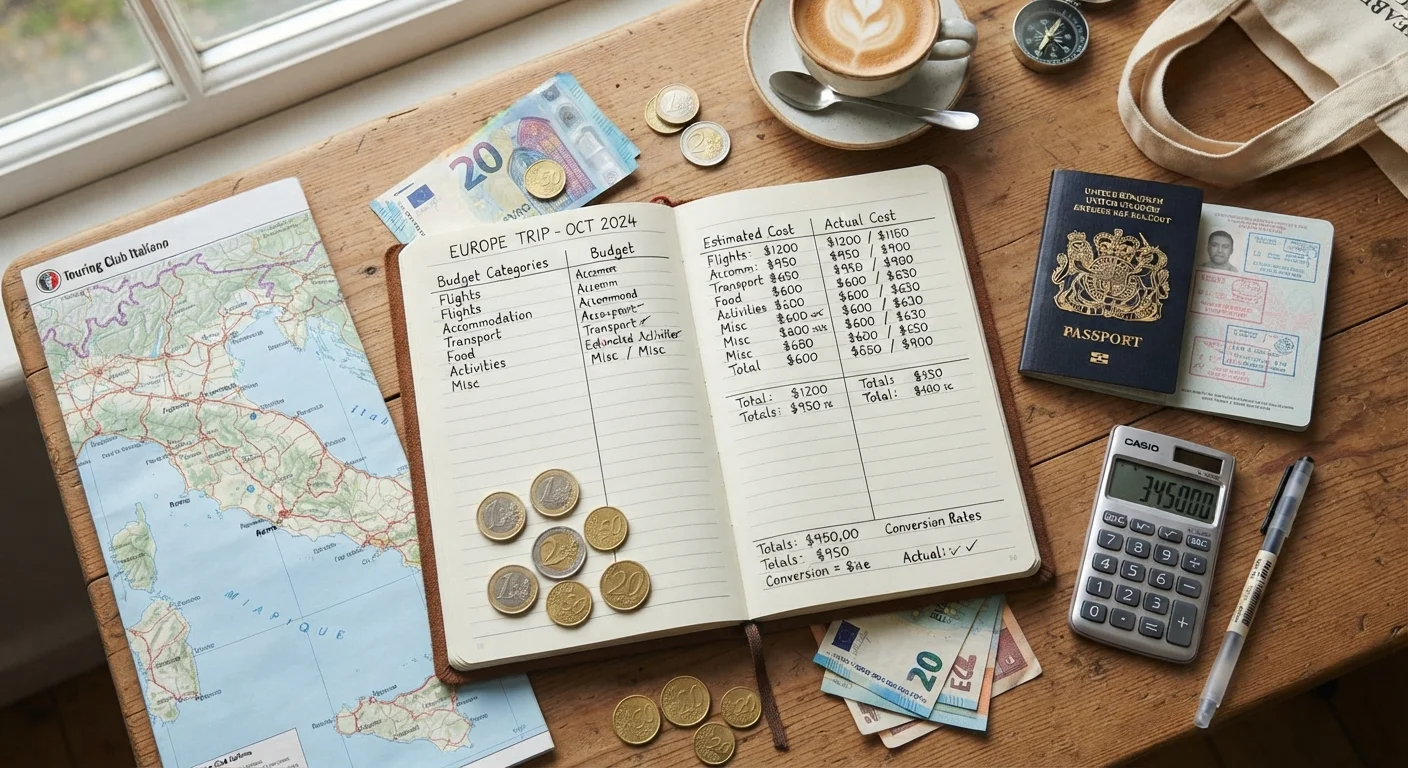
Key Takeaways
Why Most Travel Budgets Fall Apart
Most travel budgets don't fail because people overspend wildly - they fail because the original estimate was incomplete. Travelers price flights and hotels, then discover that airport transfers, activity fees, resort charges, and meals out add up to twice what they planned. The fix isn't more discipline on the road; it's a more thorough framework at the planning stage.
This guide walks you through building a travel budget category by category, spotting the leaks before they happen, and leaving yourself real breathing room. For a deeper look at where estimates routinely go wrong, see where travel budgets usually break down.
What you will need
What You Need Before You Start
Gather these before sitting down to build your numbers:
Spreadsheet or budgeting app
Records estimated and actual costs across every category so nothing gets lost.
Destination research source
Provides realistic cost benchmarks for accommodation, food, and activities at your destination.
Bank and card terms
Confirms whether your cards charge foreign transaction fees or offer travel-friendly terms.
Travel insurance policy details
Clarifies what coverage you have so you can size your contingency fund appropriately.
With those in hand, you're ready to move through the budget framework step by step.
The Step-by-Step Budget Framework
Follow these steps in order. Each builds on the last, and skipping ahead tends to produce the underestimates that blow budgets mid-trip.
Lock In Your Total Budget Ceiling
Start with how much money you can realistically spend on this trip - total, including everything. This number comes first; it drives every decision that follows. Don't start with flights and work backward. If you'd like help building savings toward that ceiling, see how to set a savings goal you'll actually reach.
Estimate Transportation Costs First
Flights or long-distance transport are usually the largest fixed cost and the least flexible once booked. Research realistic price ranges for your dates and routes, then record a high estimate - not a best-case figure. Include airport transfers and any local transit passes you'll need once there.
Timing matters here: traveling in shoulder season can meaningfully reduce both flight and accommodation costs.
Estimate Accommodation for Every Night
Multiply your nightly rate by the number of nights, then add any taxes or fees listed in the booking terms - these can add 15-25% in some markets. Accommodation is typically the single largest lever in your budget; switching from a mid-range hotel to a hostel or vacation rental can shift your totals significantly.
Budget Daily Food and Drink
Estimate a realistic daily food spend, then multiply by trip length. Research what a typical meal costs at your destination - not the cheapest street stall, not a splurge dinner, but your average day. Factor in one or two nicer meals if that's part of your trip style. Solo travelers should note that meal costs don't split the way accommodation sometimes can; see how solo travel budget math shifts.
List and Price Activities and Admissions
Write down every paid experience you're likely to want: museum entry, guided tours, day trips, theme parks, classes. Look up current admission prices and add them as line items. This step catches a common budget leak - travelers underestimate activity costs because they plan vaguely rather than specifically.
Add a 10-15% Contingency Buffer
Once you've totaled all categories, add 10-15% on top. This buffer absorbs the expenses that every trip generates but no budget perfectly predicts: a pharmacy run, an unplanned meal delay, a bag storage fee, a taxi when the transit system fails. If you don't use it, you come home with money left over. That's a good outcome. For more on how emergency reserves and budget buffers interact, see how emergency funds and budgets work together.
Review Your Budget Before You Book Anything
Run the full framework on paper before committing to any reservation. Once flights are booked, your flexibility shrinks significantly. A complete budget estimate takes less than an hour and gives you a far clearer picture of whether the trip is feasible - or whether dates, destination, or duration need adjustment first.
Plugging the Most Common Budget Leaks
Even careful planners miss a handful of recurring expense categories. Watch for these:
- Airport transfers: Taxis and rideshares from airports often cost more than expected, especially late at night or in unfamiliar cities.
- Checked baggage fees: Booking a carry-on-only strategy can eliminate this line entirely - see carry-on-only travel tradeoffs before you pack.
- Resort and destination fees: Some hotels add nightly charges that don't appear in the quoted rate. Read lodging terms carefully. For a breakdown of accommodation types and their true costs, compare lodging options.
- Foreign transaction fees: Some bank cards charge 1-3% on every purchase abroad. Check your card terms before you travel.
- Tipping norms: Gratuity expectations vary widely by destination and can add meaningfully to daily food and service costs.
Don't Rely on Best-Case Price Estimates
Budget-building tempts people to use the lowest price they can find for every category. In practice, flights get more expensive, a hotel at the ideal location costs more than the outlier, and meals add up faster than the street-food math suggests. Use realistic midpoints or high-end estimates for each line - you'll be glad you did.
If your trip involves significant irregular expenses - gifts, medications, gear - the general framework at spending categories most budgets underestimate applies directly to travel planning as well.
Tracking Your Budget During the Trip
Building the budget is only half the work. Reviewing it daily while traveling is what keeps the plan alive. A simple approach: at the end of each day, log what you spent against each category. You'll spot overruns early enough to adjust - eating in one night, skipping a paid attraction - rather than discovering a problem on the last day.
For a practical method that works in real-world conditions, making a daily travel budget that holds up goes deeper on in-trip tracking habits. And if you want to build savings habits that fund future trips more easily, setting a savings goal you'll actually reach is a useful companion read.
This article provides general travel budgeting information and education only. Prices, fees, and financial conditions vary and can change; verify all costs with providers and official sources before booking or traveling.