

Key Takeaways
Reduces soil moisture loss between waterings
A 2-4 inch mulch layer can cut evaporation significantly, helping soil stay moist longer and reducing how often you need to water during dry stretches.
Suppresses weed germination effectively
By blocking light at the soil surface, mulch interrupts the germination of many annual weeds, reducing weeding time throughout the growing season.
Moderates soil temperature extremes
Mulch acts as insulation, keeping roots cooler during summer heat and buffering against sudden temperature drops in fall and early winter.
Improves soil structure over time
As organic mulch decomposes, it adds organic matter that feeds soil microbes, improves drainage in clay soils, and boosts water retention in sandy soils.
Reduces soil compaction and erosion
Mulch cushions the impact of rain and irrigation, preventing surface crusting and protecting topsoil from being washed away during heavy watering.
Requires regular replenishment and upfront cost
Organic mulch breaks down and thins over time, requiring top-ups at least once a year for most materials - adding recurring labor and material expense.
Improper application can harm plants
Mulch piled against plant stems or applied too thickly can cause crown rot, restrict airflow, and create habitat for pests and rodents near vulnerable plant tissue.
Slows spring soil warming
Mulched beds take longer to warm in late winter and early spring, which can delay planting windows for gardeners direct-seeding cold-sensitive crops.
Can temporarily reduce available nitrogen
Fresh carbon-rich wood mulches can tie up soil nitrogen as they decompose at the soil surface, potentially affecting nutrient availability in sensitive planting areas.
May shelter slugs, voles, and other pests
In high-moisture climates, thick organic mulch can provide ideal cover for slugs, voles, and other garden pests, requiring closer monitoring of affected beds.
Our Verdict
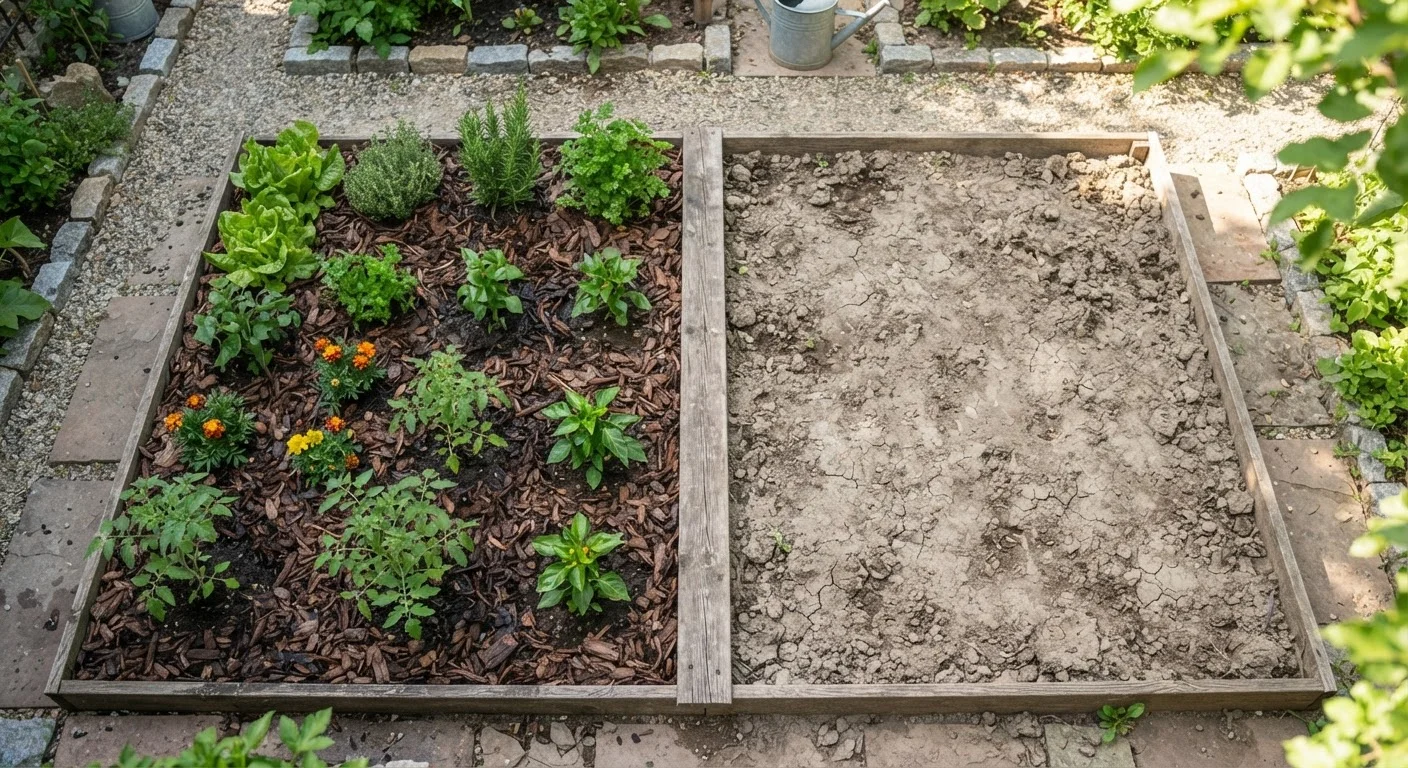
Mulch outperforms bare soil in most home garden settings, particularly for moisture conservation, weed suppression, and soil health over time. However, bare soil has legitimate advantages in specific situations, such as early spring warming or annual vegetable beds where you need regular soil access.
Mulching is the stronger default for homeowners managing ornamental beds, perennial gardens, or water-conscious landscapes, while bare soil may suit gardeners who prioritize seasonal flexibility and direct soil work.
What Mulch Actually Does (and What It Doesn't)
Mulch is any material - organic or inorganic - spread over the soil surface around plants. Common organic options include shredded bark, wood chips, straw, and leaf litter. Inorganic options include gravel, landscape fabric, and rubber chips. Each type behaves differently, but all share a core function: modifying the environment at the soil surface.
What mulch does well is well-documented. A 2-4 inch layer of organic mulch can meaningfully reduce evaporation from the soil surface, keeping moisture available longer between waterings. It also moderates soil temperature, keeping roots cooler in summer and insulating against early frost. As organic mulch breaks down, it contributes to soil organic matter - a key driver of healthy soil biology. For more on how soil health connects to plant outcomes, see our article on soil pH and plant health.
What mulch does not do is fix underlying drainage problems, replace fertilization, or guarantee weed elimination. Seeds that land on top of mulch can still germinate, particularly in fine-textured or thin applications.
Reduces soil moisture loss between waterings
A 2-4 inch mulch layer can cut evaporation significantly, helping soil stay moist longer and reducing how often you need to water during dry stretches.
Suppresses weed germination effectively
By blocking light at the soil surface, mulch interrupts the germination of many annual weeds, reducing weeding time throughout the growing season.
Moderates soil temperature extremes
Mulch acts as insulation, keeping roots cooler during summer heat and buffering against sudden temperature drops in fall and early winter.
Improves soil structure over time
As organic mulch decomposes, it adds organic matter that feeds soil microbes, improves drainage in clay soils, and boosts water retention in sandy soils.
Reduces soil compaction and erosion
Mulch cushions the impact of rain and irrigation, preventing surface crusting and protecting topsoil from being washed away during heavy watering.
The Real Costs and Drawbacks of Mulching
Mulch isn't a maintenance-free solution. Organic mulch breaks down and must be replenished - typically annually for finer materials, every two to three years for denser wood chips. That means recurring time and cost.
Application errors are common and can be harmful. Piling mulch directly against tree trunks or plant stems - sometimes called a "mulch volcano" - traps moisture against woody tissue and creates conditions favorable to rot and certain pest species. Depth matters, too: more than 4 inches can restrict oxygen exchange in the soil and inhibit healthy root development.
Some wood-based mulches, particularly fresh wood chips high in carbon, can temporarily tie up nitrogen in the soil as they decompose. This effect is more pronounced when the material is tilled in rather than left on the surface, but it's worth monitoring in nutrient-sensitive beds. Slug and vole habitat is another consideration in high-moisture climates, as thick organic mulch provides cover.
Requires regular replenishment and upfront cost
Organic mulch breaks down and thins over time, requiring top-ups at least once a year for most materials - adding recurring labor and material expense.
Improper application can harm plants
Mulch piled against plant stems or applied too thickly can cause crown rot, restrict airflow, and create habitat for pests and rodents near vulnerable plant tissue.
Slows spring soil warming
Mulched beds take longer to warm in late winter and early spring, which can delay planting windows for gardeners direct-seeding cold-sensitive crops.
Can temporarily reduce available nitrogen
Fresh carbon-rich wood mulches can tie up soil nitrogen as they decompose at the soil surface, potentially affecting nutrient availability in sensitive planting areas.
May shelter slugs, voles, and other pests
In high-moisture climates, thick organic mulch can provide ideal cover for slugs, voles, and other garden pests, requiring closer monitoring of affected beds.
When Bare Soil Has the Advantage
Bare soil isn't simply "unmulched" - in some contexts it's an intentional and productive choice. Dark, uncovered soil absorbs solar radiation more readily than mulched soil, warming faster in late winter and early spring. For gardeners direct-seeding cool-season vegetables or trying to extend the growing season, this early warmth matters. A mulched bed in March may lag days or even weeks behind a bare bed in soil temperature.
Bare soil also allows easier access for succession planting, soil amendments, and cultivation between rows - common practices in annual vegetable gardens. Some gardeners who make their own compost prefer to work amendments directly into bare beds each season; composting at home is a natural complement to this approach.
In low-humidity or arid climates, the moisture-retention benefit of mulch may be less dramatic than in humid regions, narrowing the advantage. Certain ground-nesting beneficial insects also prefer patches of open, undisturbed soil - a consideration for gardeners focused on supporting local pollinators.
A Note on Inorganic Mulches
Gravel, river rock, and landscape fabric are sometimes used in place of organic mulch, especially in low-maintenance or xeriscape designs. These materials don't decompose or need replenishment, but they also don't contribute organic matter to the soil. Landscape fabric in particular can become problematic over time as it degrades, traps debris, and impedes natural soil processes. Inorganic mulches are generally better suited to pathways and decorative areas than to plant beds where long-term soil health is the goal.
Making the Right Call for Your Garden
Rather than treating this as an either-or decision, most experienced gardeners treat mulch as a strategic tool applied contextually. Perennial beds, shrubs, and trees benefit from consistent mulching year-round. Annual vegetable rows may go unmulched early in the season, then receive a straw mulch application once plants are established and heat conservation becomes the priority.
If water conservation is a core goal - particularly relevant in drier regions - mulch is a clear advantage. Our coverage of drought-tolerant landscaping explores this further in the context of overall yard design.
Whatever you choose, depth and placement matter more than material. Apply mulch at 2-4 inches, keep it away from stems and trunks, and refresh as it breaks down. If you're leaving soil bare intentionally, consider cover crops or dense planting to limit erosion and weed pressure during off-seasons. The goal in both cases is the same: a stable, biologically active soil that supports the plants above it.
2-4 in.
Optimal mulch depth for most garden beds
University cooperative extension programs consistently recommend this depth range to balance moisture retention, weed suppression, and adequate soil oxygen exchange.
25-50%
Potential reduction in soil water evaporation
Research from horticultural and agricultural institutions suggests organic mulch layers can reduce evaporative water loss from soil by roughly this range compared to bare soil.