

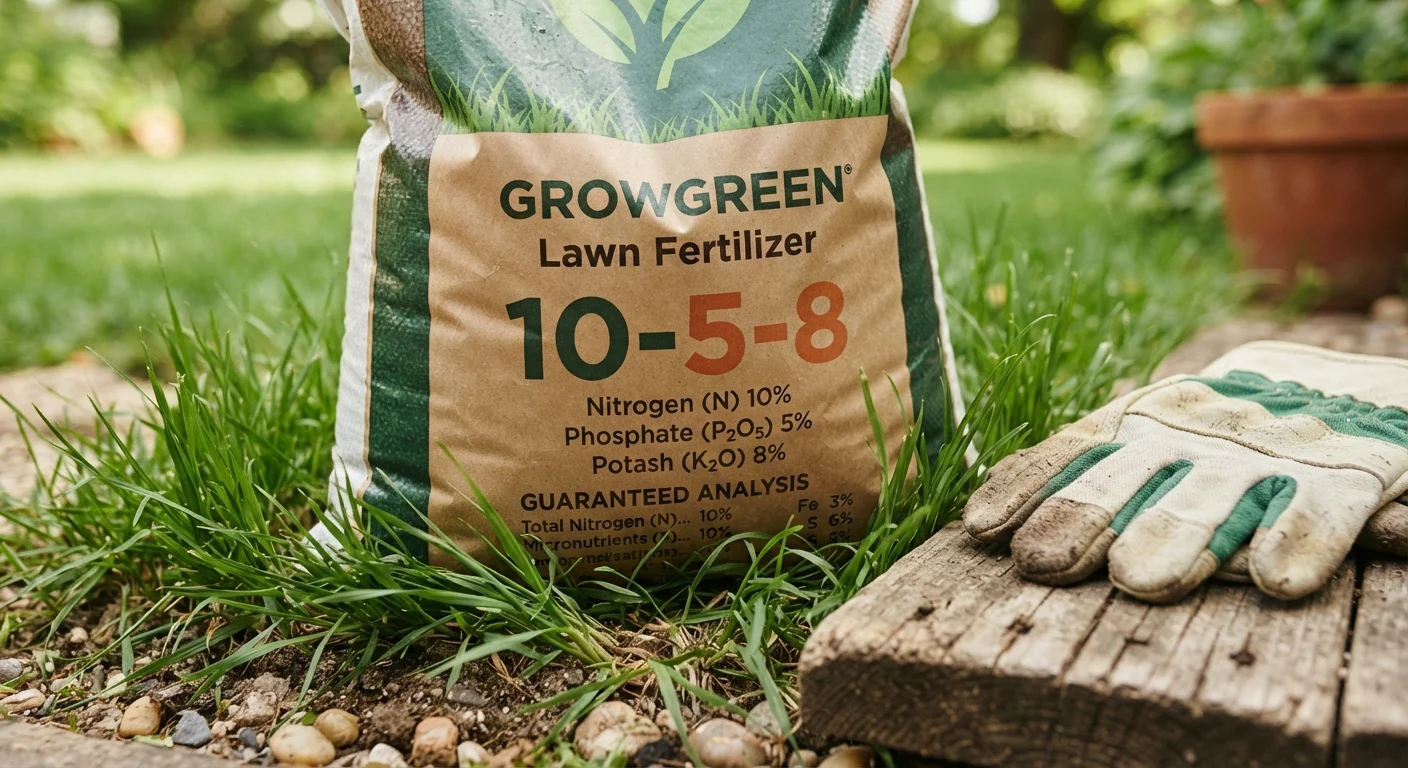
| N stands for | Nitrogen - promotes green color and leaf growth |
| P stands for | Phosphorus - supports root and seedling development |
| K stands for | Potassium - builds stress, drought, and disease tolerance |
| Label format | Percentages by weight (e.g., 20-5-10 = 20% N, 5% P₂O₅, 10% K₂O) |
| Soil test recommended | Every 2-3 years for established lawns (Cooperative Extension general guidance) |
| Phosphorus restrictions | Some states limit or ban phosphorus in lawn fertilizers for established turf (Varies by state regulation) |
Decoding the Three Numbers on Every Fertilizer Bag
Pick up any bag of lawn fertilizer and you'll see three numbers separated by dashes - something like 28-0-6 or 10-10-10. This sequence is called the N-P-K ratio, and it tells you the percentage by weight of the three primary nutrients inside: nitrogen (N), phosphorus (P), and potassium (K). Understanding what each nutrient does - and when your lawn actually needs it - is the foundation of smarter fertilizing.
| N stands for | Nitrogen - promotes green color and leaf growth |
| P stands for | Phosphorus - supports root and seedling development |
| K stands for | Potassium - builds stress, drought, and disease tolerance |
| Label format | Percentages by weight (e.g., 20-5-10 = 20% N, 5% P₂O₅, 10% K₂O) |
| Soil test recommended | Every 2-3 years for established lawns (Cooperative Extension general guidance) |
| Phosphorus restrictions | Some states limit or ban phosphorus in lawn fertilizers for established turf (Varies by state regulation) |
These numbers are guaranteed minimums regulated by state departments of agriculture, so a bag labeled 20-5-10 contains at least 20% nitrogen, 5% phosphorus pentoxide (P₂O₅), and 10% potassium oxide (K₂O) by weight. The remaining percentage is filler material that helps distribute the nutrients evenly across your lawn.
Note that phosphorus and potassium values on the label are expressed as oxides - not as pure elemental P and K - so the label numbers don't translate directly to elemental percentages. For most homeowners, the label ratio itself is all you need for routine decisions.
What Nitrogen, Phosphorus, and Potassium Each Do
Nitrogen (N) - The Growth Driver
Nitrogen is the nutrient most responsible for the lush, deep green color and vigorous leaf growth that define a healthy lawn. It's a core component of chlorophyll, the molecule that drives photosynthesis. Because nitrogen moves through soil quickly - especially in sandy soils or after heavy rain - it needs to be replenished regularly throughout the growing season. Slow-release nitrogen fertilizers extend feeding over weeks, reducing the risk of burning grass or losing nutrients to runoff.
Phosphorus (P) - Root Establishment
Phosphorus supports root development, seedling establishment, and energy transfer within the plant. It's most important when you're seeding or overseeding a lawn, or establishing turf in a new area. Mature, established lawns often need very little added phosphorus, and many soils already have adequate levels. Applying excess phosphorus can contribute to water quality issues, which is why some states restrict or ban phosphorus fertilizers for established turf. A soil pH test also reveals whether existing phosphorus is actually accessible to your grass roots.
Potassium (K) - Stress and Disease Tolerance
Potassium strengthens cell walls and improves a lawn's ability to withstand drought, cold, foot traffic, and disease. It doesn't produce visible growth the way nitrogen does, but it acts as a behind-the-scenes reinforcer. Fall applications that include potassium are a common recommendation before winter dormancy - a strategy covered in our fall lawn prep checklist.
N-P-K ratio
The three-number sequence on a fertilizer label representing the guaranteed minimum percentages of nitrogen, phosphorus (as P₂O₅), and potassium (as K₂O) by weight.
Slow-release nitrogen
A form of nitrogen that breaks down gradually over weeks or months, providing a steadier nutrient supply and reducing the risk of burning grass or leaching into waterways.
Starter fertilizer
A fertilizer formulated with elevated phosphorus levels to support root development during lawn seeding, overseeding, or sod installation.
Soil test
A laboratory analysis of a soil sample that measures existing nutrient levels, pH, and organic matter, helping homeowners choose fertilizers based on actual deficiencies rather than guesswork.
Macronutrients
The primary nutrients plants need in the largest quantities - nitrogen, phosphorus, and potassium - as distinguished from secondary nutrients and micronutrients needed in smaller amounts.
Choosing the Right Ratio for Your Situation
There's no single "best" N-P-K ratio for every lawn. The right choice depends on your grass type, the season, and what a soil test reveals about existing nutrient levels. Here's a practical framework:
- General maintenance feeding: A high-nitrogen formula like 30-0-6 or 28-0-8 suits established lawns in spring and early summer when growth is the priority.
- New seeding or overseeding: A starter fertilizer with a moderate phosphorus number (e.g., 18-24-6) supports root establishment in bare or thin areas.
- Late-season feeding: A balanced or potassium-heavy formula (e.g., 12-0-20) helps harden grass before winter.
- Soil test guidance: If a certified soil test shows your soil already has sufficient phosphorus and potassium, a nitrogen-only or low P-K product avoids unnecessary buildup.
Soil tests - available through most cooperative extension offices - give you the most accurate picture of what your lawn actually needs, removing the guesswork from fertilizer selection. Pairing fertilization with smart watering habits also matters; see our guide to lawn watering schedules for timing tips that help nutrients absorb properly.
If you're also working on overall lawn health, combining fertilization with lawn aeration can improve nutrient penetration significantly, especially in compacted soils.
Always Read Your Local Regulations
Phosphorus fertilizers for established lawns are restricted or prohibited in a growing number of states and municipalities due to runoff and water quality concerns. Before purchasing any fertilizer, check with your local cooperative extension office or state department of agriculture to confirm what's allowed in your area. When in doubt, a soil test will clarify whether phosphorus is even necessary for your lawn.