

Key Takeaways
Our Verdict
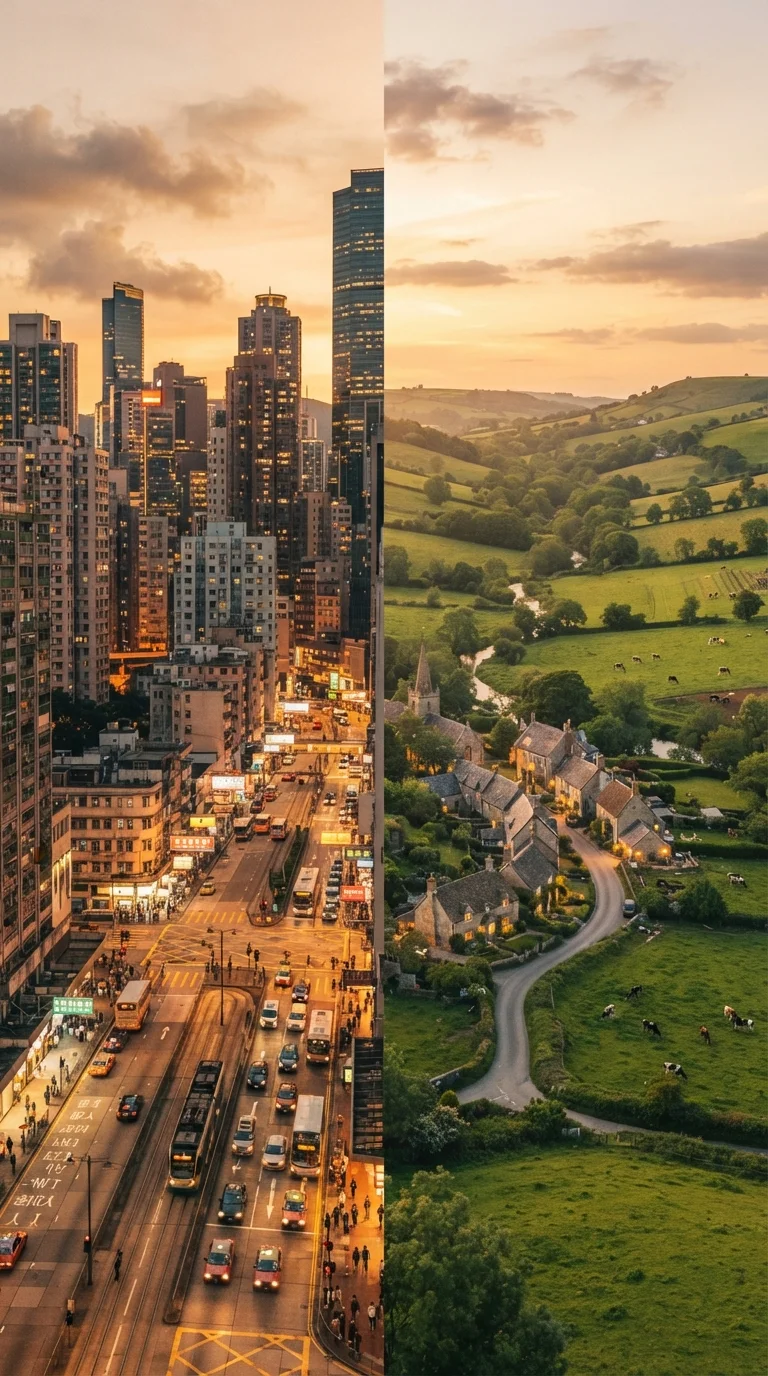
Neither urban nor rural tourism is inherently better - each creates a different kind of exchange between visitor and place. Cities absorb more visitors but feel the strain in concentrated ways, while rural destinations offer quieter immersion but can be more fragile to sudden visitor spikes. The most satisfying trips tend to come from matching your travel style to a destination's rhythms, not the other way around.
| Best for | Recommended |
|---|---|
| Travelers who want cultural density, logistics ease, and variety | Urban tourism |
| Those seeking slower paces, natural landscapes, and community connection | Rural tourism |
| Travelers concerned about spreading their economic impact broadly | Rural tourism |
| First-time international or long-haul travelers | Urban tourism |
Two Very Different Relationships With Place
When you visit a city, you're stepping into a system already built to absorb you. Hotels, transit, restaurants, attractions - the infrastructure anticipates millions of visitors annually and routes them efficiently. When you visit a small rural town, you're entering a community that may only see a fraction of that traffic, where a single busy weekend can feel transformative - or overwhelming - for residents.
That difference in scale isn't just logistical. It shapes the entire experience: what you see, who you interact with, what your dollars support, and what kind of footprint you leave behind. Understanding the contrast helps you make more deliberate decisions about where to go and how to show up when you get there. For a deeper look at how travel media frames destinations, see what travel coverage often leaves out.
What Urban Tourism Looks Like on the Ground
Cities have built-in buffers. A major metropolis can accommodate surges in visitor numbers without most residents noticing - except in specific neighborhoods that become tourist magnets. That concentration effect is where urban tourism's tensions tend to emerge: short-term rental pressures on housing, restaurant prices drifting upward near landmarks, and public spaces feeling more like stage sets than living places.
On the positive side, cities offer extraordinary access. Museums, transit networks, international cuisine, and cultural events are typically easy to navigate even for first-time visitors. The economic footprint is broad: tourism revenue flows into hotels, street vendors, cultural institutions, and services that locals also use.
| Urban Tourism | Rural Tourism | |
|---|---|---|
| Infrastructure readiness | High - built for large visitor volumes | Lower - can strain quickly under surges |
| Economic impact spread | Broad but concentrated in tourist zones | Narrower but often directly community-facing |
| Visitor experience | High variety, culturally dense | Slower pace, more immersive |
| Navigation ease | Generally easier with transit options | Often requires a car or advance planning |
| Overtourism risk | High in popular neighborhoods | High relative to community capacity |
| Local interaction quality | Often transactional in tourist zones | Tends toward more personal exchanges |
| Seasonal sensitivity | Moderate - cities function year-round | High - many areas depend on peak seasons |
Still, heavily visited urban neighborhoods can develop what researchers sometimes call a "tourism bubble" - an experience curated for visitors rather than reflective of how residents actually live. Being aware of that dynamic, and deliberately exploring beyond the obvious zones, tends to produce richer travel and spreads spending more evenly.
What Rural Tourism Looks Like on the Ground
Rural destinations operate at a different frequency entirely. A small farming community, a mountain village, or a coastal fishing town may depend on a single peak season for the majority of its annual tourism income. That economic vulnerability cuts both ways: visitors genuinely matter, and thoughtful tourism can fund preservation of landscapes, crafts, and local economies that might otherwise struggle.
But the fragility is real. Infrastructure - roads, waste systems, water - isn't built for large visitor surges. When rural areas become suddenly popular (often via social media), the impact can arrive faster than communities can adapt. Visiting in shoulder season is one way to distribute that pressure more sustainably.
Spread Your Spending Intentionally
In rural destinations especially, where you eat, sleep, and shop makes an outsized difference. Choosing locally owned accommodations and markets - rather than chain outposts - keeps more of your travel dollars circulating within the community. Ask hosts or locals where residents actually go; the answers are almost always more interesting than the default tourist recommendations.
The flip side is the intimacy rural travel can offer. Interactions with locals often feel less transactional, landscapes remain less mediated by commercial tourism, and the slower pace tends to encourage genuine curiosity rather than itinerary-checking.
How Your Travel Style Fits the Setting
The urban vs. rural question isn't just about destination character - it's about your own travel temperament. Solo travelers often find cities more logistically forgiving, with better transit and more options for spontaneous plan changes. Group trips can work beautifully in rural settings, where renting a farmhouse or cabin creates its own contained social world. For a broader look at how those dynamics play out, see solo vs. group trip planning.
Whatever setting you choose, doing your research before you go makes a meaningful difference. Understanding a destination's seasonal patterns, economic context, and cultural norms helps you arrive as an informed visitor rather than an accidental source of friction. Researching a destination thoroughly before you go is always time well spent - regardless of whether you're headed to a capital city or a crossroads town.
Both urban and rural tourism have genuine merit. The most rewarding trips usually come from matching your expectations to what a place actually is - not what you've projected onto it. That's a discipline worth developing wherever you travel.