

Key Takeaways
Why good research changes everything
The difference between a trip that flows smoothly and one that feels like constant firefighting often comes down to how well you understood your destination before you arrived. That doesn't mean over-planning every hour - it means building a foundation of knowledge that lets you make confident decisions on the fly.
Whether you're heading somewhere for the first time or returning to a region you've visited before, structured research pays off. If you're still at the early stages of organizing a trip, our complete trip planning walkthrough covers the full process from destination selection to day-of logistics.
Below are seven research strategies worth working through before any significant trip.
Check official government sources first
Before you book anything, visit the U.S. Department of State's travel website and look up your destination's country information page. You'll find visa requirements, entry rules, current travel advisories, and any health-related entry conditions. The Centers for Disease Control and Prevention (CDC) also maintains destination-specific health pages covering recommended vaccinations and disease risks.
Entry requirements change without much public fanfare, so checking official sources close to your departure date is just as important as checking them when you first start planning. Don't rely on what was true for a friend's trip two years ago.
Entry requirements change often - always verify with official sources close to your departure date.
Study the geography before you build your itinerary
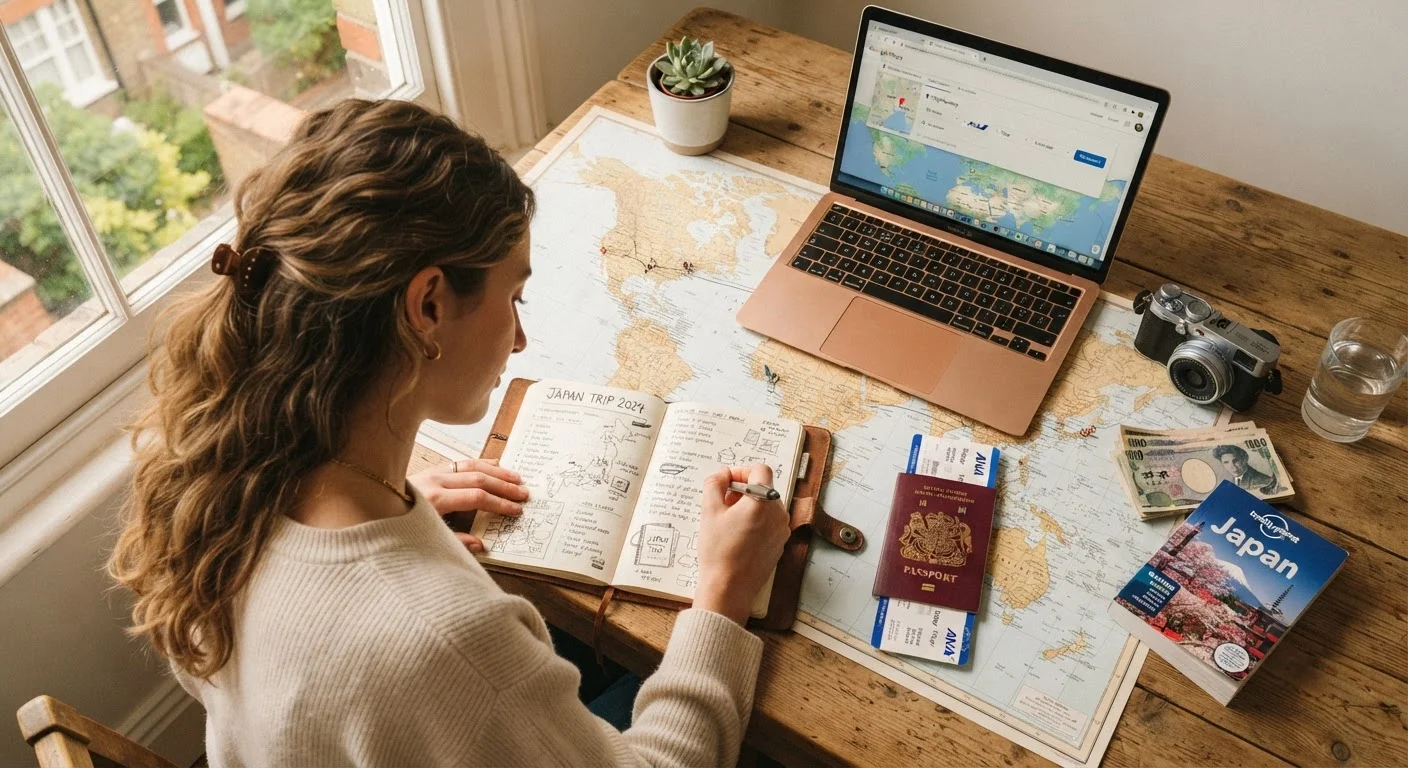
A surprising number of travelers arrive at a destination without a clear mental map of how it fits together. Spend time with a real map - digital or paper - before you go. Identify where your accommodation sits relative to major neighborhoods, transit hubs, and points of interest. Understanding distances and travel times prevents the classic mistake of scheduling things across opposite ends of a city on the same day.
For regional or multi-city trips, look at how transportation links destinations. Sometimes what looks like a short hop on the map takes four hours by ground transport.
Understanding distances and transit options before arrival saves hours of wasted time on the ground.
Research local customs and cultural etiquette
Etiquette that feels second nature at home can be considered rude, disrespectful, or even illegal elsewhere. Before traveling internationally, read up on dining customs, dress codes for religious or public spaces, tipping norms, and basic social conventions. A destination like Japan, for example, has its own distinct set of etiquette expectations that trip up first-time American visitors regularly.
This kind of preparation isn't about becoming an expert - it's about arriving with enough awareness to be a respectful guest.
Knowing what's considered respectful or offensive locally is the foundation of being a considerate traveler.
Read recent traveler accounts and trip reports
Guidebooks offer solid foundational context, but they're often a year or more out of date by the time you read them. Online travel forums, subreddits, and trip report communities are where you'll find current, ground-level intelligence: which areas are under construction, which neighborhoods feel safe to walk at night, which local transit pass is actually worth buying this season.
Look for posts from within the past six to twelve months, and pay attention to accounts from travelers with similar circumstances to yours - solo, family, budget-focused, or accessibility-dependent.
Recent trip reports surface current, practical details that no printed guidebook can match.
Understand the local currency and payment landscape
Knowing how money works at your destination prevents a lot of friction. Is cash still king, or is card payment widely accepted? Are there ATM networks that work with U.S. bank cards without steep fees? What's the general cost level - is this a destination where budget travelers can stretch their money, or does it require careful daily spending limits?
For a useful overview of currency and logistics at commonly visited spots, our quick-reference destination facts guide covers the essentials. Also check whether dynamic currency conversion at point-of-sale is common at your destination - it often costs you more than letting your bank handle the conversion.
Understanding cash versus card norms and fee structures before you arrive saves real money.
Look into seasonality and what it means for your trip
Weather is only part of the seasonality picture. Consider crowd levels, local holidays, festival periods, and regional off-seasons. Traveling during a major national holiday can mean that transport is packed and popular sites are overwhelmed - or, alternatively, that you experience something rare and memorable. Knowing which scenario you're heading into lets you plan accordingly rather than being caught off guard.
Seasonality also affects rural and nature-based destinations more dramatically than cities. Our piece on how urban and rural tourism differ explores why this matters for planning.
Crowd levels, local holidays, and climate together paint a fuller picture of what any season actually means.
Verify border crossing and documentation requirements
Beyond a standard visa check, confirm whether your passport has enough validity remaining (many countries require six months beyond your travel dates), whether you need proof of onward travel, or whether your destination requires a tourist card purchased on arrival. Some countries also have specific requirements around medications travelers are carrying.
Our border crossing verification checklist walks through the details you should confirm before any international trip - because these are the details that, if missed, can stop a trip before it starts.
Passport validity rules and documentation requirements catch travelers off guard more often than visa denials do.
Build a simple research checklist
Work through destination research in a consistent order: official entry requirements first, then geography and logistics, then cultural context, then ground-level traveler reports. This sequence ensures you don't skip something critical in favor of the more exciting parts of planning. Our pre-trip preparation checklist is a helpful companion once your research is done.
Go in informed, not just excited
Good pre-trip research is less about eliminating surprises and more about making sure you can handle them. When you understand a destination's entry rules, cultural context, geography, and practical logistics, you arrive with a kind of confidence that makes the unpredictable parts of travel feel manageable rather than stressful.
Information can change quickly
Entry requirements, travel advisories, and local conditions can shift with little notice. Always verify critical details - especially visa rules, health requirements, and safety advisories - through official government sources as close to your travel date as possible. No third-party article, including this one, should be your final word on entry or safety requirements.
For travelers heading abroad on a budget, the same research principles apply with extra weight - understanding the financial landscape of a destination before you go is one of the habits experienced budget travelers rely on consistently. Do the legwork early, and your trip will thank you for it.