

Key Takeaways
Lower accommodation and flight prices in most markets
Rates often drop noticeably from peak-season highs, though the exact savings vary by destination, dates, and how far in advance you book. Independent research on specific routes and properties gives a more accurate read than rules of thumb.
Significantly thinner crowds at major attractions
Popular sites that feel overwhelming in peak season - major museums, historic districts, scenic viewpoints - are often genuinely manageable in shoulder periods, allowing for a more relaxed visit.
More authentic interaction with a destination
When tourist infrastructure isn't running at full capacity to serve peak-season volumes, local rhythms reassert themselves. Markets, neighborhoods, and restaurants tend to feel less performance-like.
More accommodation flexibility and negotiating room
Properties that are fully booked months in advance during peak season often have availability in shoulder periods, giving travelers more options and sometimes more leverage on price.
Pleasant weather in many destinations - not just adequate
For destinations where peak season brings oppressive heat or extreme humidity, shoulder season can actually offer more comfortable conditions for sightseeing and outdoor activity.
Weather is variable, not simply 'nearly as good'
Shoulder season weather can include rain, wind, or cold snaps that travel content tends to minimize. Checking historical weather data for your specific destination and window - not just regional trends - is worth the effort.
Some attractions, tours, and restaurants may be closed
Seasonal operators - boat tours, beach clubs, mountain huts, smaller museums - often close between peak and off-season. Travelers have found planned highlights unavailable upon arrival, so verifying schedules in advance matters.
Reduced service frequency on ferries, buses, and tours
Transport networks and organized excursions that run daily in peak season may drop to two or three times per week in shoulder months, requiring more careful scheduling.
Daylight hours may be shorter than expected
For shoulder seasons that lean toward autumn or early spring, shorter days can limit outdoor sightseeing time - a factor that rarely appears in promotional shoulder-season content.
The 'savings' depend heavily on your specific destination and dates
Price reductions in shoulder season are not uniform. Some popular destinations see only marginal drops from peak pricing, particularly if a local festival or event falls within the window.
Our Verdict
Shoulder season travel delivers genuine value, but it rewards preparation more than luck. The savings and quieter atmosphere are real; so are the closures, weather uncertainty, and occasional service gaps. For travelers willing to verify conditions ahead of time and build flexibility into their plans, shoulder season is often a smart choice.
Best for independent travelers who prioritize atmosphere and value over guaranteed sunshine and fully operational tourist infrastructure.
What Shoulder Season Actually Means
Shoulder season is the window of weeks - sometimes months - that sits between a destination's busiest period and its quietest. The exact timing varies dramatically by place. For a Mediterranean beach town, shoulder season might be May and October. For a ski resort, it could be November or April. For a cultural city in Southeast Asia, it might hinge on monsoon patterns rather than temperature.
This variability is worth taking seriously. Generic advice like "visit in spring for shoulder season" can be accurate for one destination and completely wrong for another. Doing destination-specific research - including checking local tourism board calendars and traveler forums - gives you a far more reliable picture than broad seasonal generalizations. See our guide on reading a destination honestly for a useful framework on that research process.
The Real Advantages
The core appeal of shoulder season is well-founded, not just marketing spin.
Lower accommodation and flight prices in most markets
Rates often drop noticeably from peak-season highs, though the exact savings vary by destination, dates, and how far in advance you book. Independent research on specific routes and properties gives a more accurate read than rules of thumb.
Significantly thinner crowds at major attractions
Popular sites that feel overwhelming in peak season - major museums, historic districts, scenic viewpoints - are often genuinely manageable in shoulder periods, allowing for a more relaxed visit.
More authentic interaction with a destination
When tourist infrastructure isn't running at full capacity to serve peak-season volumes, local rhythms reassert themselves. Markets, neighborhoods, and restaurants tend to feel less performance-like.
More accommodation flexibility and negotiating room
Properties that are fully booked months in advance during peak season often have availability in shoulder periods, giving travelers more options and sometimes more leverage on price.
Pleasant weather in many destinations - not just adequate
For destinations where peak season brings oppressive heat or extreme humidity, shoulder season can actually offer more comfortable conditions for sightseeing and outdoor activity.
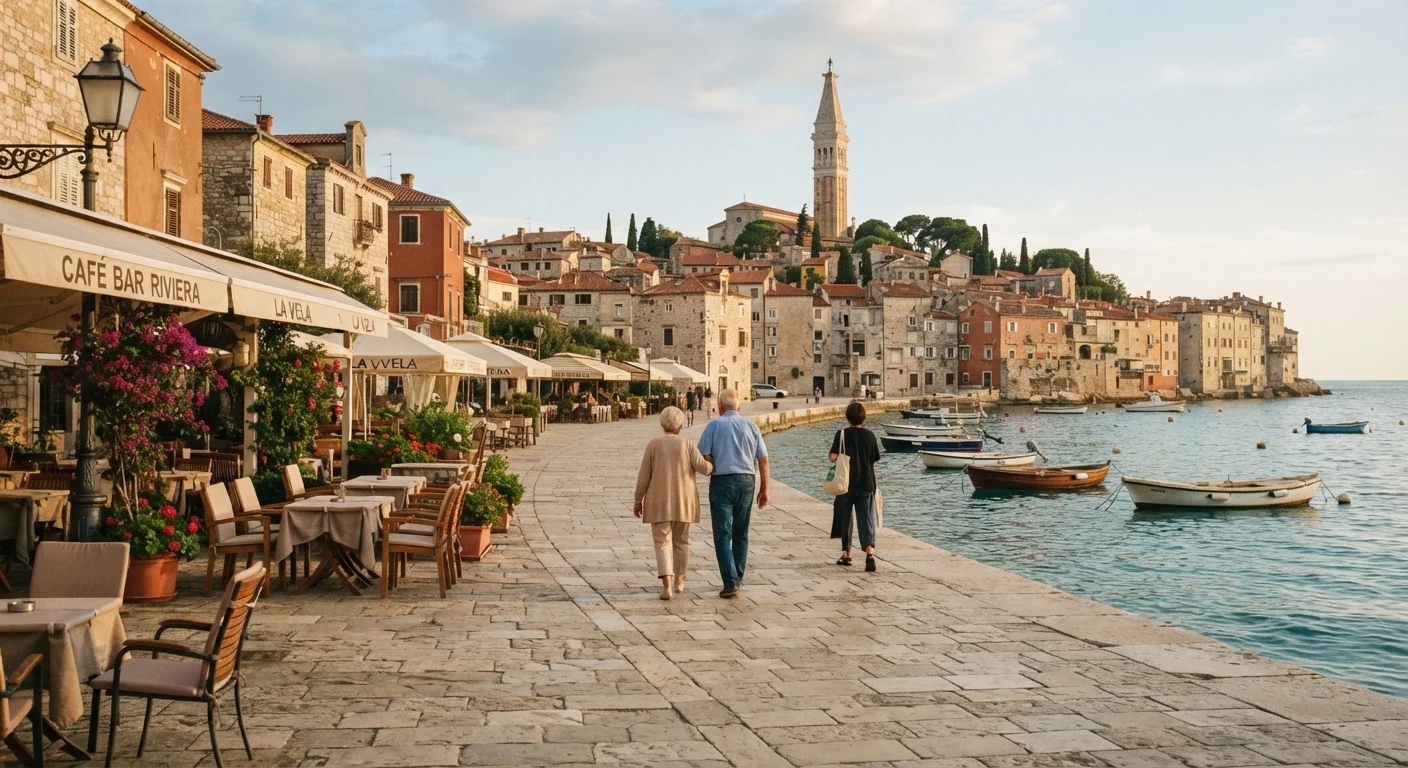
Fewer crowds genuinely change the quality of a visit. Arriving at a popular site without a 45-minute queue, or finding a café table without a wait, shifts the entire feel of a trip. That atmospheric gain is harder to quantify than price savings but often more memorable. If you're already thinking carefully about how you structure your days, consider pairing shoulder-season timing with our advice on avoiding overpacked itineraries - the two approaches complement each other well.
The Trade-Offs You Should Actually Expect
Travel content loves to oversell shoulder season as purely upside. The reality is more nuanced.
Weather is variable, not simply 'nearly as good'
Shoulder season weather can include rain, wind, or cold snaps that travel content tends to minimize. Checking historical weather data for your specific destination and window - not just regional trends - is worth the effort.
Some attractions, tours, and restaurants may be closed
Seasonal operators - boat tours, beach clubs, mountain huts, smaller museums - often close between peak and off-season. Travelers have found planned highlights unavailable upon arrival, so verifying schedules in advance matters.
Reduced service frequency on ferries, buses, and tours
Transport networks and organized excursions that run daily in peak season may drop to two or three times per week in shoulder months, requiring more careful scheduling.
Daylight hours may be shorter than expected
For shoulder seasons that lean toward autumn or early spring, shorter days can limit outdoor sightseeing time - a factor that rarely appears in promotional shoulder-season content.
The 'savings' depend heavily on your specific destination and dates
Price reductions in shoulder season are not uniform. Some popular destinations see only marginal drops from peak pricing, particularly if a local festival or event falls within the window.
~30%
Typical accommodation rate drop from peak to shoulder season
Price reductions in shoulder season vary widely by destination and property type; some markets see much smaller drops, while others see steeper declines, particularly at resort properties.
50%+
Reduction in visitor volume at some European sites in shoulder months
Visitor tracking at a number of major European heritage sites shows substantially thinner crowds in May and October compared to July and August peak periods.
Whether these trade-offs matter depends on your travel style. A traveler who plans every meal and museum visit in advance will feel the closure risk more acutely than someone comfortable improvising. The pre-booking question becomes especially relevant here - in shoulder season, it's often worth confirming specific opening schedules before committing.
When Shoulder Season Works and When It Doesn't
Shoulder season tends to deliver for travelers who are flexible, doing genuine destination-level research, and not dependent on a specific attraction or experience being fully operational.
The 'Local Calendar' Factor
Shoulder season dates shift depending on local events that have nothing to do with climate. A regional festival, a national holiday, or a major sporting event can push prices and crowds back to peak levels for a week or two within an otherwise quiet window. Always cross-reference general seasonal guidance with the specific destination's event calendar before finalizing dates. Tourism board websites for the relevant city or country are a reliable starting point.
It's a harder fit for families with school-age children (who often can't choose travel dates freely), travelers visiting for a once-in-a-lifetime event tied to peak season, or anyone whose trip happiness is closely tied to guaranteed beach weather.
Worth noting: some destinations are genuinely transformed by the season, in ways that go beyond "slightly quieter." Iceland is a clear example - the experience in shoulder season there isn't simply a muted version of peak; it's categorically different. That distinction matters when you're deciding what kind of trip you actually want.
For budget-focused travelers, shoulder season is one of several smart habits worth layering together. Our roundup of habits experienced budget travelers rely on covers the broader picture.