
Vertical Storage, Zones, and Dead Space: The Principles Behind Smart Small-Space Organization

Key Takeaways
Small-Space Organization
Small-space organization is a set of spatial principles - including vertical storage, activity zoning, and dead-space recovery - that help you get more functional use from limited square footage. Rather than simply adding more storage containers, these principles work by restructuring how space is categorized and accessed. The goal is a home that feels calm and manageable, even in tight quarters.
Professional organizers often distinguish between 'storage capacity' (how much a space can hold) and 'retrieval efficiency' (how easily items can be found and returned) - effective small-space systems optimize both simultaneously.
Why Spatial Principles Matter More Than Storage Products
Walk into any well-organized small apartment and you'll notice something: it doesn't look like a container store exploded inside it. The calm comes not from an abundance of bins and baskets, but from a deliberate structure - one built on a handful of spatial principles that professional organizers apply consistently.
The most common mistake people make when a space feels cramped or chaotic is reaching for more storage products. But as the storage myths that often backfire illustrate, adding containers to a poorly structured space usually just relocates the clutter. The real work is upstream: understanding how your space is divided, what areas go unused, and where your floor plan is fighting against your daily habits.
Three principles form the foundation of smart small-space organization: vertical storage, activity zoning, and dead-space recovery. Each addresses a different dimension of how space gets wasted - and each offers concrete, low-cost ways to reclaim it. For a deeper grounding in the vocabulary used throughout this article, the glossary of home organization terms is a useful companion.
~30%
Of cabinet space typically goes unused
Organizational research consistently finds that the backs of cabinets and upper shelves are the most chronically underutilized storage areas in American homes.
2x
Storage capacity gains from vertical systems
Interior designers and professional organizers commonly report that introducing floor-to-ceiling shelving can roughly double a room's effective storage volume without expanding its footprint.
17 min
Average daily time lost searching for items
Various productivity studies have estimated that the average person loses roughly 15-20 minutes per day looking for misplaced items in disorganized spaces.
Vertical Storage: Looking Up to Find More Room
In most American homes, storage is concentrated at eye level and below - on counters, in low cabinets, and across floors. The wall space above roughly five feet is frequently bare. This is where vertical storage strategy begins.
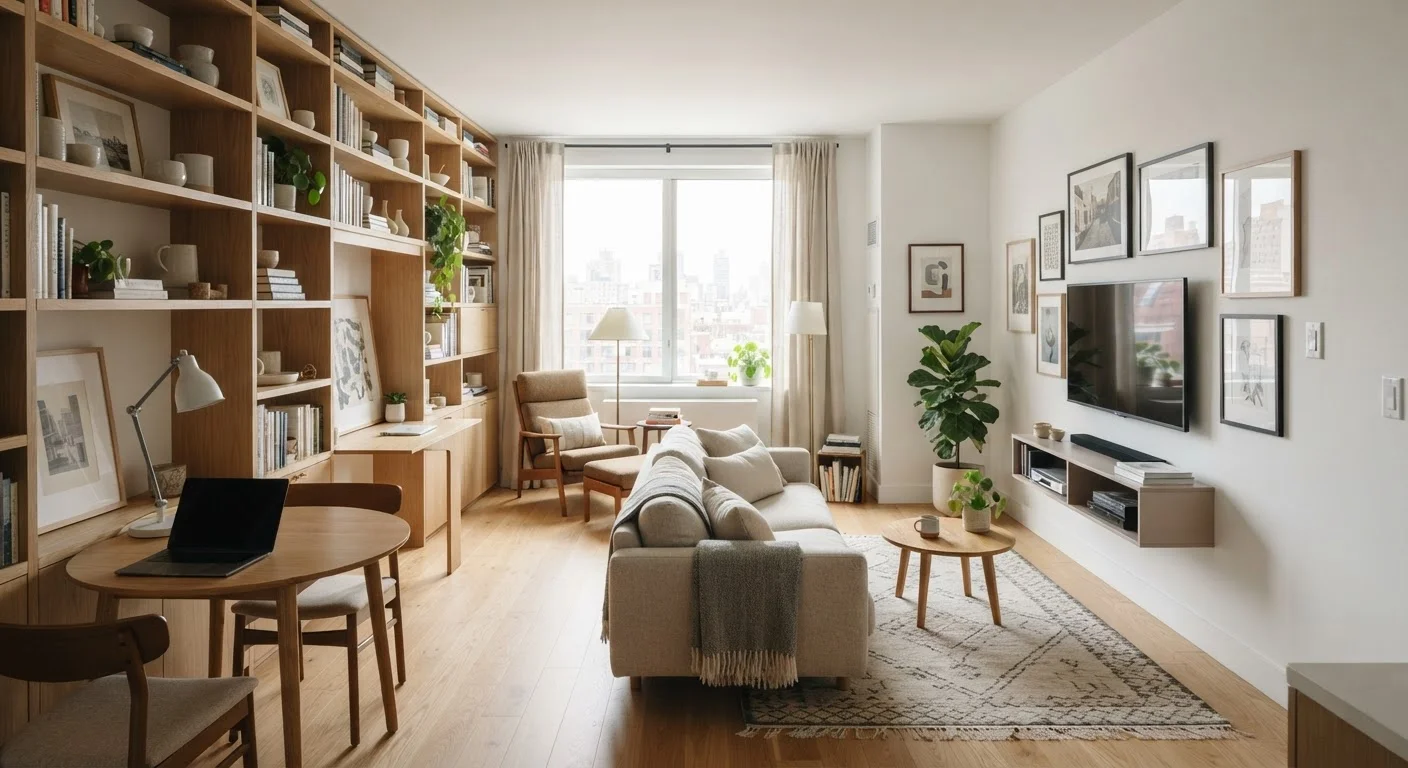
Vertical storage means deliberately using wall height as a storage dimension. This can take many forms: floor-to-ceiling shelving units, wall-mounted hooks or pegboards, over-door organizers, and stacked drawer systems. The principle is straightforward - the more storage you can move off the floor and onto walls, the more floor space remains available for living.
A few practical guidelines apply here. Items used daily should stay within easy reach - between hip and shoulder height. Items used weekly can go higher, requiring a step stool occasionally. Seasonal or rarely needed items are good candidates for the highest shelves. This frequency-based vertical layering keeps the most-used items accessible while putting underused items out of the way without losing them entirely.
Start with Frequency, Not Category
When building a vertical storage system, resist the urge to group items only by category (all books together, all craft supplies together). Instead, layer by frequency of use: daily items at arm's reach, weekly items slightly higher, seasonal items at the top. This approach keeps your most-used items effortlessly accessible while still maintaining logical groupings.
Activity Zoning: Giving Every Task Its Own Territory
Activity zoning is the practice of designating specific areas of a room for specific purposes - and storing related items within or immediately adjacent to that zone. The concept draws from workplace design principles and applies naturally to home environments.
In a small studio apartment, for example, a reading zone might be nothing more than a corner chair with a lamp and a small side table holding current books. A work zone could be a compact desk with charging cables and notebooks within arm's reach. Neither zone requires a separate room - only consistent boundaries and dedicated storage nearby.
The power of zoning lies in what it does to decision-making. When items belong to a zone, there's no deliberation about where they go when you're done using them. That reduction in small decisions is what keeps a zoned space tidy with far less effort. For a room-by-room look at how these principles apply throughout a home, the complete guide to organizing every corner of your home offers thorough context. Zoning is also especially useful in home offices - the guide to organizing a home office for deep work explores this in detail.
Dead Space Recovery: The Hidden Square Footage You Already Own
Dead space refers to areas within a home that exist but are functionally unused. In most homes, this is surprisingly abundant. Common examples include the backs of deep cabinets, the gap between the refrigerator and the wall, the area under beds, the space above the refrigerator, door backs, and the corners of rooms where furniture doesn't reach.
Recovering dead space doesn't mean cramming things into every gap - it means identifying which of these areas could hold something useful, and whether activating them would reduce congestion elsewhere. A narrow pull-out rack beside the stove can hold cutting boards and baking sheets that otherwise crowd a cabinet. An over-door organizer in the bathroom can absorb toiletries that clutter the sink. Under-bed storage containers can hold seasonal clothing, freeing closet space for current-season items.
The garage organization guide on zones and reclaiming lost space explores a large-scale version of the same principle - garages are often entirely dead space waiting to be recovered through zoning and rotation.
“The goal is not to have a place for everything - it's to have the right place for everything. Proximity to use is the single most overlooked variable in home organization.”
— Julie Morgenstern, Professional organizer and author of 'Organizing from the Inside Out'
Putting the Principles Together - and Keeping Them Working
These three principles work best in combination. Vertical storage expands capacity without consuming floor space. Zoning ensures that expanded capacity is structured logically. Dead-space recovery adds usable area that didn't feel available before. Applied together in even a single room, the cumulative effect on a small space can be significant.
The missing piece - and the one most articles overlook - is maintenance. A well-designed organizational system only holds if daily habits support it. That's the subject of why organized homes tend to stay that way, which examines the habits that keep systems functional over time rather than slowly reverting to chaos.
It's also worth acknowledging that organization exists on a spectrum. You don't need to implement all three principles perfectly before seeing results. Start with whichever one addresses your most pressing friction - whether that's a closet that never stays tidy, a kitchen counter that perpetually accumulates clutter, or a living room that serves too many purposes without clear structure. The principles scale to any effort level.
Organization Looks Different in Every Home
No single organizational system works universally - the right setup depends on your home's layout, the number of people sharing it, and your daily routines. The principles of vertical storage, zoning, and dead-space recovery are frameworks, not formulas. Adapt them to your specific situation rather than replicating a system designed for a different household.