

Key Takeaways
Why Organization Is a System, Not an Event
Most people approach home organization as a single heroic effort - a weekend blitz that ends with spotless counters and color-coded closets. Within weeks, clutter returns. The reason isn't laziness; it's that tidying without a repeatable system is like bailing out a boat without plugging the hole.
Sustainable organization means creating structures where items have assigned homes, decisions are easy, and maintenance is low-effort. If you're feeling overwhelmed and aren't sure where to start, our beginner's guide to starting a home organization project walks through mindset and first steps before you lift a single bin.
Think of organization not as a destination but as a set of habits layered on top of deliberate spatial choices. This guide covers both.
Organization ≠ Minimalism
You don't need to own fewer things to have an organized home - you need every item to have an assigned place and a clear reason for being there. Forcing an extreme aesthetic onto a household that doesn't suit it creates frustration and rarely lasts. Design systems around how your household actually lives, not an idealized version of it.
Core Decluttering Methods Explained
No single decluttering approach fits every household. Understanding a few proven frameworks helps you choose - or combine - what works for your habits and home size.
The Four-Box Method
Label four containers: Keep, Donate, Trash, and Relocate. Work through one area at a time, placing every item into a box without skipping. This method forces a decision on each object and prevents the common trap of shuffling clutter from one surface to another.
The KonMari Approach
Popularized by organizing consultant Marie Kondo, this method sorts by category rather than by room (clothing first, then books, papers, miscellaneous, and sentimental items). The core question - does this item serve a clear purpose or add genuine value to your life? - cuts through emotional attachment without being ruthless.
The One-In-One-Out Rule
A maintenance rule more than a decluttering method: for every new item brought into the home, one existing item leaves. Applied consistently, it prevents accumulation from restarting after a big purge.
Organize in short, focused sessions of 20-30 minutes rather than marathon days. Decision fatigue sets in quickly when sorting possessions, and tired decisions often result in keeping too much.
Cognitive load research shows that sustained decision-making degrades quality over time - shorter sessions preserve the mental clarity needed to make honest keep-or-discard calls.
Before buying any storage product, measure the space and list exactly what it needs to hold. Most organizational clutter comes from containers purchased without a specific purpose in mind.
Ill-fitting bins and baskets create secondary clutter and add to household costs - defining the need first ensures storage tools actually solve the problem.
For a structured audit of what each room actually contains, the room-by-room home organization checklist provides a printable framework to track your progress zone by zone.
Room-by-Room Organization Strategies
Kitchen
Group items by task frequency: daily-use cookware within arm's reach, occasional appliances in upper cabinets or a pantry. Drawer dividers eliminate the junk-drawer sprawl that wastes time. Decant dry goods into uniform containers to maximize shelf depth and make inventory visible at a glance.
Living Room
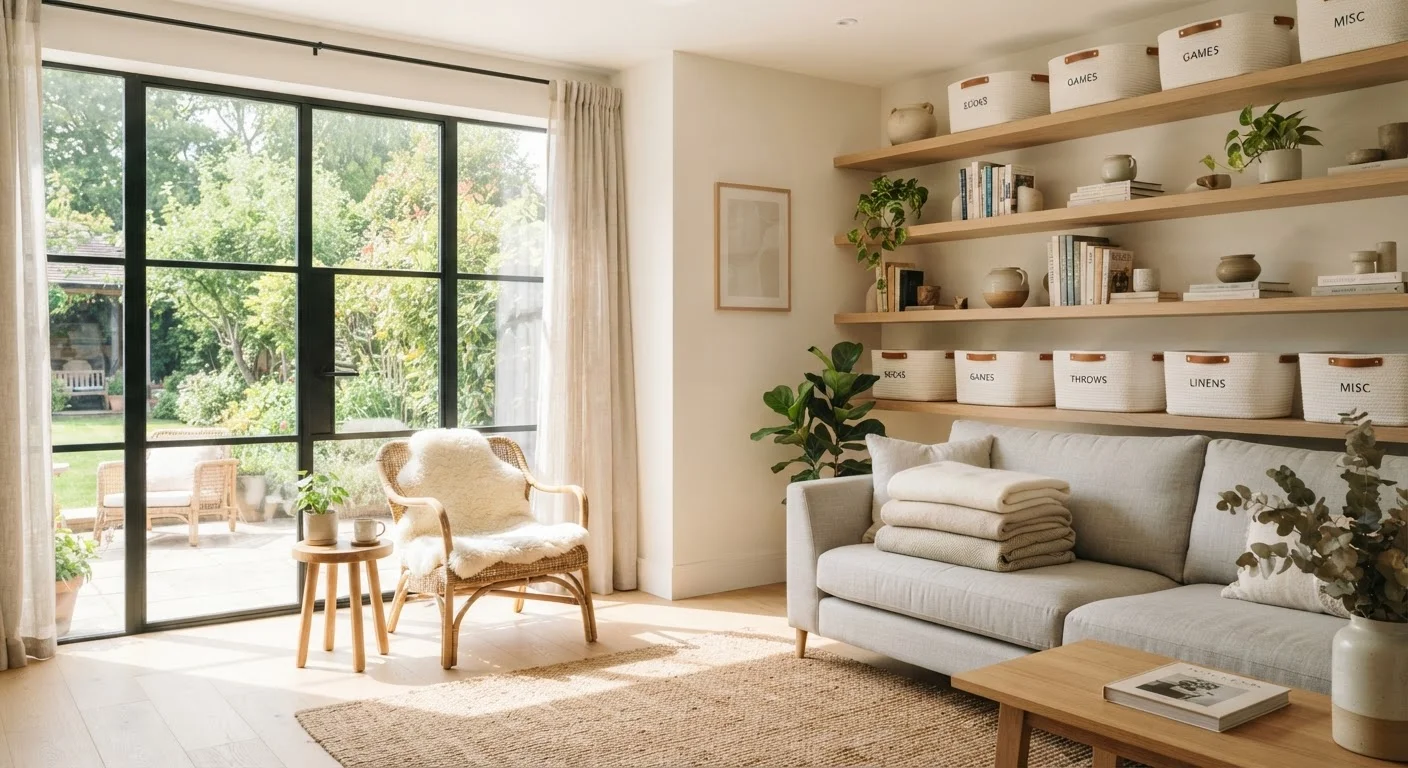
Identify the room's primary functions - relaxing, entertaining, reading - and assign zones accordingly. A basket near the sofa corrals remote controls and charging cables. Floating shelves keep surfaces clear while adding display and storage capacity.
Bedrooms
Closet organization improves dramatically when like items hang together and seasonal clothing rotates out. Under-bed storage works well for bulky off-season items in breathable bins, not cardboard boxes that trap moisture.
Bathrooms
Cabinet doors and the space above the toilet are frequently wasted. Mounted organizers and tiered shelving on these surfaces can double usable storage in a small bathroom. Discard expired medications and products regularly - most pharmacies offer safe medication disposal.
Home Office
A disorganized workspace actively disrupts focus. For a full breakdown of structuring a productive home workspace, see our guide on organizing a home office that supports deep work.
Start With the Room You Use Most
Organizing the space you occupy most frequently delivers the fastest, most motivating payoff. A tidy kitchen or living room creates daily positive reinforcement that makes tackling harder areas - like garages or basements - feel more achievable.
Storage Principles That Actually Work
Effective storage is less about buying containers and more about applying spatial principles. Three concepts guide professional organizers:
- Vertical space: Most rooms use only the bottom two-thirds of available wall height. Shelving, pegboards, and wall-mounted hooks reclaim that lost real estate.
- Defined zones: Grouping items by activity - cooking zone, crafting zone, bill-paying zone - reduces decision fatigue and speeds up retrieval.
- Dead zones: The corners of deep cabinets, the area under stairs, and the backs of doors are chronically underused. Turntables, pull-out drawers, and over-door organizers activate these overlooked spaces.
For a deeper dive into these principles, our article on vertical storage, zones, and dead space explains how professional organizers approach even the smallest apartments.
80%
Of household clutter is from disorganization, not lack of space
Frequently cited by professional organizers and home management researchers as a motivating figure for spatial reassessment.
1 hour
Average time lost weekly searching for misplaced items
Estimates from time-management studies suggest Americans spend significant time locating everyday objects due to inconsistent storage habits.
New to organization terminology? The glossary of home organization terms defines concepts like "decision fatigue" and "dead zones" clearly.
Building Habits That Maintain Order
Systems degrade without maintenance habits. The good news: the habits that sustain an organized home are small, not heroic.
The 10-Minute Reset
A nightly walk-through - returning items to their assigned spots, clearing surfaces, checking the kitchen - takes under ten minutes and prevents the slow accumulation that leads to overwhelming chaos. Make it a household routine rather than one person's responsibility.
Weekly and Monthly Reviews
Once a week, spend a few minutes on higher-level tasks: filing papers, wiping down shelves, and rotating perishables. Monthly, check one storage area - a closet, a garage shelf, a drawer - for items that have crept in without a proper home.
Seasonal Resets
Twice a year, reassess clothing, sporting equipment, and seasonal decor. Pair this with the seasonal home maintenance checklist to combine organization resets with catching small repair issues before they become costly.
Household Organization Is a Team Effort
Organizational systems work best when everyone in the household understands where things belong and why. Taking a few minutes to walk family members through new systems - especially children - dramatically improves how long those systems hold. Assign age-appropriate maintenance tasks so no single person bears the full maintenance load.
The Psychology of an Organized Home
Research in environmental psychology consistently links physical disorder with elevated stress hormones, reduced ability to focus, and lower overall life satisfaction. Clutter competes for attention - visual noise signals unfinished tasks to the brain, keeping it in a low-level state of alertness even during rest.
Conversely, organized environments tend to support a sense of control and calm. This isn't about perfectionism or minimalism as an aesthetic - it's about reducing the friction that clutter creates in daily life. An organized kitchen makes cooking feel manageable. A tidy bedroom signals to the brain that it's time to wind down.
“The objective of cleaning is not just to clean, but to feel happiness living within that environment.”
— Marie Kondo, Professional organizing consultant and author
The goal is not a magazine-ready home. It's a home that works for the people living in it - one where finding things is easy, cleaning is fast, and the environment supports rather than drains the people inside it.
As you build your organization system, remember that tracking your progress room by room keeps momentum visible and motivates continued effort.