

Key Takeaways
Why Garages Lose Their Function So Quickly
The garage is often the first space in a home to absorb overflow clutter - partly because it has no defined social purpose and partly because it accepts anything without complaint. Items get placed there temporarily and never leave. Within a season or two, the floor plan shrinks and parking the car becomes a careful maneuver.
The underlying problem is almost never a shortage of space. It is the absence of a system. Without assigned homes for categories of items, every new object lands wherever there is a gap, and retrieval becomes a slow excavation. If you are still figuring out where to begin with a broader home clutter problem, the beginner's guide to home organization covers the mindset and prioritization work that makes the physical steps more effective.
The principles at work in a well-organized garage are the same ones professional organizers apply to small apartments: defined zones, use of vertical space, and a clear distinction between dead and active storage. For a deeper look at those underlying concepts, see our overview of vertical storage and zone principles.
What you will need
What You'll Need to Get Started
Garage organization does not require a large budget, but a few targeted tools make a significant difference in how functional the finished setup becomes. The items listed below cover the core infrastructure for a zoned, labeled system that holds up over time.
Pegboard panels
Mount on open wall space to hang tools, garden hand tools, and cords within easy reach.
Heavy-duty shelving units
Provide tiered surface storage for bins, equipment, and bulkier items along perimeter walls.
Overhead ceiling storage racks
Utilize dead ceiling space for large, infrequently accessed items like holiday decorations or luggage.
Uniform storage bins with lids
Contain and categorize items within each zone while protecting contents from dust and moisture.
Label maker or permanent marker
Mark bins, shelves, and hooks so every household member knows exactly where things belong.
Stud finder
Locate wall studs for safe installation of shelving, pegboards, and bike hooks.
Safety Before Storage
Never block garage egress paths, fire exits, or the access panel to your electrical panel with storage units or bins. Items stored near a gas water heater or furnace must maintain the clearance distance specified by local fire codes. If your garage has structural concerns - such as sagging ceiling joists before installing overhead racks - consult a qualified contractor before adding significant weight.
Step-by-Step: Setting Up Your Zoned Garage
Work through the following steps in order. Resist the urge to start installing shelving before you have sorted and zoned - structure built before sorting typically gets built in the wrong place.
Empty and sort everything
Pull every item out of the garage and sort it into categories on the driveway: keep, donate/sell, discard, and relocate (items that belong somewhere else in the house). Be honest during this step - duplicates, broken tools, and items unused in over two years are strong candidates for removal.
Map out your zones on paper
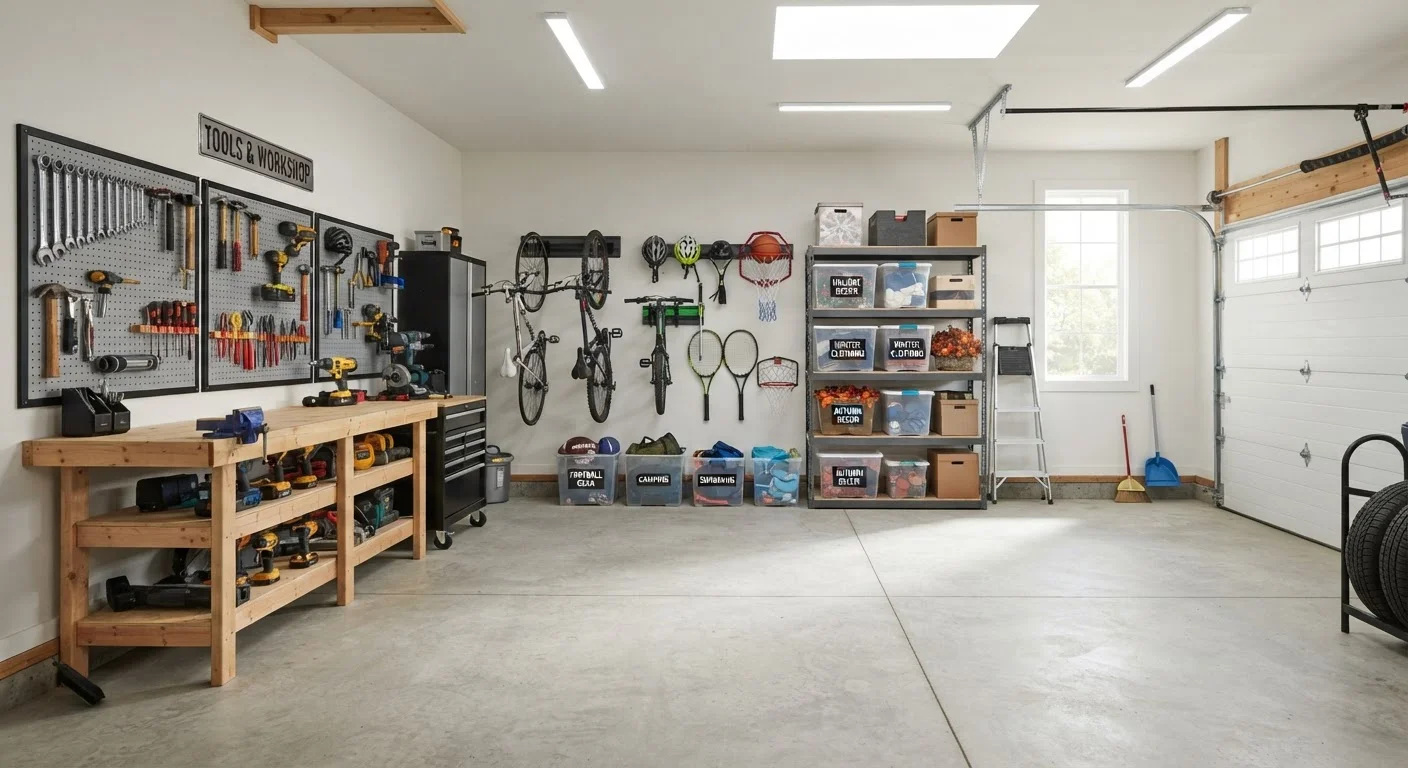
Sketch a rough floor plan and assign activity-based zones before touching a single shelf. Common garage zones include: automotive (car care, fluids, tire pump), garden and lawn (tools, hoses, soil), sports and recreation, workshop or hand tools, and seasonal storage. Place high-frequency zones near the entry door and lower-frequency zones (like holiday bins) toward the back or overhead.
Claim vertical and overhead space
Most garages surrender an enormous amount of storage potential by ignoring the wall area above workbench height and the ceiling span. Install pegboard panels for hanging tools, add wall-mounted shelving for bins, and consider ceiling-mounted racks for bulky seasonal items. Confirm stud locations before drilling and match hardware weight ratings to what you plan to store.
Assign and label every zone
Return items to their designated zones and place them in labeled bins or on marked shelf sections. Use consistent, readable labels visible from a standing position. If multiple people use the garage, clear labeling is what makes the system self-maintaining - everyone knows where things go back without having to ask.
Build a seasonal rotation schedule
Designate one shelf or section for seasonal items and rotate them on a set schedule tied to the calendar. In spring, bring forward garden tools, lawn fertilizer, and outdoor furniture hardware; move snow shovels and ice melt to the back or overhead storage. In fall, reverse the swap. Consistent timing - rather than waiting until the item is urgently needed - keeps the system predictable. See our seasonal home maintenance checklist for a broader schedule that pairs well with this rotation.
Establish a one-in, one-out maintenance rule
Every item added to the garage should displace one item leaving it. This single habit is the most reliable way to prevent the gradual return of clutter. Attach a small bin near the garage door for outgoing donate or discard items so the exit path for unwanted things is always frictionless.
Use the Season-Change Swap as a Reset
Every time you rotate seasonal items - typically four times a year - treat it as a brief audit. Check that bins still hold only what belongs in them, discard expired products, and make a note of any tools or equipment that need repair. This small habit prevents the slow drift back to chaos.
Keeping the System Intact Over Time
The most common reason organization systems collapse is that they are designed for one big reset rather than ongoing maintenance. Garages that stay organized share a few consistent habits: items are returned to their labeled zones rather than placed on available flat surfaces, seasonal swaps happen on a schedule rather than reactively, and the space is audited briefly at regular intervals.
If you find your system drifting after a few weeks, the issue is usually a zone that is undersized for what it holds, or a label that is too vague to guide restocking. Both are quick fixes. For a broader look at why organization efforts tend to unravel, this article on why systems fall apart identifies the most common recurring causes.
Flammables Need Special Handling
Gasoline, propane tanks, paint cans, and similar flammables should be stored in a dedicated, well-ventilated area away from heat sources and ignition points. Do not stack flammable materials against interior walls shared with living spaces. Check local fire codes for approved storage containers and quantities - regulations vary by municipality.
A well-zoned garage also connects directly to outdoor maintenance. Garden tools that have a clear home are easier to inspect, sharpen, and replace at the right time - habits that pair naturally with the garden and lawn care routines that keep outdoor spaces healthy through the seasons. For a broader home maintenance perspective, the complete guide to organizing every corner of your home covers how garage organization fits into a whole-house system.