
Drought-Tolerant Landscaping: Approaches That Reduce Water Use Without Sacrificing Curb Appeal

Key Takeaways
Why Drought-Tolerant Landscaping Is Worth Considering
Outdoor watering accounts for a substantial portion of residential water use - and in many parts of the country, that use is increasingly constrained by drought conditions, local restrictions, or rising utility costs. Drought-tolerant landscaping addresses this challenge by rethinking which plants, materials, and watering practices belong in your yard.
The good news: water-wise landscaping doesn't require a bare, rocky yard. With thoughtful plant selection and smart design, it's entirely possible to maintain an attractive, colorful outdoor space that holds up well through dry spells. Whether you're dealing with seasonal drought or simply want to reduce your water bill and environmental footprint, the approaches below give you a practical starting point.
For a broader look at what's possible when you rethink conventional turf, see our guide on incorporating native plants into your yard.
Core Practices for a Water-Smart Landscape
The following practices form the backbone of effective drought-tolerant landscaping. Each one addresses a different lever - plant choice, soil health, irrigation, or design - and they work best in combination.
Choose plants native to your region or proven drought-tolerant species suited to your climate zone.
Native plants have evolved alongside local rainfall patterns, soil types, and temperature swings, making them naturally adapted to periods of low moisture. Non-native ornamentals often require irrigation to compensate for conditions they weren't designed for. Selecting plants matched to your USDA Hardiness Zone and regional rainfall reduces the watering burden from the start.
Reduce turf area strategically, replacing it with permeable hardscape, mulched beds, or ground covers.
Traditional cool- and warm-season grasses are among the thirstiest elements in a residential landscape. Reducing turf footprint - particularly in low-traffic or full-sun areas - is one of the fastest ways to cut water consumption. Permeable materials like decomposed granite or flagstone also allow rainwater to infiltrate rather than run off.
Apply a consistent layer of organic mulch around all planting beds and trees.
Mulch acts as an insulating blanket over soil, slowing evaporation significantly and keeping root zones cooler during heat spells. It also breaks down over time, improving soil structure and adding organic matter. Bare soil, by contrast, dries out quickly and invites weed competition.
Switch to drip irrigation or soaker hoses, and water during early morning hours.
Overhead sprinklers lose a significant portion of water to wind drift and evaporation before it ever reaches roots. Drip and soaker systems deliver moisture directly to the root zone, where it's needed. Watering in early morning allows moisture to soak in before daytime heat accelerates evaporation.
Group plants with similar water needs together (hydrozoning).
Mixing thirsty annuals with drought-tolerant perennials in the same irrigation zone forces a compromise that either overwaters the resilient plants or underwaters the demanding ones. Hydrozoning lets you tailor irrigation schedules precisely to each group's actual needs.
Smarter Watering: Timing, Tools, and Technique
Even drought-tolerant plants need water during establishment (typically the first one to two growing seasons). The goal is to supply water efficiently so plants develop deep root systems that allow them to thrive with minimal supplemental irrigation long-term.
Install a Rain Gauge to Guide Decisions
A simple rain gauge lets you track how much natural precipitation your yard receives each week. Many drought-tolerant plants need little or no supplemental water once established if they receive even an inch of rain. Checking your gauge before running irrigation prevents unnecessary watering and helps you build an evidence-based routine.
Drip irrigation delivers water slowly and directly to the root zone, dramatically reducing evaporation compared to overhead sprinklers. Pairing drip systems with a timer or soil-moisture sensor adds another layer of efficiency. For guidance on scheduling, our article on lawn watering timing explains why when you water matters as much as how much.
Grouping plants with similar water needs - a practice called hydrozoning - ensures you're not overwatering drought-tolerant species to satisfy thirstier neighbors. This simple design principle pays dividends throughout the growing season.
Mulch, Soil Health, and Ground Cover
Two of the most impactful, low-cost steps any homeowner can take involve what happens at ground level: mulching and improving soil structure. A 2-3 inch layer of organic mulch (such as wood chips or shredded bark) slows evaporation, moderates soil temperature, and suppresses weeds that compete for moisture.
Our in-depth look at mulch vs. bare soil trade-offs covers the full range of benefits and considerations. Compacted or nutrient-poor soil drains poorly, which paradoxically can stress plants even during rain events. Amending soil with compost before planting gives roots the loose, well-aerated structure they need to go deep.
Low-growing ground covers - such as creeping thyme, sedums, or native clover - can replace sections of traditional turf, providing visual interest while requiring a fraction of the water. These plants also tend to crowd out weeds naturally as they establish.
Putting It All Together for Year-Round Curb Appeal
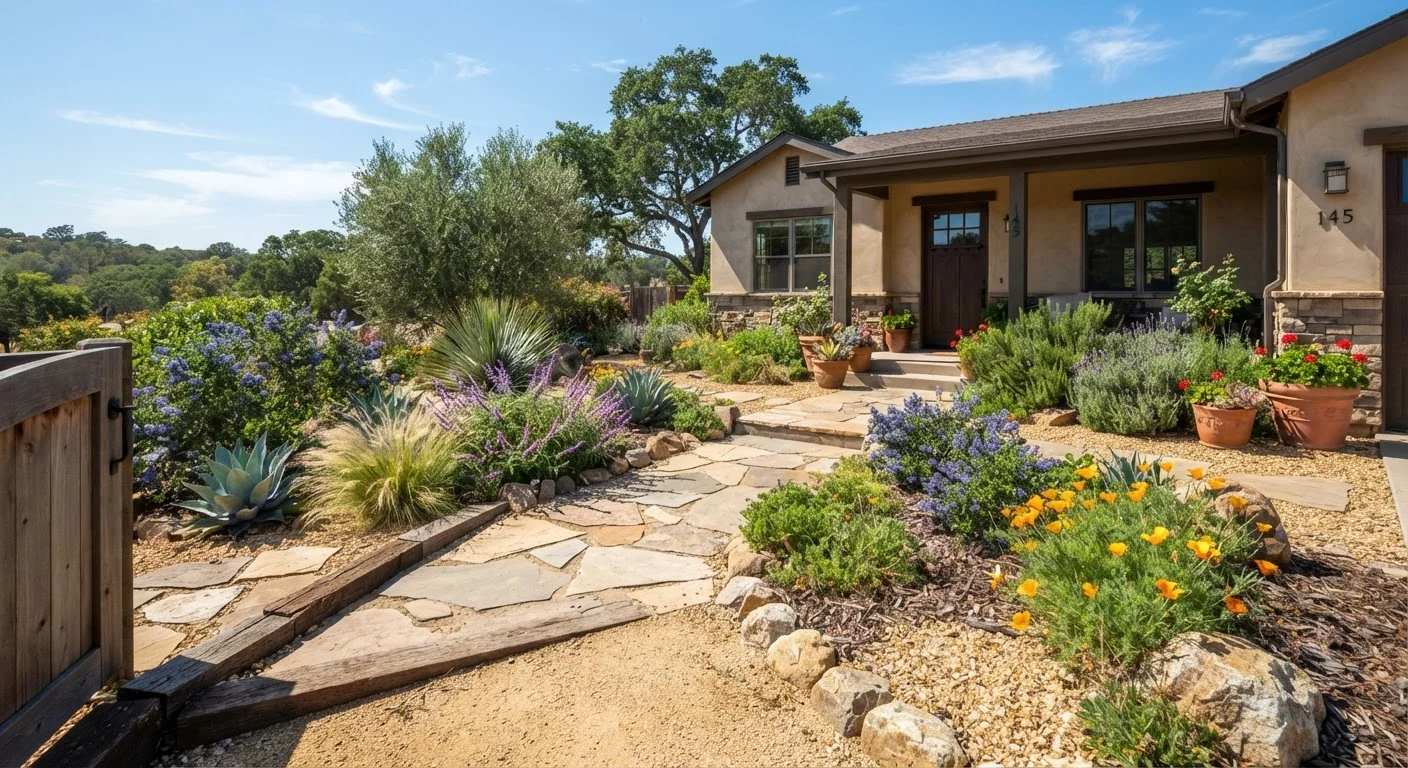
A well-designed drought-tolerant landscape layers plants of varying heights, textures, and bloom times so something is always visually interesting - even in midsummer heat. Ornamental grasses add movement and structure; succulent rosettes provide bold focal points; native wildflowers deliver seasonal color without irrigation demands.
If you're transitioning an existing lawn, consider a phased approach: replace the highest-traffic or sunniest sections first, where grass struggles most. After the growing season, use our fall lawn prep checklist to close out the year properly and set any new plantings up for a strong spring. Small, consistent changes compound over time - and a thoughtfully planned drought-tolerant landscape can look as polished and intentional as any conventional yard.
~30%
Share of U.S. household water used outdoors
According to the U.S. Environmental Protection Agency (EPA), outdoor water use - primarily lawn and garden irrigation - accounts for roughly 30% of total household water consumption on average, and significantly more in drier regions.
50%
Potential reduction in irrigation waste
The EPA's WaterSense program estimates that the average American household can reduce outdoor water use by up to 50% by switching to more efficient irrigation methods and drought-tolerant plants.