

Key Takeaways
Lawn Watering Schedule
A lawn watering schedule is a planned routine that determines when, how often, and for how long you irrigate your grass. Rather than watering whenever you have time or whenever the lawn looks dry, a schedule is built around the specific needs of your grass type, local climate, and seasonal conditions. The goal is to deliver water in a way the soil can actually absorb and the roots can use.
Turfgrass water uptake is governed by evapotranspiration (ET) - the combined loss of soil moisture through evaporation and plant transpiration. Scheduling irrigation to offset daily ET rates, rather than reacting to surface dryness, is the basis of science-backed watering programs.
Why Timing Is the Foundation of Effective Lawn Watering
Most homeowners focus on how much water their lawn gets - and while volume matters, when that water is applied often makes the bigger difference. Water delivered at the wrong time of day can evaporate before it reaches roots, sit on blades overnight and invite disease, or run off compacted soil before it absorbs.
The ideal window is early morning. Temperatures are cooler, wind speeds are typically lower, and soil is ready to absorb moisture without competing evaporation pressure. Grass blades also have the entire day to dry, which significantly reduces the risk of fungal diseases like brown patch and dollar spot - conditions that thrive in prolonged leaf wetness.
Midday watering wastes water: soil surface temperatures can be high enough to evaporate a meaningful portion of what you apply before it penetrates past the top inch. Evening watering is the most common mistake - while convenient, it leaves grass wet through the night, creating the humid conditions fungal pathogens prefer. If you've been puzzling over persistent lawn problems, common gardening myths may be compounding a timing issue you haven't identified yet.
Set Your Sprinklers to Run Before Dawn
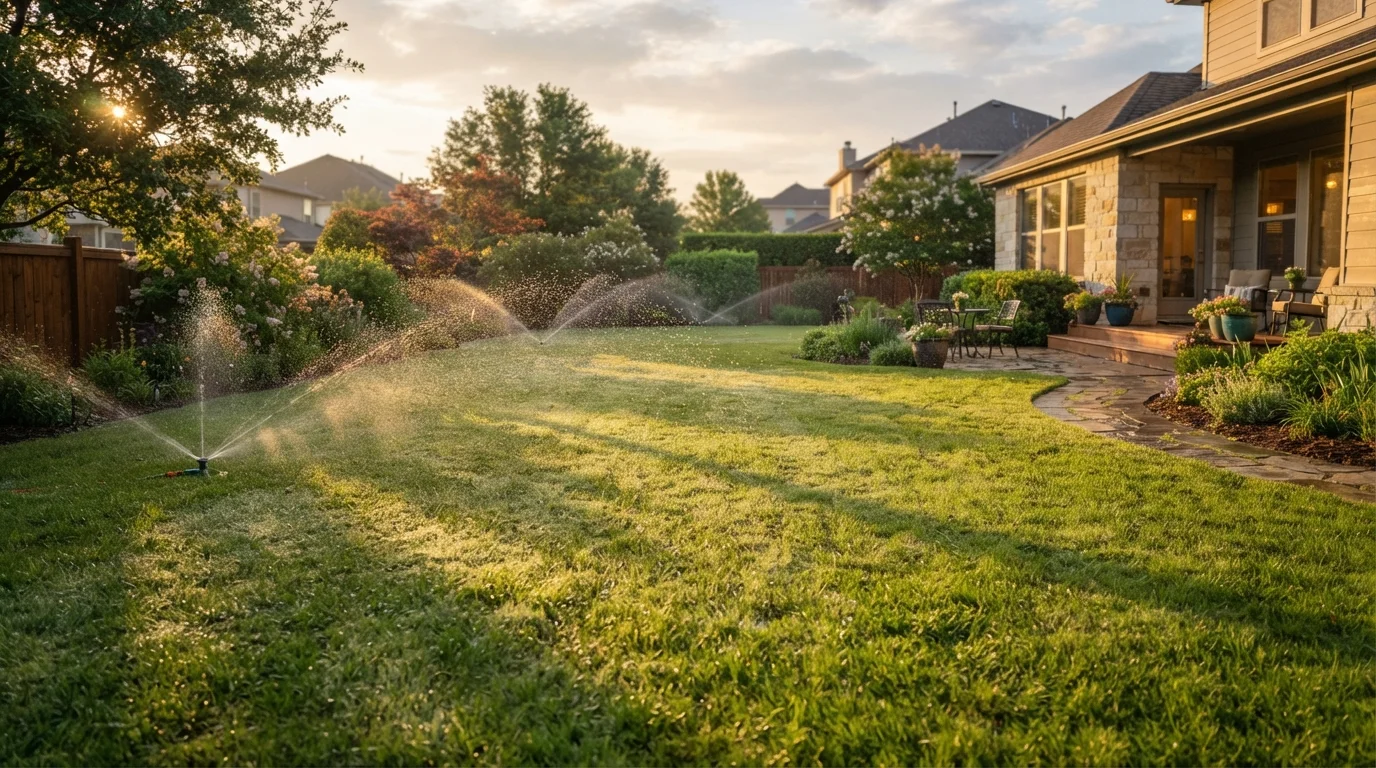
If your irrigation system has a programmable timer, set it to start around 5 or 6 a.m. This ensures watering completes before the sun is high enough to cause significant evaporation, and gives grass blades time to dry by midmorning. Even a manual routine carried out before your first cup of coffee can make a measurable difference in lawn health over the course of a season.
Deep and Infrequent: The Watering Approach That Builds Stronger Roots
Frequency and depth are inseparable from timing. Watering lightly every day - even at the right hour - trains grass roots to stay shallow, clustered near the surface where they're vulnerable to heat, drought, and foot traffic stress. Deep, infrequent watering pushes roots to follow moisture downward, building the kind of root architecture that keeps a lawn green during dry stretches.
A general guideline for most lawn types is to apply approximately one inch of water per week, split across two or three sessions. To measure what your sprinkler system delivers, place a few empty tuna cans around the lawn during a watering cycle and time how long it takes each to collect one inch. This helps you set accurate run times rather than guessing.
~1 inch
Water most lawns need per week
This general guideline, widely cited by university extension programs, includes precipitation - use a rain gauge or soil moisture reading to adjust accordingly.
50%+
Of residential water used outdoors
The U.S. Environmental Protection Agency estimates that a significant portion of residential water use goes to landscaping, much of it applied inefficiently.
6 a.m.-10 a.m.
Optimal morning watering window
Turfgrass specialists and cooperative extension services broadly recommend this window to balance absorption, evaporation reduction, and disease prevention.
If your lawn shows signs of thinning or patchy growth despite regular watering, the problem may run deeper than irrigation habits. Soil compaction, thatch buildup, or root competition can all limit water absorption - topics explored in our article on why grass keeps thinning out. Improving soil health through aeration can also dramatically change how well your lawn responds to a watering schedule - see the complete guide to lawn aeration for more.
Adjusting Your Schedule for Grass Type, Season, and Climate
No single schedule works for every lawn. Your watering routine should account for your grass variety, your regional climate, and the time of year - all three variables shift water demand substantially.
Cool-season grasses - like Kentucky bluegrass, perennial ryegrass, and tall fescue - grow most actively in spring and fall, when temperatures are moderate. During summer heat, many go partially dormant and need less water, not more. Warm-season grasses like Bermuda, Zoysia, and St. Augustine peak in summer and are naturally more drought-tolerant. Understanding these differences is fundamental to building a schedule that works. Our guide to cool-season vs. warm-season grasses covers the full spectrum of grass-specific needs.
Seasonally, most lawns need irrigation scaled back significantly in fall as temperatures drop and rainfall increases. Overwatering in fall can saturate soil heading into winter, increasing vulnerability to root diseases and freeze damage. For a structured approach to fall lawn care, including irrigation wind-down, the fall lawn prep checklist is a practical place to start.
In drier climates or during drought conditions, timing your watering to maximize absorption becomes even more critical - and pairing your schedule with water-efficient landscaping strategies can reduce overall consumption without sacrificing lawn health. The drought-tolerant landscaping guide covers smart approaches that complement a timed watering program.
Local Water Restrictions May Apply
Many municipalities impose seasonal watering schedules or restrictions, particularly during drought conditions or summer months. Before setting up a fixed irrigation routine, check with your local water utility or municipal website for current guidelines. Violating water-use restrictions can result in fines, and some utilities offer rebates for efficient irrigation practices.