

| FDA term | Added sugars (FDA Nutrition Facts label regulations) |
| Daily Value (DV) reference | 50 grams per day (Based on a 2,000-calorie reference diet (FDA)) |
| Label requirement | Added sugars must be listed separately in grams and % DV (FDA updated Nutrition Facts label rules) |
| Common aliases | Over 60 names in use on ingredient lists (University of California San Francisco Sugar Science research) |
| Top dietary source | Sugar-sweetened beverages (CDC dietary research summaries) |
What Is Added Sugar, Exactly?
Not all sugar in food is the same. Naturally occurring sugar is found inherently in whole foods - the lactose in milk or fructose in a whole apple, for example. Added sugar, by contrast, is any sugar or caloric sweetener introduced during processing or preparation. This includes white table sugar, honey, corn syrup, and dozens of other ingredients that sweeten, preserve, or enhance flavor in packaged products.
The distinction matters because naturally occurring sugars come packaged with fiber, vitamins, and other nutrients that affect how your body processes them. Added sugars, consumed in excess, are associated by researchers and major health organizations with higher caloric intake without proportional nutritional benefit.
The U.S. Food and Drug Administration (FDA) requires food manufacturers to list added sugars separately on the Nutrition Facts label - a change finalized in updated labeling rules that took full effect for most manufacturers. To learn how this line fits within the broader label, see Reading a Nutrition Facts Label Without the Confusion.
| FDA term | Added sugars (FDA Nutrition Facts label regulations) |
| Daily Value (DV) reference | 50 grams per day (Based on a 2,000-calorie reference diet (FDA)) |
| Label requirement | Added sugars must be listed separately in grams and % DV (FDA updated Nutrition Facts label rules) |
| Common aliases | Over 60 names in use on ingredient lists (University of California San Francisco Sugar Science research) |
| Top dietary source | Sugar-sweetened beverages (CDC dietary research summaries) |
The Many Names Added Sugar Hides Behind
One of the most practical skills a label reader can develop is recognizing sugar's many aliases. Manufacturers use dozens of ingredient names that all refer to added sweeteners. On an ingredient list, any of the following signal the presence of added sugar:
- Sugars ending in "-ose": sucrose, fructose, dextrose, maltose, lactose (when added, not naturally present)
- Syrups: high-fructose corn syrup, brown rice syrup, malt syrup, agave syrup, maple syrup
- "Natural" sweeteners: honey, molasses, coconut sugar, date sugar, fruit juice concentrate
- Other terms: cane juice, evaporated cane juice, turbinado, panela, muscovado
The key insight: ingredient lists are ordered by weight, so if any sweetener appears near the top - or if multiple sweeteners appear throughout the list - the product likely contains a meaningful amount of added sugar in total.
Added sugar
Any sugar or caloric sweetener added to food or beverages during processing, preparation, or manufacturing - as distinct from sugar naturally present in whole ingredients.
Daily Value (DV)
A reference number set by the FDA representing how much of a nutrient a typical adult needs per day, based on a 2,000-calorie diet. It provides a general benchmark for comparing foods, not a personal recommendation.
Ingredient list
A federally required list of all ingredients in a packaged food, ordered from greatest to least by weight. Reviewing it can help identify multiple added sweeteners that collectively contribute significant sugar.
Naturally occurring sugar
Sugar that exists inherently in a whole food - such as fructose in fruit or lactose in dairy - before any processing or preparation takes place.
High-fructose corn syrup (HFCS)
A liquid sweetener derived from corn starch, commonly used in processed foods and beverages. It is classified as an added sugar on nutrition labels.
Fruit juice concentrate
Fruit juice with most of its water removed, used as a sweetener in processed foods. It counts as an added sugar when used as an ingredient, even though it originates from fruit.
Where Added Sugar Commonly Appears
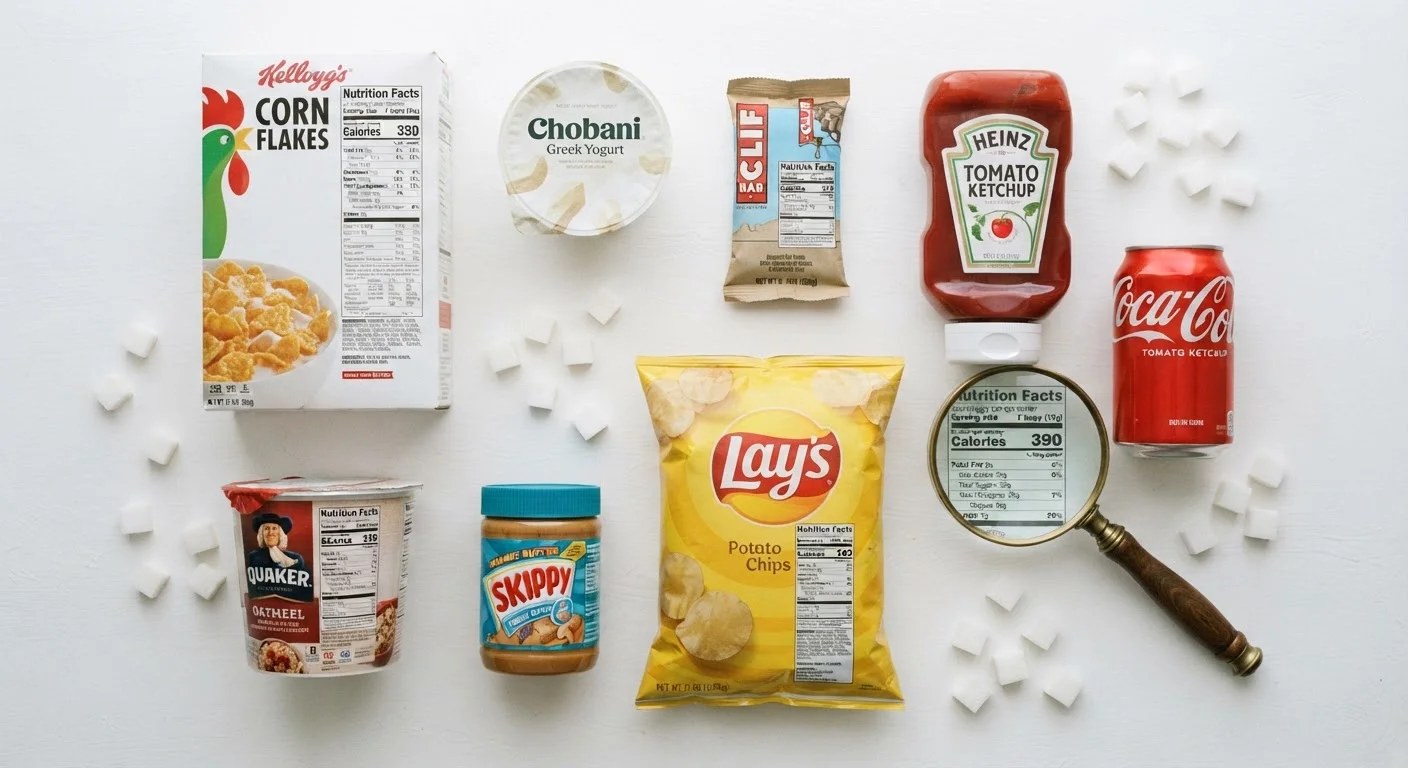
Added sugar shows up in places many people wouldn't immediately suspect. Sweetened beverages - sodas, energy drinks, flavored coffees, sports drinks, and many fruit-flavored drinks - are frequently cited as a top source in the American diet. But added sugar also appears in:
- Bread, crackers, and other baked goods
- Flavored yogurts and dairy-based beverages
- Pasta sauces, ketchup, and salad dressings
- Breakfast cereals and granola bars
- Canned soups, beans, and prepared meals
- Protein bars and meal-replacement shakes
This doesn't mean all of these foods should be avoided - context, overall diet pattern, and individual health circumstances matter enormously. The goal of awareness is to make more informed choices, not to create anxiety about every label.
"Natural" Doesn't Mean Sugar-Free
Ingredients like honey, maple syrup, agave, and coconut sugar are often marketed as natural or healthier alternatives to white sugar. From a labeling standpoint, they are still classified as added sugars and counted toward your daily total. While they may differ slightly in nutrient composition, no major health body currently recommends treating them as meaningfully distinct from other added sweeteners when it comes to overall intake.
What the Label Tells You - and What It Doesn't
The current U.S. Nutrition Facts label shows added sugars in grams and as a percentage of the Daily Value (DV). The FDA set the Daily Value for added sugars at 50 grams per day, based on a 2,000-calorie reference diet. This means a product showing 10g of added sugar provides 20% of that reference value.
A few important caveats about what the label cannot tell you on its own:
- The Daily Value is a general reference point, not a personal recommendation - individual needs vary by age, health status, and caloric intake.
- The label does not distinguish between types of added sugars (e.g., honey versus high-fructose corn syrup), so ingredient list review is still useful.
- "No added sugar" claims on packaging mean no sugar was added during processing, but the product may still contain naturally occurring sugars.
Major health organizations, including the American Heart Association and the World Health Organization, have published general guidance on limiting added sugar intake, though their specific figures differ. Consulting a registered dietitian is the most reliable way to translate general guidelines into personally appropriate targets.
This article is for general informational and educational purposes only and is not a substitute for professional medical or nutritional advice. Please consult a qualified healthcare provider or registered dietitian for guidance specific to your health situation.