

Key Takeaways
Why the Label Exists and What It's Based On
The Nutrition Facts label is a federal regulatory requirement governed by the U.S. Food and Drug Administration (FDA). Its format was significantly updated in 2016 - with full compliance required by 2020 - to better reflect current nutritional science and actual eating habits. The label is designed to give consumers a consistent, standardized way to understand what's in packaged food.
Every number on the label is anchored to a 2,000-calorie reference diet, which is used to calculate the % Daily Value (% DV) figures. This reference point is a general population benchmark established by the FDA - not a recommendation for any individual. Actual needs vary by age, sex, body size, activity level, and health status.
Understanding the label's structure makes it far easier to use in practice. It isn't designed to tell you what to eat - it's a transparency tool. For broader context on how nutrition science itself works, see why nutrition research is genuinely complex.
This Is General Information, Not Medical Advice
Nutrition needs vary based on age, health status, activity level, and medical history. The guidance here reflects general public health frameworks established by the FDA and USDA - not personalized recommendations. If you have specific dietary needs or a health condition, consult a registered dietitian or your healthcare provider before making significant changes.
How to Read the Label Step by Step
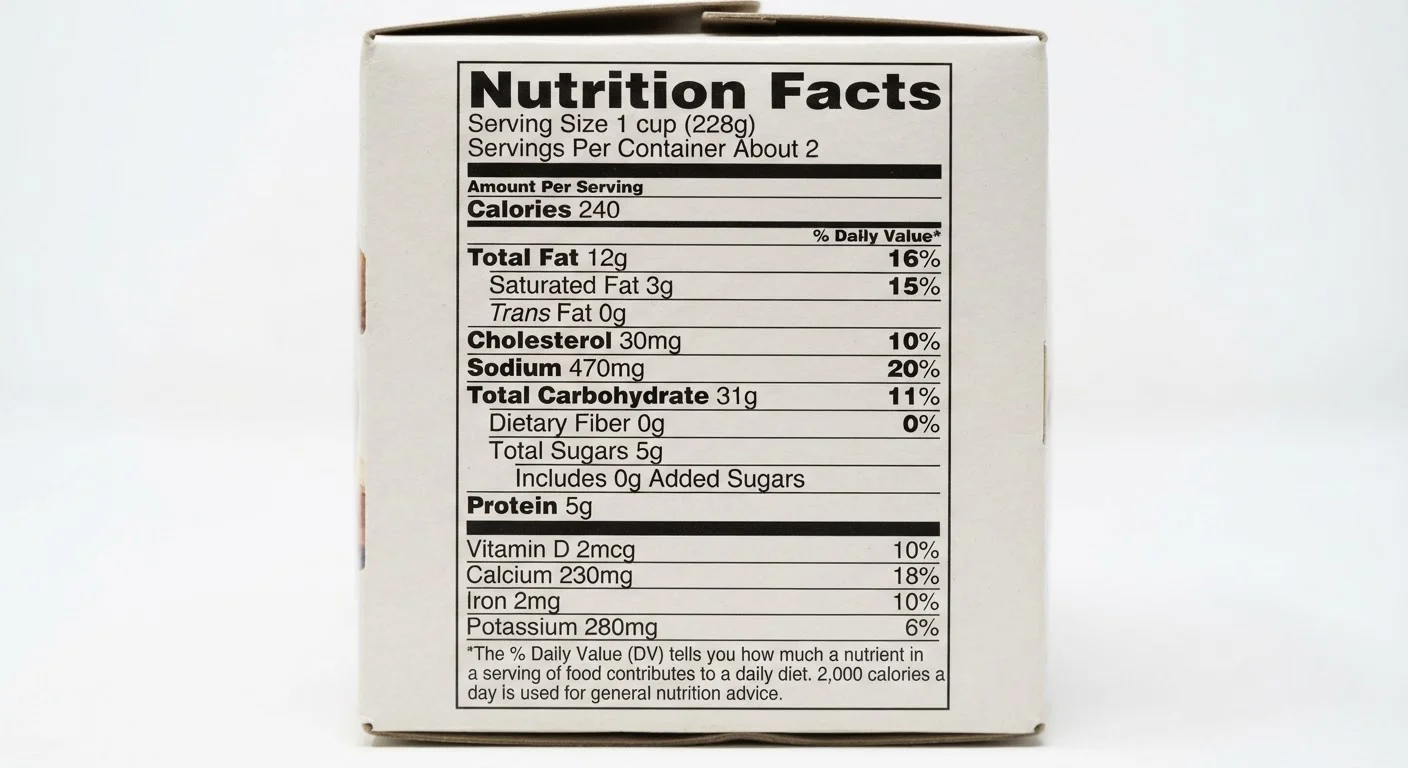
The label is arranged in a deliberate order, and reading it top to bottom is the most efficient approach. Each section builds on the one before it - which is why starting anywhere other than serving size can lead to misinterpretation.
Watch for Multi-Serving Packages
A package that looks like a single serving may contain two or three servings. If you eat the whole package, every number on the label must be multiplied accordingly. This is one of the most common sources of confusion when tracking calories or sodium intake.
Start with Serving Size and Servings Per Container
The serving size appears at the very top of the label in bold, larger type. It reflects the amount of food that all the numbers below it describe - not necessarily a recommended portion or how much a person should eat. Servings per container tells you how many of those portions exist in the entire package.
If a bag of chips lists a serving size of 1 oz (about 28 chips) and contains 3 servings, the full bag contains roughly 3× every value shown on the label.
Read Calories Per Serving
Calories appear prominently just below serving size. This number reflects the energy provided by one serving of the food as defined on the label. Calorie needs vary considerably by individual - the 2,000-calorie reference diet used on labels is a population-level benchmark, not a universal prescription.
Review Nutrients to Be Mindful Of
Below calories, the label lists nutrients that many Americans tend to consume in excess, according to federal dietary guidance. These include:
- Total Fat - broken down into saturated fat and trans fat
- Cholesterol
- Sodium
Trans fat has no established safe intake level. Saturated fat and sodium are linked in public health guidance to cardiovascular risk when consumed in excess, though individual context matters. These aren't nutrients to eliminate - they're ones to be aware of.
Find Total Carbohydrates, Fiber, and Sugars
Total carbohydrates include dietary fiber, total sugars, and added sugars - all listed as sub-items. Dietary fiber is associated with digestive health and satiety in a broad body of research. Total sugars include both naturally occurring sugars (as in fruit or dairy) and added sugars.
Added sugars - sweeteners added during processing - now appear as a separate line. This distinction matters because naturally occurring sugars in whole foods typically come packaged with fiber, vitamins, and other nutrients, while added sugars generally do not. For a deeper look at spotting added sugars across food categories, see Understanding Added Sugar.
Check Protein
Protein appears below carbohydrates. Unlike most other nutrients, protein does not yet have a mandatory % Daily Value on the label for adults (except in specific regulatory circumstances). The gram amount is still useful context - particularly when comparing similar products or assessing whether a food contributes meaningfully to protein intake.
Interpret % Daily Value for Vitamins and Minerals
The bottom section of the label lists key micronutrients - commonly Vitamin D, Calcium, Iron, and Potassium - alongside their % Daily Value. These are nutrients that federal dietary guidance identifies as ones many Americans don't get enough of. The % DV here helps you assess whether a food makes a meaningful contribution to your day.
Use % Daily Value as a Quick Compass
A general rule of thumb from the FDA: 5% DV or less per serving is considered low for a nutrient; 20% DV or more is considered high. This makes it easier to quickly compare products or gauge whether a food is a meaningful source of a given nutrient - no math required.
Once you're comfortable with the label structure, you can use it to quickly compare products, identify nutrient-dense options, and spot foods that are high in nutrients you'd prefer to limit. For practical strategies that put label reading into action at the store, explore grocery shopping habits that support a more balanced diet.
It's also worth noting that nutrition labels reflect the contents of a food - not its overall healthfulness. A highly processed product can technically meet a % DV threshold for a vitamin while still being low in fiber and high in sodium. The label is one useful tool among several. If you've encountered nutrition claims that seem contradictory, a look at common nutrition myths can help separate fact from pattern.
This article is for general informational and educational purposes only. It is not a substitute for personalized nutrition advice, dietary guidance, or medical care. Consult a qualified healthcare professional or registered dietitian for guidance specific to your health needs.