

Key Takeaways
Why Grocery Habits Matter More Than Willpower
Most nutrition decisions don't happen at the dinner table - they happen in the supermarket. What lands in your cart shapes what you cook, snack on, and reach for when you're tired. Building a few consistent shopping habits is one of the most practical, low-effort ways to support a more balanced diet over time, and it doesn't require following a rigid eating plan.
This is general nutrition education, not personalized medical advice. If you have specific health conditions or dietary needs, a registered dietitian or your primary care provider is the right person to guide you. For everyone else, the habits below offer a reliable starting point grounded in mainstream dietary science.
For a broader look at how small, consistent behaviors shift health and financial outcomes alike, see our healthy daily habits hub.
Plan Before You Shop - But Keep It Flexible
Going to the store without a plan is one of the most reliable ways to fill your cart with foods you didn't intend to buy. A basic meal sketch - even just knowing roughly what proteins, vegetables, and grains you want for the week - dramatically narrows impulsive decisions made under hunger or time pressure.
That said, rigidity can work against you. Leave room in your plan for what's fresh, on markdown, or in season. Seasonal produce tends to be more affordable and nutritious at peak ripeness than out-of-season alternatives shipped long distances. A flexible list keeps you intentional without making grocery shopping feel like a chore.
Navigate the Store With Intention
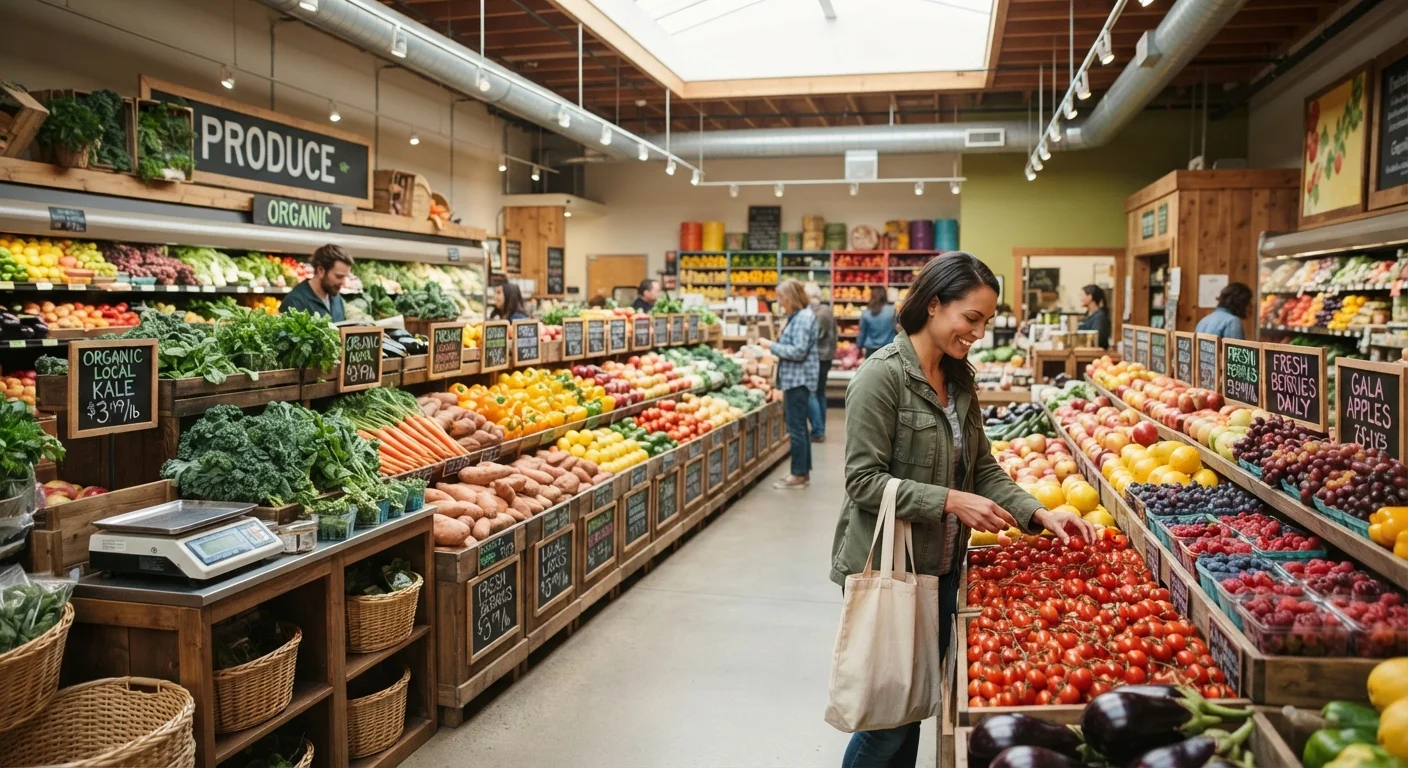
Supermarkets are designed to move you through specific areas and expose you to high-margin products. Understanding that design gives you a small but meaningful advantage. The perimeter of most grocery stores - produce, dairy, meat, fish, and bakery - tends to hold less processed foods. The interior aisles, while not off-limits, concentrate packaged and ultra-processed items.
Shop the perimeter first before moving to interior aisles.
Starting with produce, proteins, and dairy anchors your cart in whole foods and helps limit the mental bandwidth spent resisting heavily marketed packaged products. It also tends to fill your cart before impulse buying takes over.
Build your list around ingredients, not just products.
Lists built around specific ingredients (e.g., "chicken thighs, broccoli, brown rice") give you flexibility at the store while keeping you focused on whole foods rather than packaged meal solutions. This approach also reduces food waste because ingredients cross multiple meals.
Compare unit prices across package sizes before assuming bigger is better.
Larger packages aren't always cheaper per unit, and supersized quantities of perishable foods often lead to waste that erases any savings. Unit pricing removes that guesswork.
Check the ingredient list, not just the nutrition panel.
Ingredients are listed by weight in descending order, which tells you what a product is primarily made of. A bread listing "enriched white flour" as its first ingredient is nutritionally different from one listing "whole wheat flour," even if the calorie counts look similar.
Don't shop hungry - eat a small snack beforehand if needed.
Research consistently shows that shopping while hungry increases the likelihood of selecting higher-calorie, more impulsive purchases. This isn't about willpower; it's a documented cognitive bias linked to short-term hunger cues.
This isn't a rule that whole foods only live on the perimeter, or that every interior aisle is a trap. Canned beans, whole grains, olive oil, and frozen vegetables are all found in interior aisles and are nutritional staples. The point is to move through the store deliberately rather than reactively.
If label reading feels unfamiliar, our plain-language walkthrough of the Nutrition Facts label covers every section from serving size to daily values.
Read Labels With Specific Questions in Mind
Front-of-package claims - "natural," "light," "multigrain" - are marketing language, not regulated health descriptors. The Nutrition Facts panel and ingredient list are where actual information lives.
70%+
Share of U.S. calories from ultra-processed foods
Research published in nutrition epidemiology journals estimates that ultra-processed foods account for more than 70% of the U.S. food supply by product count, underscoring how label literacy matters.
17 tsp
Average daily added sugar intake per American
The CDC has reported that the average American adult consumes roughly 17 teaspoons of added sugar per day, well above the American Heart Association's general reference levels.
A few questions worth asking when you flip a package over: How large is the serving size relative to what you'd actually eat? How much added sugar is listed (distinct from naturally occurring sugars)? Where does sodium land relative to the 2,300 mg daily reference value used on U.S. labels? Is the first ingredient a whole food?
You don't need to scrutinize every item. Focus label-reading energy on the products you buy frequently and in quantity - condiments, cereals, breads, and snacks - where small differences accumulate over time. For a deeper look at how to evaluate nutrition claims more broadly, see our introduction to reading nutrition research.
A Note on "Percent Daily Values"
The %DV figures on a U.S. Nutrition Facts label are based on a 2,000-calorie reference diet, which is a standardized benchmark - not a recommendation for any specific person. Use %DV as a relative comparison tool between products rather than as a personal target. Individuals with specific health conditions, including kidney disease, diabetes, or hypertension, should work with a healthcare provider to understand what targets apply to them.
Use Unit Pricing and Apply It to Nutrition
Unit pricing - the cost per ounce, per pound, or per count displayed on shelf tags - is one of the most underused tools in the grocery store. It lets you compare the true cost between different package sizes and brands without doing mental math on irregular quantities.
Apply the same logic to nutrition: cost per gram of protein, or cost per serving of fiber-rich food, can reveal better value than the sticker price alone suggests. Dried lentils, for example, often deliver more protein and fiber per dollar than many packaged protein snacks.
“The most powerful dietary changes often happen not at the table but in the store. Structuring your environment so that the default choice is also the healthier one is a far more reliable strategy than relying on in-the-moment discipline.”
— Brian Wansinger, Paraphrase representing mainstream behavioral nutrition research on food environment design
Pairing smart unit pricing with nutritional awareness is a habit that pays off in both health and budget terms. The money mindset hub explores related behavioral habits that apply just as well to spending decisions at the grocery store.
This article is for general informational and educational purposes only and does not constitute medical or nutritional advice. Always consult a qualified healthcare professional or registered dietitian for guidance specific to your health needs.