

Travel & Trips

Your Pre-Trip Preparation Checklist

Share
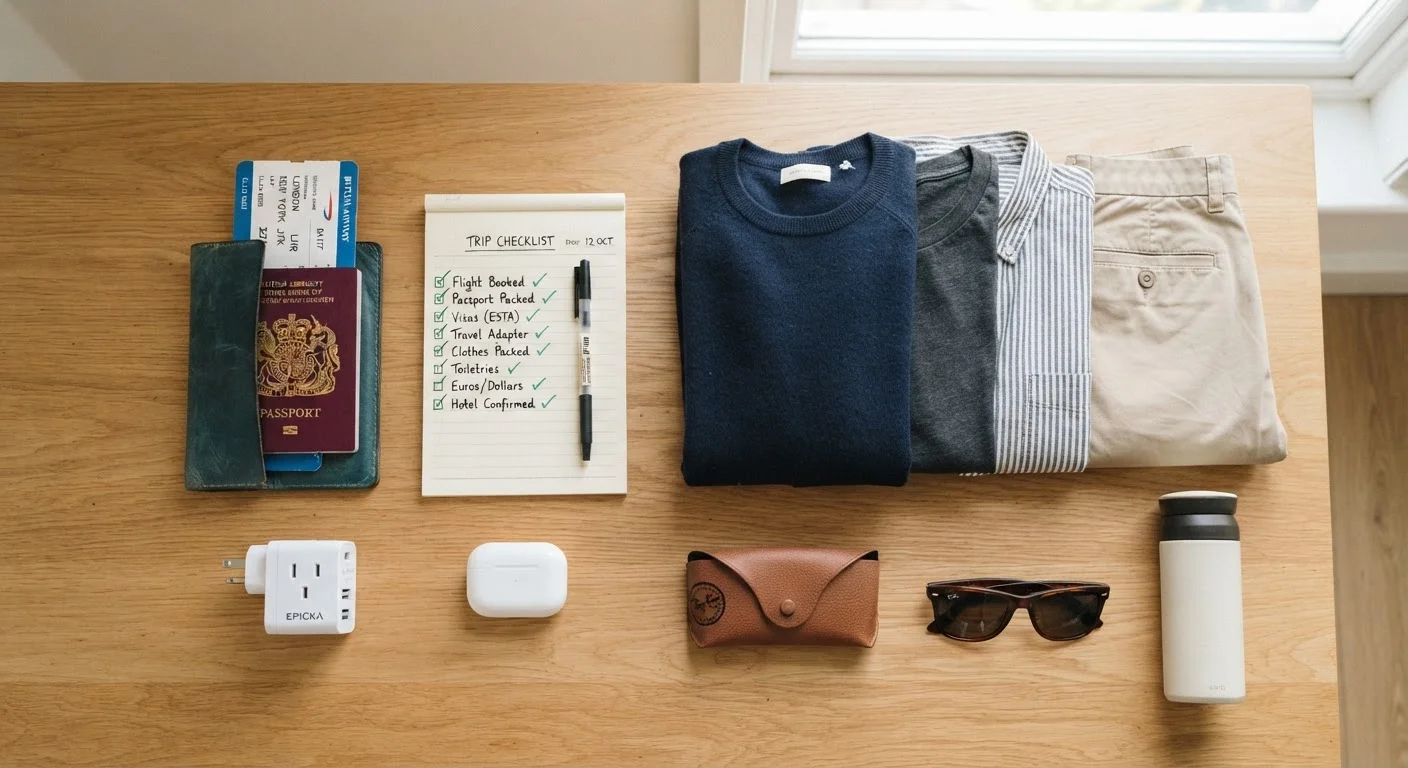
Overhead flat lay of travel essentials including passport, boarding pass, clothes, and a checklist.

Key Takeaways

Start your checklist at least two weeks before departure to leave time for any surprises.
Documents and entry requirements should be verified through official government sources, not assumptions.
A packed emergency kit and digital backup of key documents can save serious stress abroad.
Notifying your bank and setting up travel alerts helps prevent card blocks at the worst moment.
Confirming all reservations 48–72 hours out is one of the simplest ways to avoid trip disruptions.
30–60 min

Summary

24 items · 30–60 minutes

Why a Pre-Trip Checklist Actually Matters

Even experienced travelers forget things. Not because they're careless — but because the mental load of trip planning is genuinely sprawling. A checklist externalizes that load so your brain can focus on enjoying the trip instead of managing anxiety about it.

This checklist is built for any trip: a long weekend road trip, an international adventure, or anything in between. If you're starting earlier in the planning process, our complete trip-planning walkthrough covers the full arc from destination research to day-of logistics. And if your budget is still a work in progress, run through the pre-trip budget checklist before you finalize bookings.

Work through each group below in order — they're sequenced to catch problems early, when you still have time to fix them.

Required

Cloud Storage App (e.g., Google Drive or iCloud)

Store digital copies of your passport, visa, insurance card, and booking confirmations so they're accessible from any device.

Required

Offline Maps App

Download destination maps in advance so you can navigate without cellular data.

Required

Travel Insurance Policy

Provides coverage for trip cancellations, medical emergencies, and lost baggage — review what's covered before departure.

Optional

Universal Power Adapter

Ensures your devices can charge at outlets with different plug standards around the world.

Optional

Translation App

Helps communicate and read signs in countries where you don't speak the local language, especially useful offline.

The Complete Pre-Trip Checklist

These 24 items are organized into four logical phases. Tackle them in sequence: documents and logistics first, then packing, then home prep, then a final 48-hour sweep before you walk out the door.

Documents & Entry Requirements

Confirm your passport is valid for at least six months beyond your return date and has blank pages for stamps. Must
Research and secure any required visas, travel authorizations (like an ETA or ESTA), or entry permits for your destination. Must
Make photocopies and digital scans of your passport, visa, travel insurance card, and any other critical documents — store them in a cloud folder and email them to yourself. Must
Check current travel advisories for your destination through official government sources (e.g., travel.state.gov for U.S. travelers). Must
Confirm whether your destination requires proof of vaccination or health documentation for entry. Should

Reservations & Logistics

Reconfirm all flight, train, or bus bookings and save or print e-tickets with booking reference numbers. Must
Verify hotel, rental, or accommodation reservations 48–72 hours before check-in — confirm address, check-in time, and cancellation policy. Must
Arrange transportation from the airport or station to your accommodation and confirm it's booked or planned. Must
Notify your bank and credit card providers of your travel dates and destinations to prevent fraud blocks. Must
Research whether your destination is primarily cash-based or card-friendly, and carry an appropriate amount of local currency or know where to exchange it on arrival. Should
Check your mobile plan's international coverage and arrange a local SIM, international add-on, or roaming plan if needed. Should

Packing Essentials

Build your packing list around your destination's climate, planned activities, and trip length — then lay everything out before loading the bag. Must
Pack a travel first-aid kit including bandages, pain reliever, antidiarrheal tablets, any prescription medications (with sufficient supply plus a buffer), and copies of prescriptions. Must
Bring a universal power adapter and any necessary charging cables for your devices. Should
Pack a small personal item bag (daypack or tote) for use during excursions, separate from your main luggage. Should
Include photocopies of key documents in your carry-on separately from the originals. Should
Download offline maps, translation apps, and any reservation confirmations to your phone in case you lose connectivity. Nice to have

Home & Final Prep

Arrange for someone to collect mail, water plants, or care for pets while you're away. Must
Set lights and security systems, and ensure all windows, doors, and appliances are secure before leaving. Must
Share your itinerary — including accommodation addresses and flight numbers — with a trusted contact at home. Must
Set up an out-of-office reply for email and any professional or personal accounts that need it. Should
Schedule a bag weigh-in before departure to avoid airline overweight fees. Nice to have
Set a departure alarm with buffer time factored in for traffic, check-in queues, and security screening. Must

Don't Leave Travel Insurance to Chance

Travel insurance is one of those things that feels optional — until you need it. Medical evacuations, trip cancellations, and lost baggage can carry costs that far exceed the policy premium. Review what any policy covers and excludes before you travel, and don't assume your credit card's travel protections are comprehensive. For trip-cost planning more broadly, the Budgeting Basics hub has frameworks that translate well to travel budgeting.

For anything involving international borders — visas, vaccination records, or entry restrictions — always verify current requirements through official government sources. Rules change frequently, and third-party summaries can lag behind. Our article on what to verify before crossing an international border is a useful companion for this step.

Medication Rules Vary by Country

Prescription medications that are legal in the United States may be controlled or prohibited in other countries. Always carry medications in their original labeled containers, bring a copy of your prescription, and research destination-specific rules through official embassy or health authority sources before you pack. If in doubt, contact your healthcare provider and the destination country's embassy well ahead of departure.

Travel & Trips Editorial Team is the collective byline for our editorial team and contributor network. Articles published under this byline or an editorial pen name are researched, written, and reviewed according to our editorial standards for clarity, consistency, and independence before publication.

View all articles by Travel & Trips Editorial Team →
Disclaimer: The content on this site is for informational purposes only and is not a substitute for professional advice. Always consult a qualified professional for guidance specific to your situation.