

Key Takeaways
Our Verdict
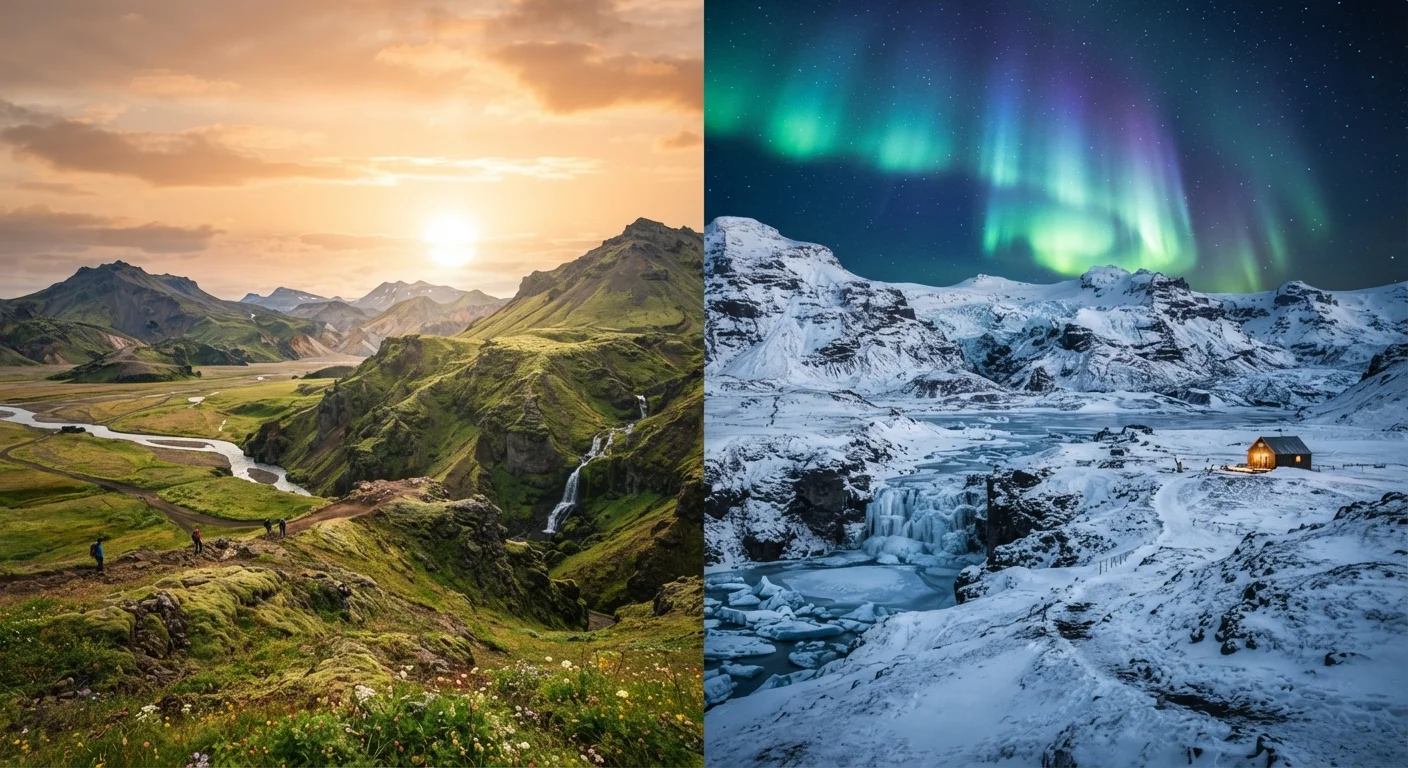
Iceland in summer and Iceland in winter are genuinely distinct experiences rather than variations on a theme. Summer rewards hikers, road-trippers, and those who want maximum flexibility, while winter delivers atmospheric drama and the northern lights at the cost of limited daylight and more challenging driving conditions. Neither season is objectively superior - it comes down to what you want from the trip.
| Best for | Recommended |
|---|---|
| Hikers, road-trippers, and first-time visitors | Summer (June-August) |
| Northern lights seekers and aurora chasers | Winter (November-February) |
| Travelers balancing cost, crowds, and daylight | Shoulder seasons (April-May or September-October) |
| Hot spring and geothermal landscape enthusiasts | Either season - geothermal sites are open year-round |
Daylight: The Factor That Changes Everything
More than any other variable, daylight shapes how Iceland feels. In late June, the sun barely dips below the horizon - the famous midnight sun means you could realistically hike a volcanic ridge at 11 p.m. with full natural light. That extended window allows travelers to cover remarkable ground, squeezing multi-stop Ring Road days into a single itinerary without stress.
Winter flips this completely. By December, Reykjavík gets roughly four to five hours of usable daylight. Museums, thermal pools, and cozy restaurants fill the gaps, but road trips to remote areas require tight planning. The upside? Those long, dark nights are exactly what makes aurora hunting possible. The northern lights require darkness to be visible, and Iceland's winter skies - when clear - can deliver genuinely unforgettable displays.
~22 hrs
Usable daylight in Reykjavík at summer solstice
Near the June solstice, Iceland experiences nearly continuous daylight, with the sun setting only briefly or not at all in northern regions.
4-5 hrs
Daylight hours in Reykjavík in December
Iceland's capital sits just below the Arctic Circle, resulting in extremely short days during the winter solstice period.
Landscape and Access: What You Can Actually See
Summer unlocks Iceland's interior highlands, including the dramatic Landmannalaugar lava fields and the Þórsmörk nature reserve. These areas are only accessible via mountain roads that typically open between late June and early September. For anyone drawn to Iceland's raw, other-worldly volcanic terrain, summer is often the only practical window.
Winter transforms the same island into a monochrome panorama. Snow-capped peaks, frozen waterfalls, and ice caves carved into Vatnajökull glacier - Europe's largest ice cap - are genuinely breathtaking and are often inaccessible or less dramatic in warmer months. Crystal ice caves, for example, are typically only stable and safely accessible from November through March.
| Criteria | Summer (June-August) | Winter (November-February) | |
|---|---|---|---|
| Daylight hours | Up to 22-24 hours | 4-5 hours in December | |
| Northern lights visibility | Not visible (too bright) | Prime viewing season | |
| Highland road access | Open late June-September | Closed entirely | |
| Ice cave tours | Unavailable (unstable ice) | Available November-March | |
| Crowd levels | High - peak tourist season | Low - far fewer visitors | |
| Driving conditions | Generally accessible | Ice, snow, possible closures | |
| Typical temperatures | 50-60°F (10-15°C) | 28-40°F (-2-4°C) |
Coastal attractions like the black sand beaches at Reynisfjara and the Jökulsárlón glacier lagoon are worth visiting in either season, though the mood shifts dramatically - summer light gives them a cinematic warmth, while winter strips them down to something starker and more elemental.
Weather, Crowds, and Practical Realities
Iceland's weather is famously changeable in every season. The local saying - "if you don't like the weather, wait five minutes" - holds year-round. Summer temperatures in Reykjavík typically range from around 50°F to 60°F (10°C to 15°C), which surprises many visitors expecting warmth. Wind and rain are common. Winter adds ice and potential road closures to that equation, with some highland and mountain routes closing entirely.
Winter Driving Requires Serious Preparation
Iceland's winter road conditions can change rapidly. Ice, black ice, and sudden closures are real risks, particularly on Route 1 (the Ring Road) outside Reykjavík. Always check road conditions via the Icelandic Road and Coastal Administration before driving, ensure your rental vehicle is winter-rated, and never underestimate travel time between destinations. Verify entry, insurance, and road requirements with official sources before your trip.
Crowds follow the sun. July and August are peak months, and popular spots like Geysir, Gullfoss, and Seljalandsfoss can feel genuinely busy. Winter sees far fewer international visitors, which some travelers find more appealing - shorter queues, quieter guesthouses, and a sense of having the landscape to yourself. If the trade-offs of off-peak travel interest you, our piece on visiting destinations in shoulder season explores when that approach really pays off.
Making the Call: Questions Worth Asking Yourself
Before booking, consider what you actually want the trip to deliver. Do you prioritize hiking, wildlife spotting, or covering lots of ground independently? Summer gives you the daylight and road access to do all of that comfortably. Are you drawn to aurora photography, ice cave tours, or a more intimate, uncrowded Iceland? Winter is your season, with the understanding that you'll need flexibility for weather delays and limited driving conditions.
Budget is also worth factoring in. Peak summer demand typically pushes accommodation and flight prices higher, though this varies depending on booking timing and flexibility. Neither season is automatically cheaper - it's worth researching current conditions before assuming one will save money over the other.
Iceland in any season rewards curiosity and preparation. Whichever window you choose, waterproof layers, sturdy footwear, and a flexible itinerary will serve you better than a packed schedule that can't absorb the unexpected - which, in Iceland, is practically guaranteed.