

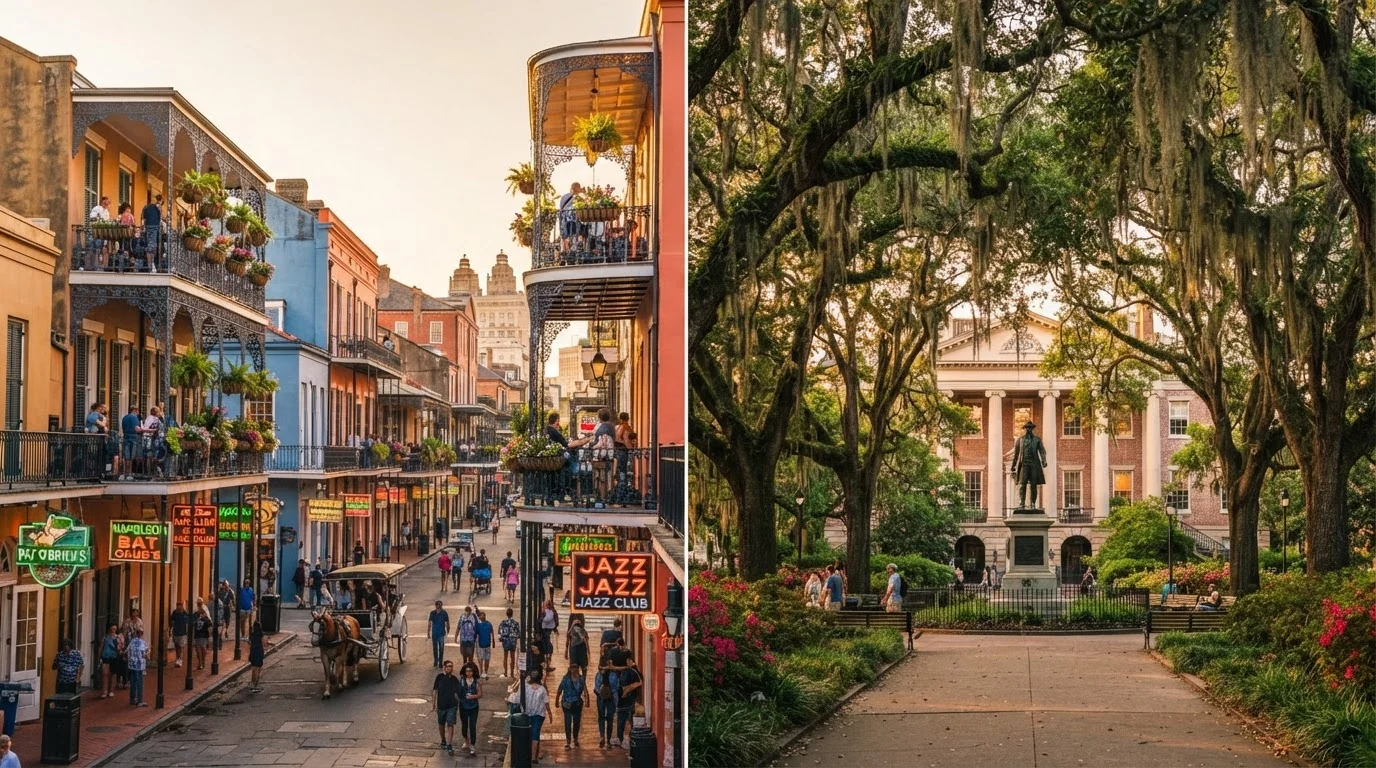
Key Takeaways
Option A
New Orleans, Louisiana
The bold, electric city that never stops celebrating.
Best for: Travelers craving live music, bold Creole cuisine, and an electric street-level energy unlike anywhere else in America.
Option B
Savannah, Georgia
The graceful, unhurried city where history breathes through every square.
Best for: Travelers who prefer a slower, strollable pace with Gothic architecture, moss-draped parks, and refined Southern hospitality.
If you want nonstop live music and legendary nightlife
New Orleans, Louisiana
New Orleans has one of the most celebrated live music cultures on Earth, from jazz clubs on Frenchmen Street to brass bands in the streets. The energy simply doesn't stop.
If you prefer a walkable, peaceful city break with rich history
Savannah, Georgia
Savannah's 22 historic squares are tailor-made for unhurried exploration. The city is compact, safe to walk, and rewards slow, curious travelers at every turn.
If food is your top travel priority
New Orleans, Louisiana
Consistently ranked among America's top food cities, New Orleans offers a depth and distinctiveness of cuisine - gumbo, beignets, po'boys - that is hard to rival.
If you're traveling with family or prefer a quieter atmosphere
Savannah, Georgia
Savannah's riverfront, parks, and historic district feel approachable for all ages and travel styles, without the overwhelming intensity of Bourbon Street.
If you want to combine two Southern cities into one trip
New Orleans, Louisiana
New Orleans makes a natural anchor city for a broader Gulf Coast or Southern road trip. See our multi-city trip planning guide for sequencing both destinations efficiently.
Atmosphere and Street-Level Energy
Walk onto Bourbon Street at 9 p.m. and you'll immediately understand what New Orleans is about: brass instruments, the smell of frying food, crowds spilling off sidewalks, and a sense that the night is just getting started. The French Quarter is dense, sensory, and unapologetically loud - and that's precisely what draws millions of visitors each year.
Savannah operates on an entirely different frequency. Its 22 landmark squares - grassy, shaded by ancient live oaks draped in Spanish moss - function as the city's living rooms. People linger. Dogs are walked. Visitors sit on benches and simply take it in. Even the busiest corridors, like Broughton Street or River Street, feel measured and gracious compared to New Orleans' intensity.
Neither atmosphere is better - they serve different travel moods. Understanding that difference upfront saves a lot of mismatched expectations. As we explore in how urban tourism shapes a destination, the built environment of a city profoundly influences how visitors experience it.
| Criterion | New Orleans, LA | Savannah, GA |
|---|---|---|
| Overall pace | High-energy, immersive | Relaxed, unhurried |
| Signature cuisine | Creole and Cajun | Lowcountry Southern |
| Music scene | World-class jazz and brass | Smaller, arts-focused |
| Walkability | Good in core neighborhoods | Excellent throughout historic district |
| Family-friendliness | Mixed - some areas adult-oriented | Generally family-friendly |
| Signature landmarks | French Quarter, Garden District | 22 historic squares, Forsyth Park |
| Major annual events | Mardi Gras, Jazz Fest | St. Patrick's Day parade, SCAD events |
Food, Music, and Culture
New Orleans is one of the few American cities with a cuisine so distinct it belongs in its own category. Gumbo, étouffée, red beans and rice, beignets, po'boys - the food here is rooted in a layered Creole and Cajun heritage influenced by French, African, Spanish, and Native American traditions. The music scene is equally deep: jazz didn't just pass through New Orleans, it was born here.
Savannah's culinary identity draws from Lowcountry cooking - shrimp and grits, she-crab soup, boiled peanuts, and peach-based desserts. It's soulful, ingredient-forward cooking that reflects coastal Georgia's landscape. The cultural life leans toward visual arts (the Savannah College of Art and Design has a significant presence), ghost tours, and live storytelling.
22
Historic squares preserved in Savannah's downtown
Savannah's original town plan, laid out in 1733, designated these squares - most still intact and publicly accessible today.
~500,000
Visitors during New Orleans Jazz Fest annually
The New Orleans Jazz & Heritage Festival typically draws hundreds of thousands of attendees over its multi-weekend run each spring.
Top 5
Ranking of New Orleans among U.S. food cities
New Orleans consistently appears in top-tier rankings of American food destinations by major travel and culinary publications.
Both cities hold major festivals throughout the year. New Orleans is synonymous with Mardi Gras and Jazz Fest, while Savannah hosts the nation's second-largest St. Patrick's Day parade. Timing a visit around a major event can transform either city - but also bring dramatically larger crowds and higher accommodation costs.
Practical Considerations for Travelers
Getting around New Orleans is easiest on foot within the French Quarter and nearby neighborhoods like the Marigny and Garden District. The city's streetcar lines cover broader distances reliably. Rideshares are widely available. Savannah's historic district is extremely walkable - many travelers never need a car at all once they've arrived downtown.
Climate matters for both. Southern summers are humid and hot in ways that can genuinely affect how much you enjoy walking outdoors. Spring and fall are generally the most comfortable seasons for either destination, though both attract peak crowds during those windows. Always verify current entry conditions, local events, and accommodation availability directly with official tourism resources before booking.
Check Conditions Before You Travel
Both New Orleans and Savannah sit in hurricane-prone regions of the South. Hurricane season runs June through November, and conditions can change quickly. Always review official weather forecasts, local advisories, and government travel resources before finalizing travel dates. Travel insurance that covers weather disruption is worth considering for trips to either city during peak hurricane months.
Budget travelers should note that both cities have a wide range of lodging options, from historic bed-and-breakfasts to larger hotels. Costs vary significantly by season and proximity to major events. For travelers considering both cities in one trip, see our guide to planning multi-city trips for realistic logistics and pacing strategies.