

Key Takeaways
Our Verdict
The 50/30/20 rule is an excellent starting point for those new to budgeting or working with a stable income, but it lacks the granularity some situations demand. Zero-based budgeting suits detail-oriented planners; the envelope system works well for cash-based spenders; and pay-yourself-first is powerful for anyone who struggles to save consistently. The strongest budget is the one you'll stick with.
| Best for | Recommended |
|---|---|
| Beginners or those wanting a low-maintenance framework | 50/30/20 Rule |
| People with variable income or complex spending patterns | Zero-Based Budgeting |
| Overspenders who benefit from physical spending limits | Envelope System |
| Those who consistently fail to save before spending | Pay-Yourself-First |
What the 50/30/20 Rule Actually Does
The 50/30/20 rule allocates after-tax income into three broad categories: 50% toward needs (housing, utilities, groceries, minimum debt payments), 30% toward wants (dining out, entertainment, subscriptions), and 20% toward savings and debt repayment. Its appeal is simplicity - three buckets, no spreadsheets required.
For a full breakdown of how the rule works in practice, see our guide to the 50/30/20 budget rule. The short version: it works best for people with predictable monthly income whose essential expenses genuinely fall around 50% of take-home pay. In high cost-of-living cities - where rent alone can consume 40-50% of income - the math strains quickly.
Start With Your Actual Numbers
Before choosing a budgeting method, pull three months of bank and credit card statements and categorize your real spending. Many people discover their 'needs' already exceed 50% of take-home pay - a finding that shapes which framework will be realistic. Honest baseline data prevents the frustration of adopting a method that doesn't fit your actual financial situation.
How the Alternatives Compare
Three methods are most commonly set against the 50/30/20 rule:
- Zero-based budgeting assigns every dollar of income to a named category until the balance reaches zero. Income minus allocations equals zero - nothing is left unaccounted for. This approach demands more time upfront but eliminates ambiguity about where money goes. Zero-based budgeting is particularly valuable when income fluctuates month to month.
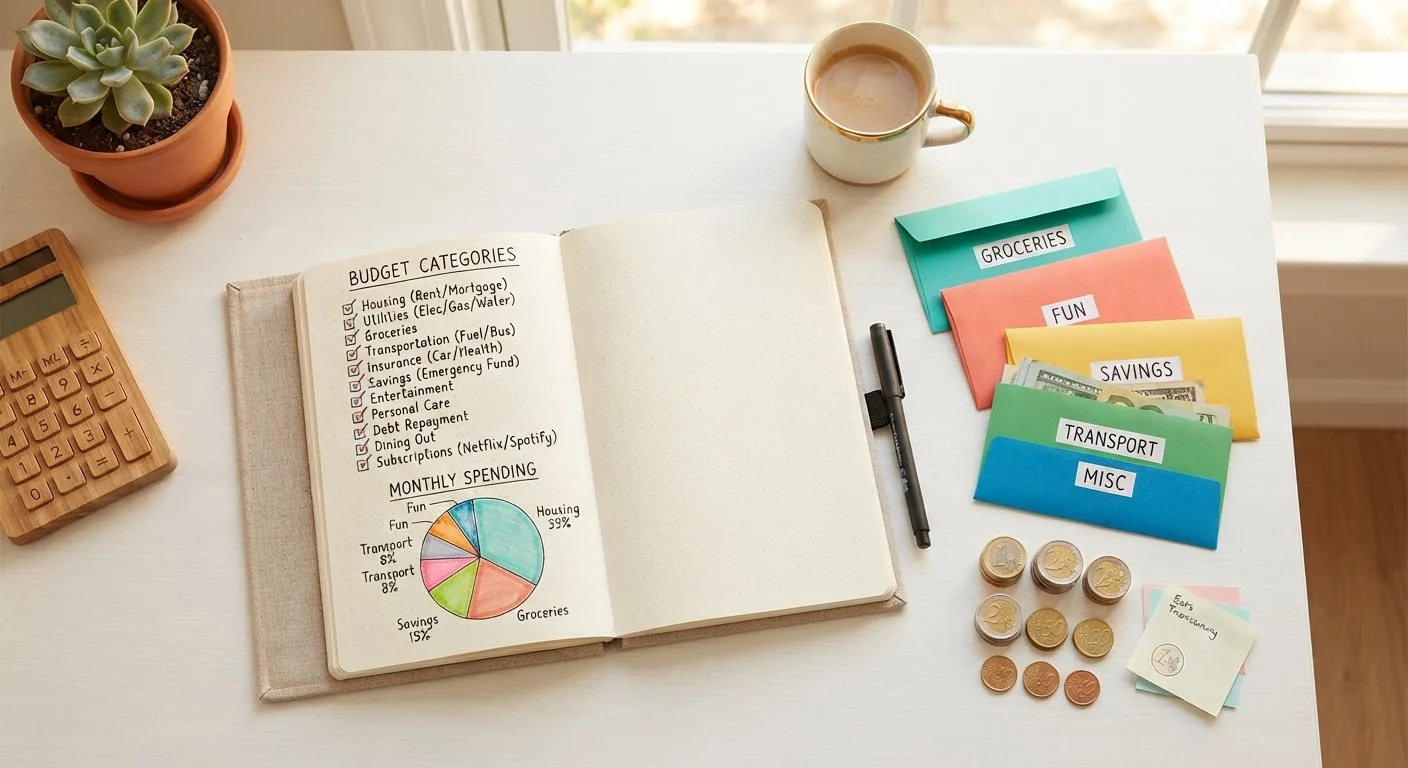
- The envelope system divides physical cash (or digital equivalents) into labeled envelopes for each spending category. When an envelope is empty, spending in that category stops. It introduces a tactile, immediate spending constraint that percentage-based rules don't. Learn more in our guide to the envelope system.
- Pay-yourself-first reverses the typical sequence: savings are transferred automatically on payday before any discretionary spending begins. Whatever remains covers living expenses and wants. This method sidesteps the willpower problem entirely by removing the choice.
| 50/30/20 Rule | Zero-Based Budgeting | Envelope System | Pay-Yourself-First | |
|---|---|---|---|---|
| Complexity | Low | High | Medium | Low |
| Time commitment | Minimal | Weekly review needed | Ongoing category tracking | Minimal after setup |
| Best income type | Stable/salaried | Variable or irregular | Any | Any |
| Savings discipline required | Moderate | High | Moderate | Low - automated |
| Spending visibility | Broad categories only | Highly detailed | Category-by-category | Total spend only |
| Flexibility | High | Low to moderate | Low | High |
| Ideal for | Beginners | Detail-oriented planners | Impulse spenders | Chronic undersavers |
Choosing the Right Framework for Your Life
The choice between these methods isn't purely technical - it's behavioral. Before selecting a framework, it helps to honestly assess your spending patterns and financial blind spots. Reflecting on your existing money habits can surface tendencies you may not have consciously recognized.
A few practical considerations:
- Income stability: Salaried workers with fixed expenses can often make the 50/30/20 rule work without modification. Freelancers, gig workers, and those with irregular income usually benefit from zero-based budgeting's monthly recalibration.
- Savings track record: If you consistently intend to save but find the money spent before month-end, pay-yourself-first removes that friction by automating the decision.
- Overspending in specific categories: If restaurants or online shopping routinely blow your budget, the envelope system's hard limits - physical or digital - provide accountability that percentage rules don't.
- Time available: Zero-based budgeting requires the most active management; the 50/30/20 rule the least. Match the method to the time you'll realistically commit.
Rigid Rules Can Backfire
Treating any budgeting framework as an inflexible law rather than a guideline often leads to all-or-nothing thinking - one overspent category feels like total failure, and the budget gets abandoned. Personal finance research consistently suggests that flexibility and self-compassion are associated with longer-term adherence to financial plans. Adjust the percentages or categories to reflect your real life, not an idealized version of it.
Many people find success with a hybrid approach - for example, using pay-yourself-first to automate savings, then applying loose 50/30/20 ratios to the remainder. The goal of any budget is to align daily decisions with longer-term priorities, not to follow a framework perfectly. See the Money Mindset hub for more on building lasting financial habits.
This article is for general informational and educational purposes only. It does not constitute personalized financial advice. Consider consulting a licensed financial professional before making significant changes to your financial plan.