
Sentimental Clutter: Why It's the Hardest Kind to Address and How People Work Through It

Key Takeaways
Why Sentimental Objects Are a Different Challenge Entirely
Anyone who has breezed through clearing out a kitchen junk drawer and then spent three hours frozen in front of a box of childhood mementos already understands the gap. Standard decluttering logic - do I use it, does it earn its space? - simply doesn't apply when an object carries emotional weight. A cracked ceramic figurine from a late grandparent isn't competing on the merits of its function. It's holding a relationship, a period of life, a version of you that no longer exists.
The difficulty isn't weakness or indecisiveness. Research suggests our brains process meaningful objects differently from ordinary possessions, linking them to autobiographical memory and identity in ways that trigger real discomfort when we consider letting go. If you've noticed that clutter from other categories feels mentally lighter to address, understanding what disorganized space does to your brain may provide useful context for why the emotional toll of sentimental clutter feels especially heavy.
The strategies below won't make the process painless - they aren't supposed to. What they can do is give you a more workable framework so the task doesn't stall indefinitely.
Start With Lower-Stakes Sentimental Items
If you're new to addressing sentimental clutter, don't open the box of photographs or the late parent's belongings first. Begin with lower-stakes categories - a drawer of birthday cards, a shelf of novelty souvenirs - to build your decision-making confidence before moving to higher-weight items. This lets you develop a personal framework before the emotional difficulty peaks.
Ways People Work Through Sentimental Clutter
Separate the object from the memory
One of the most freeing reframes in sentimental decluttering is this: the memory doesn't live in the object. A childhood blanket doesn't contain your love for a grandparent - you do. Many people find that once they explicitly name what a possession represents (a relationship, a milestone, a lost person), they feel more able to assess whether the physical item itself still needs to stay.
This isn't about talking yourself out of keeping things. It's about making the decision consciously rather than by default. Some items will still clearly belong with you after this reflection. Others reveal themselves as placeholders for something you were already carrying inside.
The memory doesn't live in the object - you carry it regardless of what you keep.
Name guilt as a reason - and then examine it
A significant portion of sentimental clutter is kept not from love but from obligation. Gifts from people who are still living, heirlooms passed down with expectation attached, items from relatives who "would have wanted you to have it" - these often generate guilt rather than warmth when encountered.
Recognizing guilt as the primary driver (rather than genuine attachment) doesn't automatically make it easy to let something go, but it does clarify the decision. Keeping an item purely to avoid guilt places an emotional tax on your home without yielding the benefit of a meaningful memory. It's worth asking: if this came with no history attached, would I choose to bring it in?
Keeping an item purely out of obligation places a quiet emotional tax on your home.
Use the "postpone, don't force" method for hard items
Forcing a decision on a difficult item in the middle of an active decluttering session often leads to either regret (if you let it go too quickly) or paralysis (if you can't bring yourself to decide). A middle path that many people find useful: set genuinely uncertain items aside in a clearly labeled temporary box with a review date - typically six months to a year out.
This isn't indefinite procrastination. It's a structured pause. When the date arrives, you'll encounter the item with fresh emotional distance. Many people discover that either the attachment has clarified (they clearly want to keep it) or it has faded enough to let go without distress.
A structured pause often provides the emotional distance that a forced decision never can.
Digitize what the object represents, not the object itself
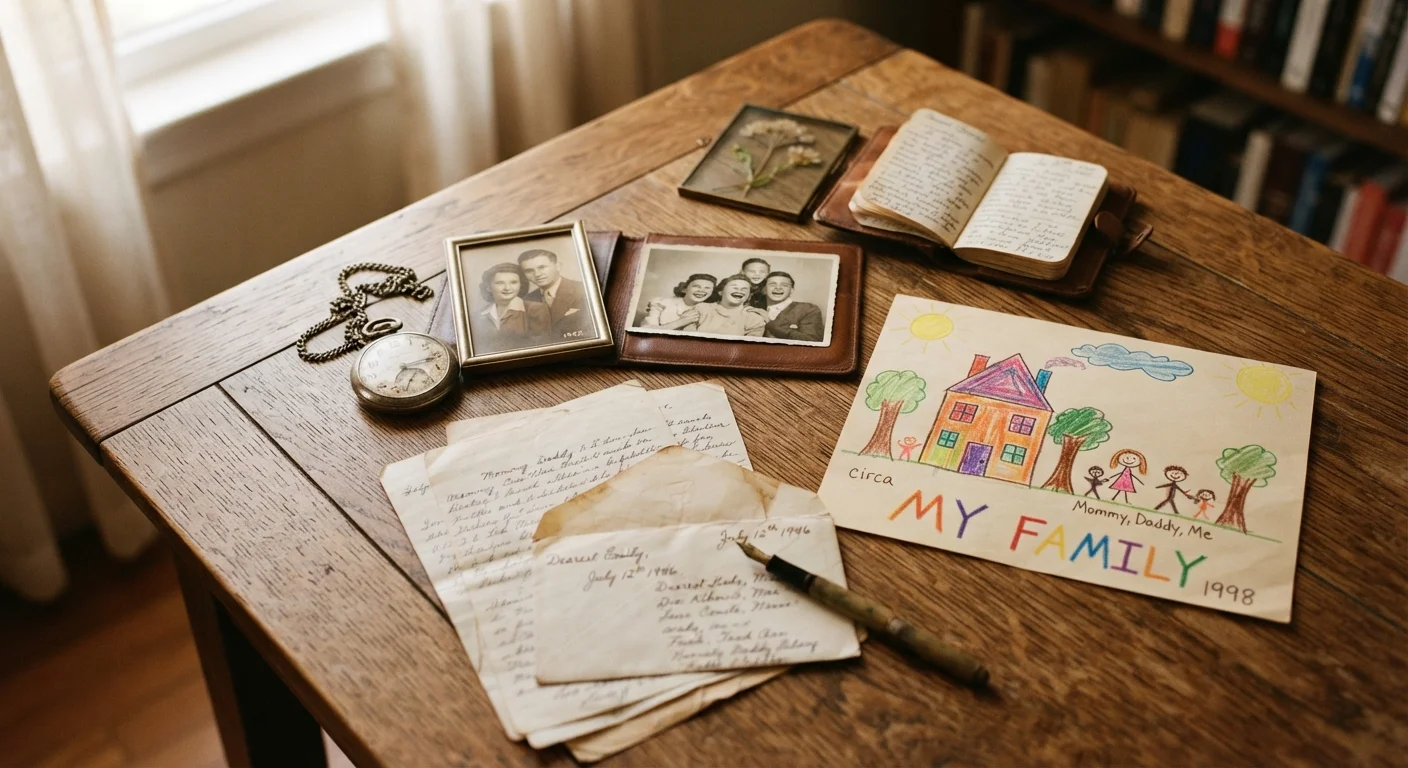
Photographs, children's artwork, handwritten letters, and report cards all carry meaning that can often be preserved digitally without losing what matters most. Scanning or photographing these items - and organizing them into a dedicated digital archive - allows people to release the physical originals while retaining the visual and contextual record.
This approach won't work for everyone or every item; some people find digital copies feel hollow compared to holding the original. But for those who are overwhelmed by volume - boxes of photos, years of school projects - digitization can meaningfully reduce physical load while honoring the intention behind keeping things in the first place.
Digitizing keepsakes can honor memory without requiring every original to occupy physical space.
Repurpose meaningful items into something actively used
Rather than storing a loved one's clothing in a bin that never gets opened, some families have garments made into quilts. Rather than boxing up a collection of vintage maps, someone might frame the most meaningful one. Repurposing transforms a stored memory into a living part of the home - one that gets seen and appreciated rather than tucked away out of a sense of duty.
This approach requires some upfront effort and cost, and it won't suit every item. But where it works, it resolves the tension between wanting to keep something and not knowing what to do with it.
Transforming a stored item into something actively displayed turns obligation into genuine appreciation.
Curate with intention using a defined physical boundary
One practical boundary that many organizers recommend: give sentimental items a fixed container - a single memory box, a specific shelf, a dedicated drawer - and treat that space as the limit. When it's full and something new needs to come in, something else needs to go.
This isn't about being cold toward meaningful possessions. It's about being deliberate. A curated collection of 20 truly meaningful items will surface and be appreciated far more often than 200 items buried in storage. The constraint also forces a kind of ranking: which items, among everything you're holding onto, actually represent what you most want to remember? For more on how to build sustainable habits that keep collections from re-expanding, one-in one-out and zero-based decluttering strategies offer useful frameworks.
A curated collection of 20 meaningful items gets seen far more often than 200 buried in storage.
Offer items to people who will genuinely use them
Letting go of a sentimental item feels entirely different when it goes to someone who will actually engage with it. Passing a grandparent's tools to a family member who woodworks, or giving a relative's vintage cookware to someone who cooks regularly, allows the object to carry its history forward in use rather than dormancy.
This requires some communication and willingness to have potentially awkward conversations about who might want what - but the result is often that both parties feel better. The giver gets to release without guilt; the recipient gets something with history. Items that have no takers within the family can often find purpose through community organizations, historical societies, or similar groups, depending on their nature.
An item that passes to someone who will use it carries its history forward in the best possible way.
There Is No Universal Right Answer
How much sentimental material to keep is a deeply personal question, and there's no objectively correct amount. What matters is that the items you retain are accessible, intentionally chosen, and actually contribute to your sense of home - rather than generating ongoing guilt, overwhelm, or avoidance. If sentimental clutter is connected to grief or trauma, working with a counselor or therapist alongside any organizational approach can be genuinely helpful.
Moving Forward Without Losing What Matters
Addressing sentimental clutter is rarely a single session - it tends to unfold gradually, often revisited as life circumstances change. That's not failure; it reflects the genuine complexity of the task. If you find yourself accumulating items faster than you're working through them, understanding the hidden costs of keeping too much stuff can help clarify what's actually at stake when a home becomes storage for unresolved decisions.
For those just beginning the broader work of organizing their home, starting a home organization project from scratch is a practical place to establish momentum before tackling the harder emotional categories. The goal isn't to end up with fewer memories - it's to end up with a home where the things you choose to keep can actually be seen, used, and appreciated.