

Key Takeaways
Start here
Choosing the Right Location
Next
Planning Your Garden Layout
Then
Preparing and Improving Your Soil
Ready to plant
Selecting and Planting Vegetables
Keep it growing
Watering, Feeding, and Ongoing Care
Choosing the Right Location
The single most critical decision you'll make for your vegetable garden is where to put it. Most food-producing vegetables - tomatoes, peppers, beans, squash - require a minimum of six hours of direct sunlight per day. Leafy greens like lettuce and spinach can tolerate four to five hours, but they'll still perform better with more light. Walk your yard at different times of day over a few days and note where sun falls consistently.
Beyond sunlight, consider these factors:
- Drainage: Avoid low-lying spots where water pools after rain. Roots sitting in saturated soil are highly susceptible to rot and disease.
- Proximity to water: You'll be watering frequently, especially when plants are young. Choose a spot within reach of a hose or install a rain barrel nearby.
- Protection from wind: A sheltered location - near a fence or wall - can prevent physical damage to plants and reduce soil moisture loss.
USDA Hardiness Zone
A geographic designation that indicates the average annual minimum winter temperature in your area. It helps gardeners know which plants are likely to survive and when to plant seasonal crops.
Last Frost Date
The approximate date in spring after which freezing temperatures are unlikely in your area. Warm-season vegetables should not be planted outdoors until after this date.
Raised Bed
A garden bed built above ground level, typically framed with wood or other materials and filled with specially prepared soil. Raised beds improve drainage and allow better control over soil quality.
Soil pH
A measure of how acidic or alkaline your soil is, on a scale from 0 to 14. Most vegetables grow best in slightly acidic to neutral soil, roughly between 6.0 and 7.0.
Direct Sow
Planting seeds directly into the garden bed rather than starting them indoors first. Crops like beans, carrots, and radishes are commonly direct-sown because they don't transplant well.
Compost
Decomposed organic material - such as food scraps, leaves, and grass clippings - used as a soil amendment to add nutrients and improve soil structure.
Planning Your Garden Layout
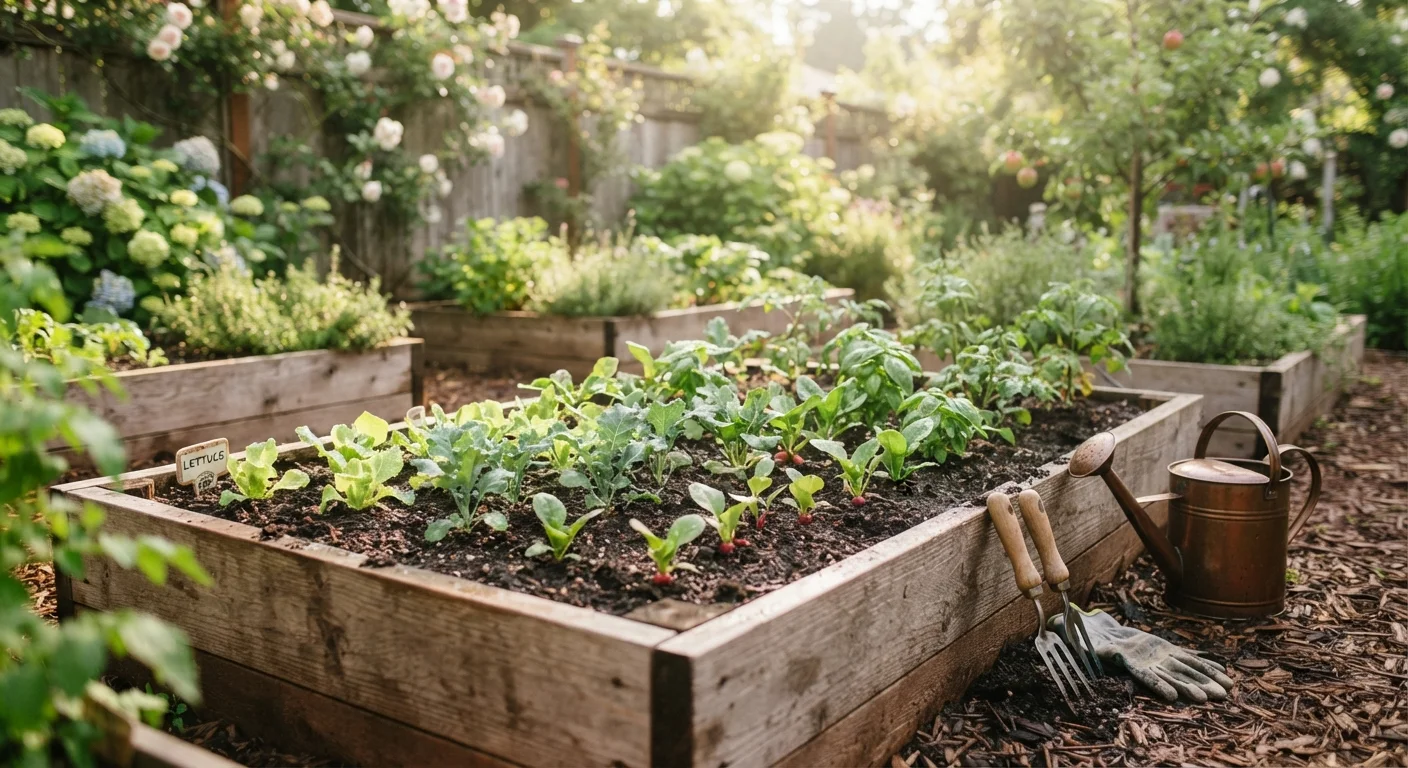
Resist the urge to dig up a large area right away. A 4×4-foot or 4×8-foot raised bed is more than enough to learn the fundamentals and produce a satisfying harvest. Raised beds warm up faster in spring, drain well, and let you fill them with ideal soil from the start.
Sketch your layout on paper before planting. Group plants with similar needs together - tall crops like tomatoes on the north side so they don't shade shorter plants. Leave at least 18 inches of walking space around any bed so you can reach the center without compacting the soil by stepping in it.
If building a raised bed isn't practical, in-ground rows work well, too. Till or loosen a defined rectangular patch, mark rows with stakes and string, and keep that area distinct from foot-traffic zones. Even a few large containers on a sunny deck can support herbs, lettuce, and compact vegetable varieties.
Preparing and Improving Your Soil
Healthy soil is the foundation of a productive garden. Vegetable plants need soil that is loose enough for roots to penetrate, rich in organic matter for nutrients, and well-draining so roots aren't waterlogged. Before planting, consider getting a basic soil test - many cooperative extension offices offer them affordably - to understand your soil's pH and nutrient levels.
Most vegetables thrive in a pH range of 6.0 to 7.0. If your soil is too acidic, adding garden lime can raise pH. If it's too alkaline, sulfur-based amendments can lower it. Regardless of your starting point, mixing in a generous layer of finished compost - at least two to three inches worked into the top foot of soil - improves texture, drainage, and fertility in almost every soil type.
For raised beds, a common starting mix is one-third compost, one-third topsoil, and one-third a coarse amendment like perlite or aged bark fines. This creates the loose, moisture-retaining structure vegetables love. Learn more about creating your own compost amendments with our guide on composting kitchen scraps into garden amendment.
Amend Before You Plant
The easiest time to improve your soil is before any plants go in. Work compost into the full depth of the bed - not just the surface - so roots encounter good structure as they grow deeper. Even a modest investment in soil preparation at the start saves significant effort in watering, fertilizing, and troubleshooting later in the season.
Selecting and Planting Vegetables
Choose crops that match your climate and the current season. Cool-season vegetables - lettuce, spinach, peas, radishes, broccoli - grow best when temperatures are between 45°F and 65°F. Warm-season crops - tomatoes, cucumbers, zucchini, beans, peppers - need soil temperatures above 60°F and shouldn't go outdoors until after your last frost date.
For beginners, these varieties are reliably productive and forgiving:
- Cherry tomatoes - produce heavily, less prone to cracking than large varieties
- Bush green beans - direct sow seeds, no staking needed, quick to harvest
- Zucchini - prolific and fast-growing, great confidence builder
- Lettuce - cut-and-come-again harvesting, works in partial shade
- Radishes - ready in as few as 25 days, ideal for impatient first-timers
Check seed packets and plant tags for spacing requirements. Overcrowding is one of the most common beginner mistakes - it reduces airflow, invites disease, and forces plants to compete for resources. When in doubt, plant fewer and space wider.
Watering, Feeding, and Ongoing Care
Most vegetable gardens need roughly one inch of water per week. Water deeply two or three times per week rather than a little every day - deep watering encourages roots to grow downward, making plants more drought-resilient. Morning watering is preferable because it lets foliage dry before evening, reducing fungal disease risk. A simple drip irrigation kit or soaker hose at the base of plants is one of the most practical investments a new gardener can make.
Mulching the soil surface with two to three inches of straw, shredded leaves, or wood chips conserves moisture, moderates soil temperature, and suppresses weeds. This one step can dramatically reduce how often you need to water.
Walk through your garden every few days with a critical eye. Early detection of pests - aphids, caterpillars, squash bugs - gives you options before populations become damaging. Many pest problems can be managed by hand-picking, rinsing plants with water, or introducing beneficial insects. Check for yellowing leaves, which can indicate overwatering, nutrient deficiency, or disease.
Keeping a simple garden journal - noting what you planted, when, and how it performed - pays dividends the following season. Just as thoughtful planning helps in other areas of life (like starting a household budget from scratch), tracking your garden's outcomes helps you make smarter decisions year after year.
Don't Overwater Seedlings
Consistently soggy soil is one of the fastest ways to lose young plants to root rot and fungal disease. Before watering, push a finger an inch into the soil - if it still feels moist, wait another day. Erring toward slightly dry is generally safer than keeping soil perpetually wet, particularly in heavy clay soils that drain slowly.