

Key Takeaways
Start here
Why Electrical Work Is Different From Other DIY
Next
Tasks Most Homeowners Can Handle Safely
Important boundary
Work That Requires a Licensed Electrician
Know the rules
Permits, Codes, and Why They Exist
Before you begin
Essential Safety Habits Before You Touch Anything
Why Electrical Work Is Different From Other DIY
Electrical repairs sit in a different category than patching drywall or replacing a faucet. Mistakes with wiring can cause house fires, electrocution, or damage that goes undetected for months before becoming dangerous. That doesn't mean homeowners should be afraid of every outlet - it means understanding the stakes clearly before deciding what to take on.
The risks are not hypothetical. According to the U.S. Fire Administration, electrical failures and malfunctions are among the leading causes of residential structure fires. Most of those incidents are preventable with proper knowledge, correct materials, and knowing when a job is genuinely beyond DIY territory.
See our guide to knowing when to call a pro for a broader look at which home repairs belong in which category.
Circuit breaker
A safety switch in your electrical panel that automatically cuts power to a circuit when it detects an overload or fault. You can also flip it manually to shut off power before doing electrical work.
GFCI outlet
A Ground Fault Circuit Interrupter outlet that shuts off power within milliseconds if it detects an electrical imbalance, reducing shock risk. Required by code in wet areas like kitchens, bathrooms, and outdoors.
Non-contact voltage tester
An inexpensive handheld tool that detects the presence of live electrical current without touching any wire. It beeps or lights up near a live circuit, giving you a reliable safety check before working.
NEC (National Electrical Code)
A nationally recognized set of electrical installation standards that most U.S. states adopt, sometimes with local modifications. It defines safe wiring practices and is the basis for electrical permit inspections.
Licensed electrician
A tradesperson who has completed formal training and passed licensing exams to legally perform electrical work. Most jurisdictions require certain types of electrical work to be done or supervised by a licensed electrician.
Electrical permit
Official government authorization to perform specific electrical work, followed by an inspection to confirm the work meets code. Required for most projects beyond simple device replacements in many jurisdictions.
Tasks Most Homeowners Can Handle Safely
Several common electrical tasks are considered low-risk when approached correctly, and many homeowners complete them without incident every day. These generally involve replacing existing devices - not adding new circuits or modifying the panel.
- Replacing an outlet or switch: Swapping a standard outlet or toggle switch for a new one of the same type is straightforward, provided the power is confirmed off and the existing wiring is in good condition.
- Installing a ceiling fan on an existing fixture: If a ceiling box is already rated for a fan's weight and motion, replacing a light fixture with a fan is typically manageable.
- Replacing a light fixture: Swapping like-for-like light fixtures - same wiring, same box - is generally within reach for careful beginners.
- Resetting a tripped GFCI outlet: Pressing the reset button on a GFCI outlet requires no tools and is completely safe.
- Replacing a worn electrical cover plate: Purely cosmetic, zero electrical risk once you confirm the screws don't contact live wires.
Before attempting any of these, make sure your home's existing wiring is in sound condition. If you see signs of scorching, melted insulation, or aluminum branch wiring (common in homes built between roughly 1965 and 1973), consult a licensed electrician first.
Work That Requires a Licensed Electrician
Some electrical work should never be a DIY project, regardless of the homeowner's confidence level. These tasks involve higher voltage, connection to the utility service, or complexity that requires professional training, proper licensing, and often a permit.
Never Work Inside Your Main Panel
Even with the main breaker switched off, the wires entering your panel from the utility are always live. There is no safe way for a homeowner to de-energize those conductors. Any work that requires opening or modifying the panel must be performed by a licensed electrician.
- Electrical panel upgrades or replacement: The main panel handles your home's entire electrical load. Working inside it exposes you to potentially lethal voltages that cannot be shut off at the breaker.
- Adding new circuits: Running new wiring through walls, connecting to the panel, and sizing breakers correctly requires knowledge of local electrical codes and is typically permit-required.
- Service entrance work: Any work near the point where utility power enters your home is strictly for licensed professionals and utility workers.
- Knob-and-tube or aluminum wiring repairs: These older wiring systems require specialized assessment and handling.
- Outdoor or underground wiring: Buried conduit, outdoor subpanels, and landscape circuits carry code requirements that vary by jurisdiction.
If you're uncertain whether a job crosses the line, it almost certainly does. Review our common repair myths article - one of the most persistent misconceptions is that electrical work is interchangeable in difficulty.
Permits, Codes, and Why They Exist
Electrical codes - primarily based on the NEC, which most states adopt with local amendments - exist to standardize safe installation practices. Permits and inspections are the enforcement mechanism that ensures work meets those standards.
Skipping a required permit is not just a technicality. It can:
- Complicate or invalidate an insurance claim if an electrical fire occurs
- Create disclosure obligations or deal-breakers during a home sale
- Result in a mandatory removal and re-inspection at your expense
What requires a permit varies by location. Many jurisdictions exempt simple like-for-like replacements (outlet for outlet, fixture for fixture), but require permits for any new circuit, panel work, or structural wiring changes. Your local building department is the authoritative source - a quick phone call or website visit before you start is always worth it.
Call Before You Start - It's Free
Your local building department can tell you in minutes whether your planned project requires a permit. Most offices handle these questions by phone or have information on their website. A quick check upfront is far less costly than addressing permit issues after the work is done.
Essential Safety Habits Before You Touch Anything
Whether you're replacing a single outlet or installing a ceiling fan, these habits apply every single time:
- Turn off the breaker for the circuit you're working on - not just the switch.
- Test with a non-contact voltage tester at the device itself. Testers are inexpensive and can be found at any hardware store. Never skip this step - mislabeled panels are common.
- Use one hand when possible near any wiring. Keeping one hand away from conductive surfaces reduces the risk of current passing through your chest.
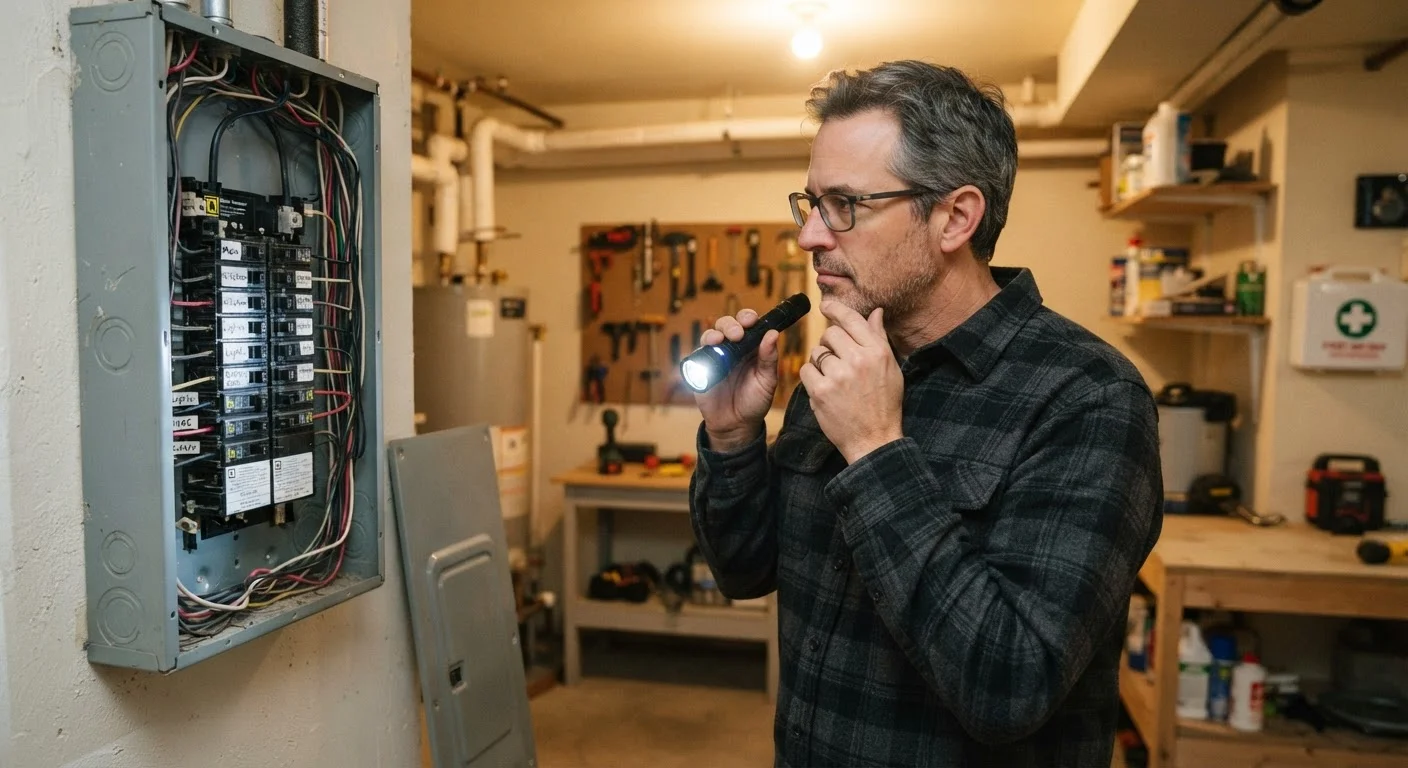
- Work in good lighting. A battery-powered work light is worth using since you've cut the power.
- Don't rush. Electrical mistakes typically happen when homeowners get impatient or skip a verification step.
Building the habit of having the right tools on hand matters too. Our DIY homeowner's toolkit guide covers the essentials worth keeping ready before any repair situation arises.
This article provides general educational information about home electrical safety. It is not a substitute for professional electrical advice. Always consult a licensed electrician for work involving your home's electrical system, and verify local permit requirements with your municipal building department before starting any project.