

| Recommended hammer weight | 16 oz. curved claw |
| Most versatile tape measure length | 25 ft. |
| Priority power tool for most homes | Cordless drill/driver |
| Key drill feature to prioritize | Variable torque settings |
| Preferred battery type for power tools | Lithium-ion |
| Minimum personal safety gear | Safety glasses, work gloves, hearing protection |
| Work typically requiring a licensed pro | Electrical panel, gas lines, structural/load-bearing work (Requirements vary by local jurisdiction) |
Start With What You'll Actually Use
Building a toolkit isn't about buying everything at once - it's about assembling the right tools before you need them under pressure. Most household repairs fall into a handful of categories: fastening, measuring, cutting, and gripping. A logical toolkit mirrors that structure, with tools selected for durability and versatility rather than novelty. The quick-reference card below captures the most commonly recommended specifications, but the underlying goal stays the same: match the right tool to the job before the job finds you unprepared.
The Hand Tools Every Home Needs
| Recommended hammer weight | 16 oz. curved claw |
| Most versatile tape measure length | 25 ft. |
| Priority power tool for most homes | Cordless drill/driver |
| Key drill feature to prioritize | Variable torque settings |
| Preferred battery type for power tools | Lithium-ion |
| Minimum personal safety gear | Safety glasses, work gloves, hearing protection |
| Work typically requiring a licensed pro | Electrical panel, gas lines, structural/load-bearing work (Requirements vary by local jurisdiction) |
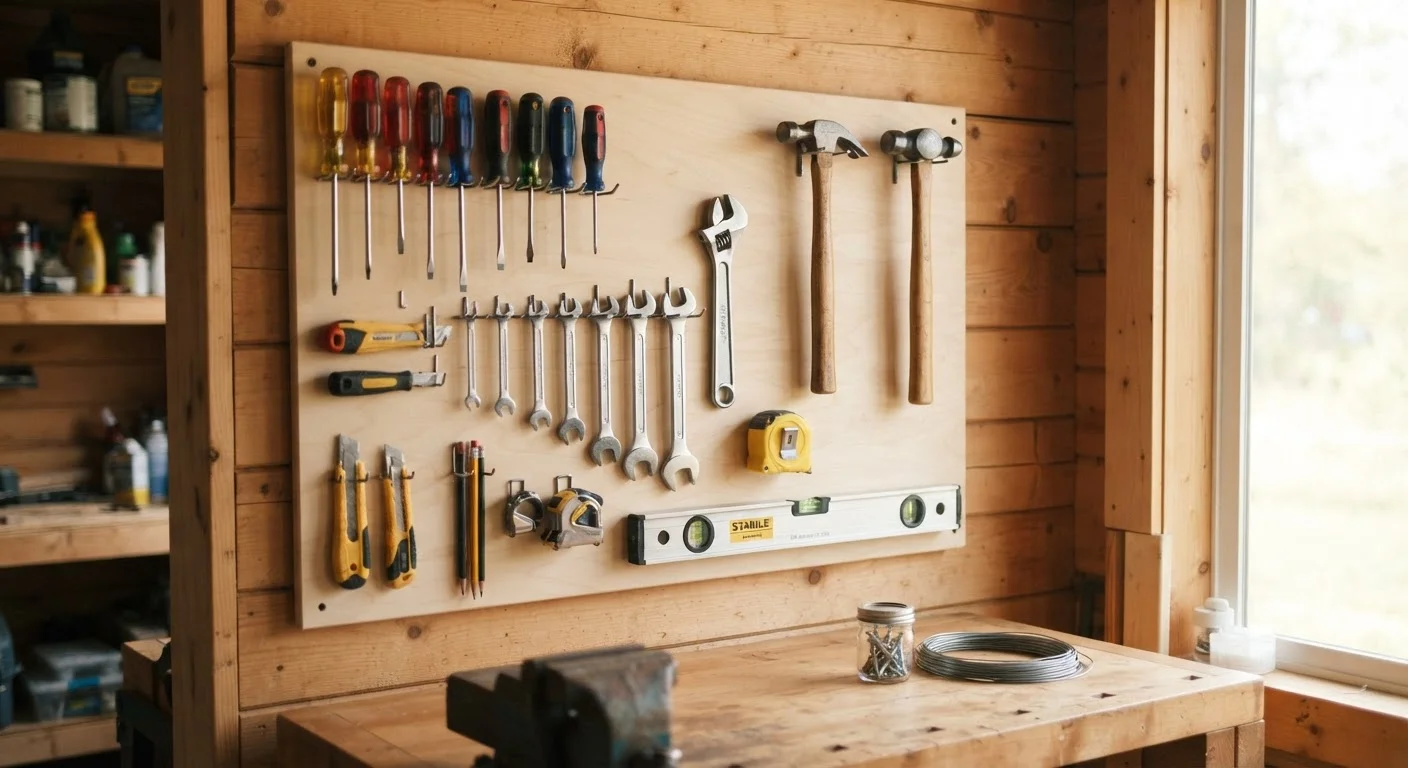
Hand tools form the backbone of any household repair kit. They require no power source, fail rarely, and handle the majority of everyday repairs on their own.
Hammers
A curved-claw hammer around 16 oz. suits most nailing and prying tasks. Straight-claw (rip) hammers are better for demolition but less versatile day-to-day.
Screwdrivers
You'll need both Phillips (cross-head) and flathead types in at least two sizes each. A magnetic tip keeps screws in place during tricky, overhead, or one-handed placements.
Measuring and Marking
A 25-foot tape measure covers most interior room dimensions. A torpedo level - compact and portable - confirms that shelves, frames, and fixtures hang straight.
Gripping and Adjusting
Adjustable pliers and an adjustable wrench handle most plumbing and assembly tasks. A set of hex keys (also called Allen wrenches) fills the gaps for furniture hardware and appliance fittings.
Power Tools: When and Why to Add Them
For most homeowners, a cordless drill/driver is the one power tool that earns its place immediately. It handles driving screws, boring holes, and assembling furniture with equal ease. Look for variable torque settings - these let you apply the right amount of rotational force without over-tightening and stripping fasteners.
A stud finder deserves a place in most toolkits as well. Mounting heavy objects directly into drywall without locating a stud first is a reliable path to wall damage and failed mounts. A basic magnetic or electronic stud finder solves that problem in seconds.
Power saws - circular saws, jigsaws - expand what's possible but carry a significantly higher risk of injury than hand tools. If you're new to power tools, seek hands-on instruction before using one. Watching online tutorials alone isn't sufficient preparation for safe cutting technique.
Key Terms Every DIYer Should Know
Hardware packaging and instruction manuals use shorthand that isn't always intuitive. Knowing what key terms mean before you're standing in the aisle - or mid-project - saves time and the cost of wrong purchases. Refer to the definitions below whenever unfamiliar language slows you down.
Torque
The rotational force a drill or driver applies to a fastener. Variable torque settings let you limit this force so you don't strip screws or damage soft materials like particleboard.
Pilot hole
A small hole drilled before inserting a screw. It guides the screw precisely and reduces the risk of splitting wood or cracking tile and masonry anchors.
Stud
A vertical framing member - typically 2×4 or 2×6 lumber - inside a wall. Screwing directly into a stud provides a far more secure anchor point than drywall alone.
Plumb
Perfectly vertical, as confirmed by a level or plumb bob. 'Plumb' describes vertical alignment; 'level' describes horizontal alignment - the two are related but distinct.
Toggle bolt
A fastener designed for hollow drywall that expands behind the wall surface once inserted, spreading load across a wider area when no stud is available nearby.
RPM
Revolutions Per Minute - how fast a drill bit or saw blade spins. Higher RPM speeds up cutting through soft materials; lower RPM offers greater control for precise or delicate work.
Safety Essentials and Knowing Your Limits
Every toolkit needs a parallel commitment to basic safety gear. At minimum: safety glasses to protect against flying debris, work gloves suited to the task at hand (cut-resistant for utility knives, grip-textured for power tools), and hearing protection for any loud power equipment.
Understanding limits matters as much as owning tools. Tasks involving a home's electrical panel, gas lines, structural framing, or load-bearing walls carry real hazards and typically require licensed professionals and local permits in most U.S. jurisdictions. Attempting such work without appropriate credentials can void homeowner's insurance and create liability concerns - in addition to the physical safety risks involved.
Before starting any electrical task, see our guide to electrical work safety. If you're ever unsure whether a job is DIY-appropriate, our guide on when to call a pro offers a practical decision framework. For staying ahead of issues year-round, pair your toolkit with a seasonal room-by-room maintenance checklist.