

Key Takeaways
Door Frame Movement
Door frame movement refers to any shift, warp, or change in the shape of a door or its surrounding frame that causes the door to stick, bind, drag, or fail to latch properly. It can result from seasonal humidity changes, foundation settling, hinge wear, or wood swelling. The door itself is often symptom-free - the frame is where the real story lives.
In building terms, a door frame includes the jamb (vertical sides), the head jamb (top), and the rough opening behind them. Movement in any of these components - even a few millimeters - can throw off door alignment.
The Door Is Talking - Here's How to Listen
A door that suddenly sticks, drags, or refuses to latch isn't just inconvenient - it's communicating a change in your home. The key to an effective fix is reading where the problem occurs, not just that it occurs. A door that binds at the top corner tells a different story than one that drags along the bottom or fails to catch the strike plate.
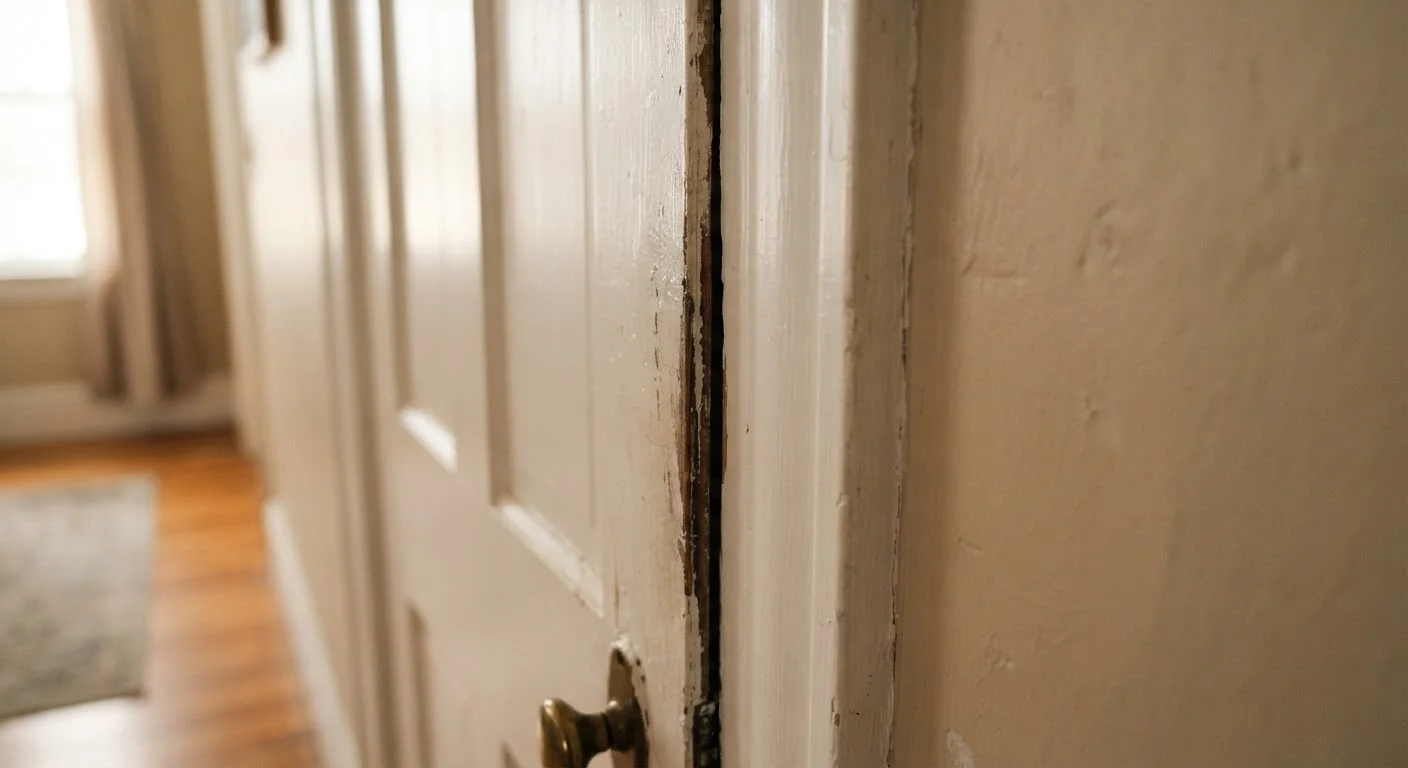
Before reaching for a plane or a can of lubricant, spend two minutes observing the door in action. Close it slowly and notice the first point of resistance. Open it and look for paint scuffing, raw wood wear, or shiny compression marks on the frame. These are your diagnostic clues.
Check All Six Sides of a Wood Door
Bare or unfinished wood on the top and bottom edges of a door - surfaces often skipped during painting - absorbs moisture at a much higher rate than sealed faces. If you're dealing with recurrent seasonal swelling, inspect whether the top and bottom edges have ever been sealed with paint or primer. This is one of the most overlooked sources of moisture-related door problems.
The Most Common Causes - and What They Look Like
Understanding the typical causes of door trouble helps you match the symptom to the source:
- Humidity and seasonal swelling: Wood is hygroscopic - it absorbs and releases moisture with the seasons. A door that binds in summer and swings freely in winter is almost always swollen from humidity. The binding tends to be spread across an edge rather than concentrated at one point.
- Loose or worn hinges: When hinge screws back out of aging wood, the door sags on the hinge side and begins to drag at the latch-side top corner. This is one of the most common causes of sticking and one of the easiest to fix - often just a matter of replacing short screws with longer ones that reach the wall framing behind the jamb.
- Frame settling: Homes shift over time as framing lumber dries and foundations respond to soil conditions. Gradual settling can rack a door frame slightly out of square, causing the door to bind diagonally - typically at one corner on the latch side.
- Paint buildup: Successive layers of paint on door edges and in the rabbet (the recessed channel in the jamb) can accumulate enough thickness to create friction. This usually produces a consistent drag across the painted surface rather than a concentrated pressure point.
Reading the Wear Marks
The location and shape of wear on a door frame is one of the clearest diagnostic tools available. Here's what common marks typically indicate:
| Where You See Wear | Likely Cause |
|---|---|
| Top latch-side corner | Hinge sag or loose hinge screws |
| Broad middle of the latch edge | Humidity swelling or paint buildup |
| Bottom of the door | Floor settling, dropped hinge, or new flooring |
| Diagonal across the door face | Frame racking from structural settling |
| Around the strike plate only | Minor frame shift, misaligned latch bolt |
Once you've located the contact zone, resist the urge to immediately sand or plane. Instead, rule out the simplest fixes first: tighten hinge screws, check whether the strike plate can be repositioned, and assess whether the sticking is seasonal before making any permanent material removal.
90%
Of door sticking cases with simple mechanical causes
Industry estimates from building trades suggest the vast majority of residential door problems stem from hinge issues, humidity, or minor settling - not structural failure.
3 inches
Recommended hinge screw length into wall framing
Contractors commonly recommend replacing standard 3/4-inch hinge screws with 3-inch screws to anchor into the stud behind the jamb, dramatically improving hinge stability.
When to Fix It Yourself - and When to Call a Pro
Most door sticking issues are squarely within DIY territory. Tightening hinge screws, filling stripped screw holes with wooden toothpicks and wood glue, repositioning a strike plate, or lightly sanding a seasonal high spot are all manageable weekend tasks with basic tools.
However, some situations call for a licensed professional:
- Multiple doors and windows sticking simultaneously, especially if accompanied by drywall cracks or sloping floors - this pattern warrants a structural evaluation.
- Doors that are out of plumb by more than a small amount and don't respond to hinge adjustment - the rough opening may need correction.
- Any frame repair that involves load-bearing walls or requires removing and rehanging a door in a structurally significant location.
Improving the seal around a well-fitted door is a separate but related task. Once your door swings and latches correctly, see our guide to weather stripping types to close gaps and improve energy efficiency.
Use a Pencil to Map the Binding Zone
Before sanding or planing anything, rub a soft pencil generously along the door edge and close the door firmly. The pencil graphite will transfer to the frame at the exact point of contact, giving you a precise map of where material removal - if needed - should occur. This prevents over-planing and keeps the fix targeted.