

Key Takeaways
Running Toilet
A running toilet is one that continuously refills or trickles water into the bowl even when it hasn't been flushed. This happens when one or more components inside the tank fail to seal or shut off properly. The result is wasted water - sometimes hundreds of gallons per day - and the constant sound of running water.
Most running toilets involve the flapper valve, the fill valve (ballcock), or the float - three mechanically simple parts that any homeowner can inspect and typically replace without specialized tools.
The Three Mechanisms Behind a Running Toilet
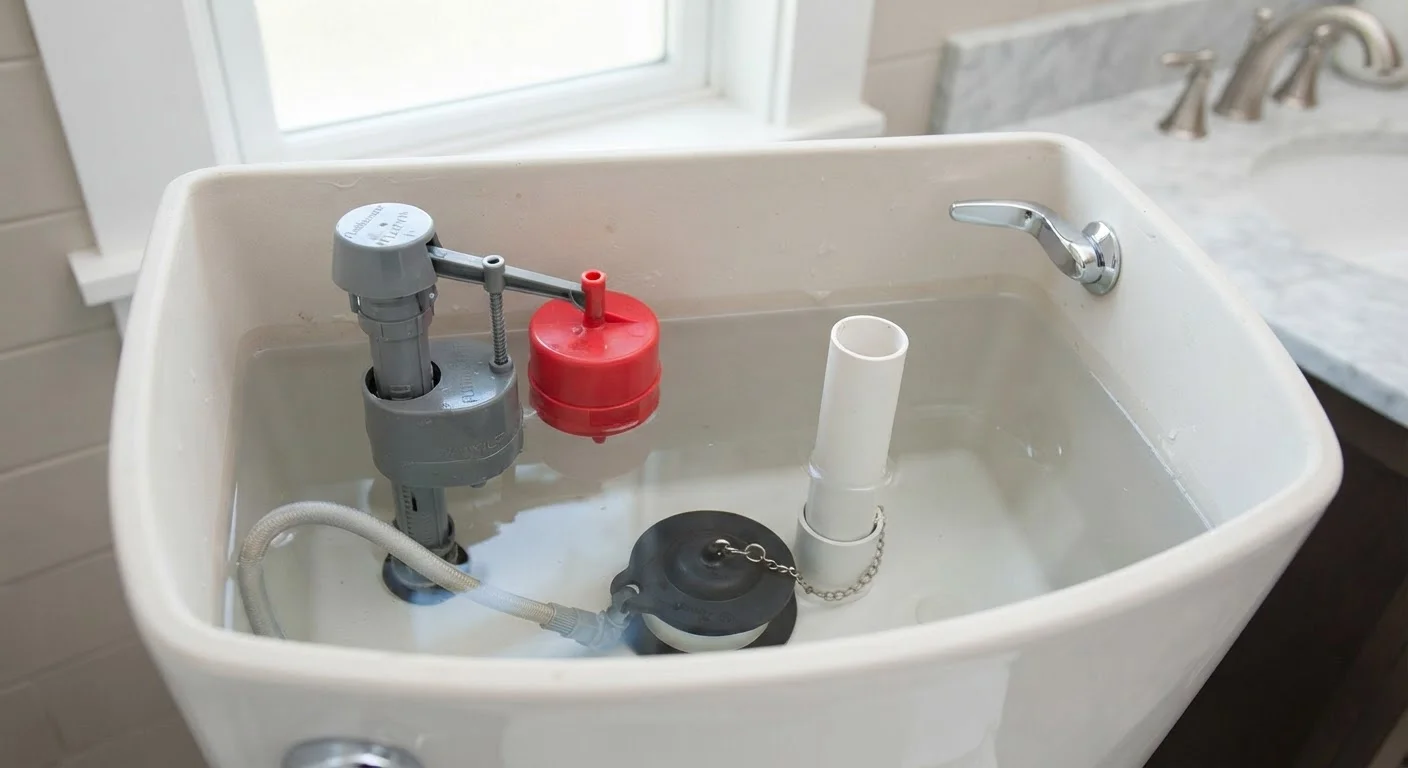
Pop the lid off your toilet tank and you'll find a compact system of three core components working together. When all three function correctly, flushing is a smooth cycle: water releases, the bowl clears, the tank refills, and everything shuts off. When one component fails, the cycle breaks - and you hear running water.
The three culprits are:
- The flapper - a rubber seal that releases tank water during a flush and then reseats to hold water while the tank refills.
- The fill valve - the mechanism that lets fresh water into the tank and shuts off once the water reaches the correct level.
- The float - a buoyant device that signals the fill valve when to stop filling.
Understanding what each part does tells you exactly where to look when something goes wrong.
200 gal/day
Water wasted by a leaking toilet daily
The U.S. Environmental Protection Agency estimates a leaking toilet can waste 200 or more gallons of water per day depending on severity.
~30%
Of indoor water use attributed to toilets
According to the EPA's WaterSense program, toilets account for nearly 30 percent of an average American home's indoor water consumption.
$1-$20
Typical cost of a replacement flapper
Flapper valves are among the most affordable plumbing repair parts, widely available at hardware stores in standard sizes.
The Flapper: The Most Frequent Offender
The flapper sits at the bottom of the tank over the flush valve opening. When you press the flush handle, it lifts to release water into the bowl. Afterward, it drops back down to form a watertight seal while the tank refills.
Over time, rubber flappers degrade. They warp, crack, or accumulate mineral deposits from hard water - any of which can prevent a clean seal. When the flapper doesn't seat properly, water slowly leaks from the tank into the bowl. The fill valve responds by running continuously to maintain the water level, which is the sound you hear.
Try the Food Coloring Test First
Before replacing any parts, drop a few teaspoons of food coloring into the tank and wait 15 minutes without flushing. Color in the bowl confirms a flapper leak. This simple test takes two minutes and can save you from replacing parts unnecessarily.
To confirm a flapper leak, add a few drops of food coloring to the tank. Without flushing, wait about 15 minutes. If color shows up in the bowl, the flapper is leaking. Replacement flappers are inexpensive and designed to be swapped out without draining the entire plumbing system.
The Fill Valve and Float: When the Tank Won't Stop Refilling
If your toilet runs in cycles - or runs constantly even without a flapper problem - the fill valve or float is the likely cause.
The fill valve controls water flow into the tank. It opens after a flush and should close completely once the tank is full. If the valve is worn, damaged, or clogged with sediment, it may not shut off properly, causing a steady trickle or continuous refill.
The float is what tells the fill valve when to stop. In older toilets, this is a large rubber ball on a metal arm. In newer designs, it's a cylindrical float that rides up and down the fill valve shaft. When the float is set too high - or is waterlogged and can't rise properly - the tank overfills. Water then spills into the overflow tube (the tall vertical tube in the center of the tank) and drains continuously into the bowl.
You can confirm overflow tube involvement by watching whether water is actively running into it. Adjusting the float downward so the water level sits about one inch below the top of the overflow tube often resolves this immediately.
Water Level Reference Point
The correct water level in most toilet tanks is approximately one inch below the top of the overflow tube. Many tanks have a marked fill line on the interior wall. If yours doesn't, use the overflow tube as your guide - water draining into it is a clear sign of overfill.
For more confidence tackling water-related home repairs, see our guide to fixing a dripping faucet - many of the same diagnostic principles apply.
When to Call a Professional
Flapper swaps, float adjustments, and fill valve replacements are well within reach for most homeowners with basic tools. However, some situations warrant a licensed plumber:
- A cracked or chipped flush valve seat (the ring the flapper seals against) that replacement alone won't fix
- Visible cracks in the porcelain tank
- Water supply line damage or leaking shutoff valve beneath the toilet
- Any repair requiring work beyond the tank components
When in doubt about the scope of a repair, consulting a licensed plumber is always the right call - particularly if you rent your home, where landlord notification may be required before undertaking repairs.
Understanding what's happening inside the tank transforms a frustrating noise into a solvable puzzle. In most cases, a single inexpensive part and an hour of your time is all it takes to stop the waste and restore quiet to your bathroom.