

Key Takeaways
Dietary Hydration
Dietary hydration refers to the total fluid your body receives from all sources - not just drinking water, but also other beverages and water-containing foods. Your body manages fluid balance continuously, drawing on everything you consume throughout the day. Meeting your hydration needs is about overall intake patterns, not a single source.
The National Academies of Sciences, Engineering, and Medicine estimates that roughly 20% of daily water intake typically comes from food rather than beverages.
The "Eight Glasses a Day" Rule Doesn't Tell the Whole Story
The popular advice to drink eight 8-ounce glasses of water daily is widely repeated, but it has a surprisingly thin scientific foundation. Hydration researchers have noted that this figure was never derived from a rigorous clinical study and doesn't account for the significant fluid many people get from food and other beverages. It persists largely because it's easy to remember - not because it's a universal standard.
What health authorities actually emphasize is total water intake from all sources. That framing matters, because it shifts the conversation from a single beverage to an entire dietary pattern. For more on the gap between popular health rules and what evidence actually supports, see our piece on nutrition myths that keep showing up in everyday health advice.
~20%
Daily water intake from food sources
The National Academies of Sciences, Engineering, and Medicine estimates roughly 20% of daily water intake comes from food rather than beverages.
3.7 L / 2.7 L
Suggested total daily water intake (men / women)
General reference values from the National Academies include all fluids from food and beverages combined, not plain water alone.
Up to 96%
Water content of cucumber by weight
Many common fruits and vegetables exceed 90% water by weight, making them a meaningful dietary hydration source.
What Beverages Actually Count
Nearly every beverage contributes to your fluid intake to some degree - the differences lie in how efficiently each one hydrates relative to the water it contains.
- Water: The benchmark. No calories, no additives, fully absorbed.
- Coffee and tea: Both are predominantly water. The mild diuretic effect of caffeine is largely offset for habitual consumers, meaning these beverages do count toward daily intake. Heavily sweetened versions add calories, but the hydration contribution remains.
- Milk and plant-based milks: High water content, plus electrolytes like sodium and potassium that support fluid retention.
- Juice: Contributes fluids but also adds sugars; whole fruit is generally considered a more balanced choice.
- Soda and sweetened drinks: They do contain water and contribute to fluid intake, though the sugar and other ingredients make them less ideal as primary hydration sources.
- Alcohol: Has a genuine diuretic effect at higher concentrations. Beer has a lower alcohol content and contributes more net fluid than spirits, but alcohol should not be considered a reliable hydration source.
A Simple Way to Gauge Your Intake
Rather than counting glasses, try checking your urine color at least once a day. Pale yellow is the general target for most healthy adults. If it's consistently darker, increasing fluid-rich foods or beverages throughout the day - not just water - is a reasonable first step.
How Food Contributes More Than Most People Expect
A substantial portion of daily hydration arrives on your plate, not in a glass. Many common foods are 80-95% water by weight, and their contribution adds up meaningfully over the course of a day.
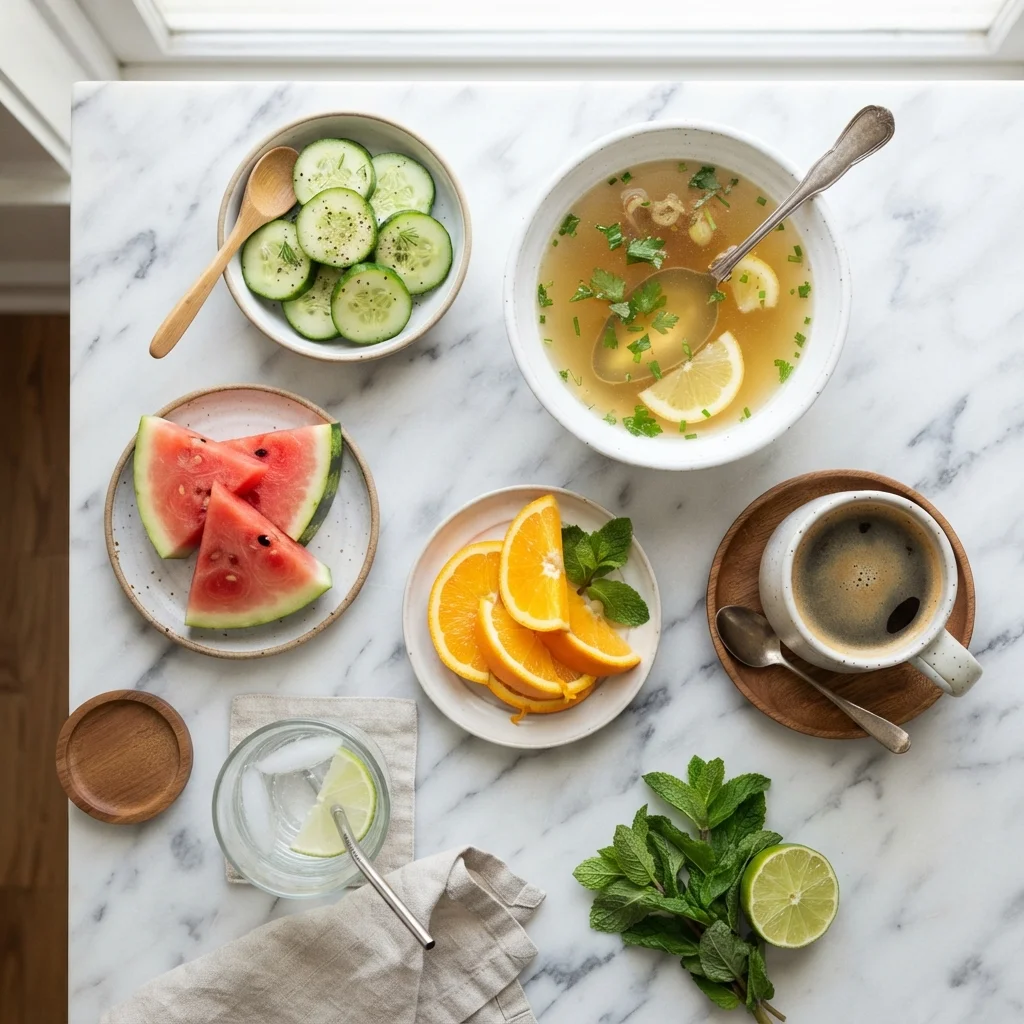
High water-content foods include cucumbers (about 96% water), lettuce, celery, tomatoes, watermelon, strawberries, and oranges. Cooked grains like oatmeal and rice also absorb significant water during preparation. Soups and broths are particularly effective - they combine fluid with sodium, which helps the body retain water more efficiently.
People who eat diets rich in fruits and vegetables may find their beverage needs somewhat lower than those eating predominantly dry or processed foods, simply because their food is doing more hydration work. This doesn't mean food can fully replace drinking fluids, but it does mean a varied, produce-rich diet supports hydration in a way that's easy to overlook.
How to Know If You're Actually Hydrated
Urine color is one of the most practical self-checks available. Pale straw yellow generally indicates adequate hydration; dark yellow or amber suggests you may need more fluid. Clear urine can sometimes signal overhydration, though this is less common for most people. Note that certain vitamins (particularly B vitamins) can temporarily darken or brighten urine regardless of hydration status.
Other signals worth knowing: persistent mild headaches, difficulty concentrating, and dry mouth can sometimes accompany mild dehydration - though these symptoms have many possible causes and are not diagnostic on their own. If you have concerns about your hydration status, especially with a health condition, talking to a healthcare provider is the most reliable step.
Individual needs vary considerably. Activity level, climate, body size, and certain health conditions all influence how much fluid your body requires. For a closer look at common mistakes people make managing daily fluid intake, see hydration habits most people get wrong.
This article is for general informational purposes only and is not a substitute for professional medical advice, diagnosis, or treatment. Consult a qualified healthcare provider with any questions about your health or nutrition needs.