

Key Takeaways
Dietary Fiber
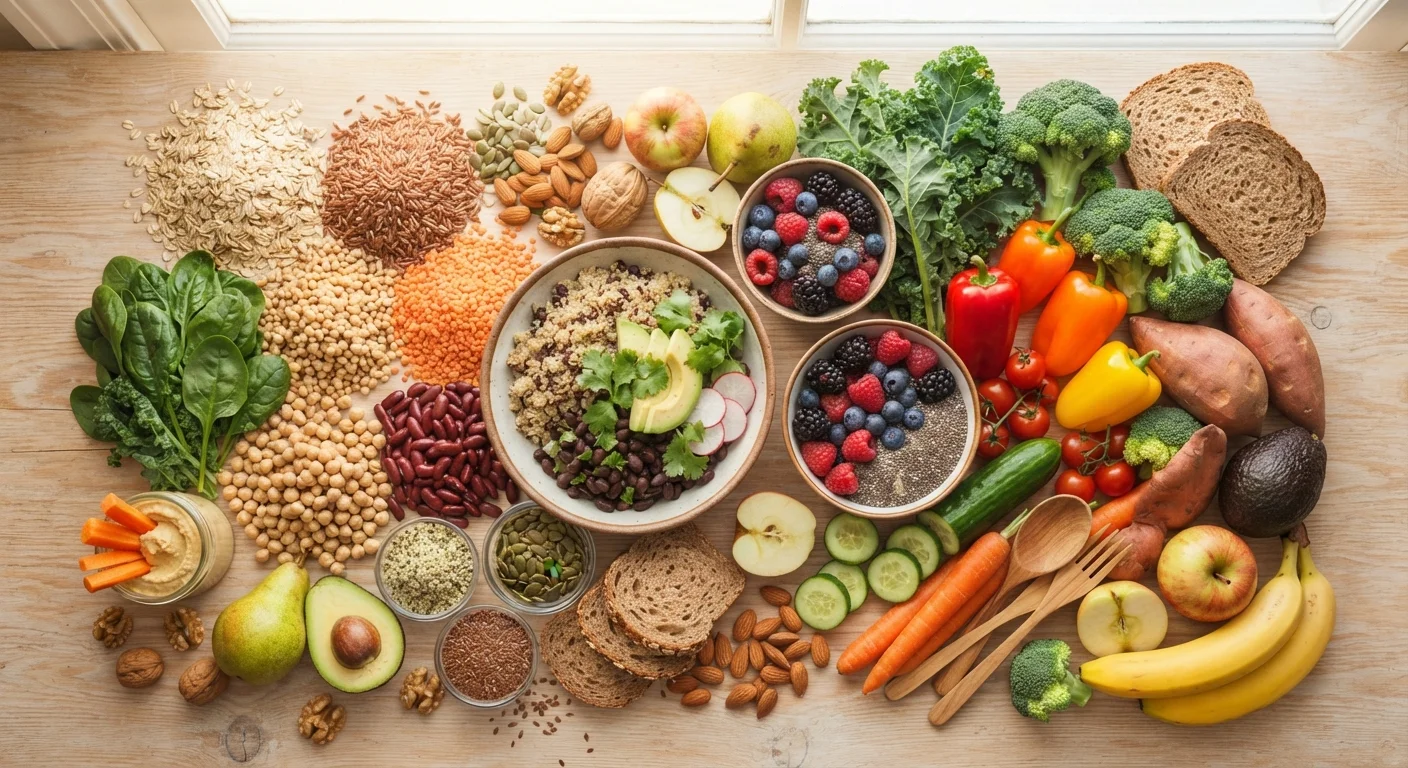
Dietary fiber is a type of carbohydrate found in plant foods that the human body cannot fully digest. Unlike sugars and starches, fiber passes largely intact through the stomach and intestines. It is found naturally in vegetables, fruits, whole grains, legumes, nuts, and seeds.
Fiber is broadly classified as soluble (dissolves in water, forming a gel-like substance) or insoluble (does not dissolve, adding bulk to stool). Most plant foods contain a mix of both types.
What Fiber Actually Is - and What It Isn't
Fiber often gets lumped in with other carbohydrates, leading to confusion in an era when carbs are frequently viewed with suspicion. But fiber behaves very differently from the sugars and starches that most people picture when they hear "carbohydrate." Because human digestive enzymes cannot break fiber down into glucose, it travels through the digestive system largely unchanged, rather than being absorbed into the bloodstream as fuel.
That undigested journey is precisely what makes fiber valuable. Along the way, it influences digestion speed, feeds beneficial gut bacteria, and interacts with cholesterol and blood sugar regulation in ways that other carbohydrates do not.
It's also worth being clear about what fiber is not: it is not found in animal-derived foods. Meat, poultry, seafood, dairy products, and eggs contain no dietary fiber. Every gram of fiber in the human diet comes from a plant source - which is one reason that diets heavily centered on ultra-processed or animal foods tend to fall short of fiber targets. For a broader look at how individual nutrients fit into the overall picture, see what gets missed when focusing too narrowly on single nutrients.
Two Types, One Important Nutrient
Nutritionists commonly divide fiber into two categories based on how it behaves in water, and understanding the distinction helps explain why variety in plant food choices matters.
Soluble fiber dissolves in water to form a viscous gel in the gut. This slows the movement of food through the digestive tract, which can moderate the pace at which glucose enters the bloodstream and may help reduce LDL (low-density lipoprotein) cholesterol levels. Oats, barley, apples, citrus fruits, and legumes are particularly rich in soluble fiber.
Insoluble fiber does not dissolve in water. Instead, it adds physical bulk to stool and accelerates its passage through the colon, which supports regularity. Whole wheat products, most vegetables, and the skins of many fruits are good sources.
Most whole plant foods contain a blend of both types, so eating a varied diet naturally provides both without needing to track each kind separately. For a more detailed look at how gut bacteria interact with fiber specifically, the companion article on gut health and daily habits is a useful companion read.
~15g
Average daily fiber intake in the U.S.
According to data from the National Health and Nutrition Examination Survey (NHANES), most Americans consume around 15 grams of fiber daily.
25-38g
General daily fiber recommendation for adults
The Dietary Guidelines for Americans and the Institute of Medicine suggest approximately 25g/day for women and 38g/day for men, varying by age.
~95%
Share of Americans falling short of fiber targets
Research published in the American Journal of Lifestyle Medicine estimated that approximately 95% of Americans do not meet recommended fiber intake levels.
What the Research Generally Shows
The body of research on dietary fiber is substantial and fairly consistent. Observational studies - tracking large populations over time - have repeatedly found associations between higher fiber intake and lower rates of cardiovascular disease, type 2 diabetes, colorectal cancer, and all-cause mortality. Randomized controlled trials have added support for fiber's role in improving specific markers such as LDL cholesterol and post-meal blood sugar response.
It's important to read these findings with appropriate nuance. Much of the strongest evidence comes from observational research, which cannot prove that fiber alone causes these benefits - people who eat more fiber also tend to have other health-supportive habits. Understanding how to evaluate this kind of research is a skill in itself; a grounded introduction to reading nutrition research can help put study claims in context.
That said, mainstream health and nutrition bodies consistently identify adequate fiber intake as a meaningful marker of diet quality, and the evidence base supporting it is among the more robust in nutritional science.
“Dietary fiber is one of the most consistently beneficial components of the human diet, yet it remains chronically underconsumed - largely because the foods that deliver it have been displaced by processed alternatives.”
— Walter Willett, Professor of Epidemiology and Nutrition, Harvard T.H. Chan School of Public Health
The Fiber Gap - and Practical Perspective
Despite widespread public awareness that fiber is beneficial, average fiber consumption in the United States sits well below general guidance levels - a pattern sometimes called the "fiber gap." The underlying driver is straightforward: the modern American diet relies heavily on refined grains, processed foods, and animal products, all of which are low in or entirely devoid of fiber.
Closing that gap does not require dramatic dietary overhaul. Small, consistent shifts - choosing whole grain versions of familiar foods, incorporating legumes into meals, eating more vegetables in their whole form rather than juiced - can meaningfully raise intake over time. One practical note: increasing fiber intake rapidly can cause temporary digestive discomfort including gas and bloating. Gradual increases over several weeks, paired with adequate hydration, allow the digestive system to adapt more comfortably.
Fiber-rich eating also tends to overlap naturally with other well-supported dietary patterns. Persistent nutrition myths sometimes frame carbohydrates as universally problematic - but fiber is a clear example of why that framing oversimplifies a more nuanced reality.
This article is for general informational and educational purposes only and does not constitute medical or nutritional advice. Individual dietary needs vary. Consult a qualified healthcare provider or registered dietitian for guidance tailored to your specific health situation.