

Key Takeaways
Blue Light & Sleep Disruption
Blue light is a short-wavelength, high-energy light emitted by LED screens on phones, tablets, and computers. Research shows it can suppress melatonin - the hormone that signals your body it's time to sleep - when viewed in the hours before bed. This delay in melatonin release can push back your natural sleep onset and reduce overall sleep quality.
The photoreceptors most sensitive to blue light (ipRGCs containing melanopsin) peak around 480 nm wavelength. However, the behavioral and cognitive stimulation from screen content may also independently affect sleep, separate from light wavelength.
What the Research Actually Shows
The headline claim - that screens ruin sleep - is both partially true and somewhat overstated. The foundational science is real: studies published in journals including PNAS and Sleep Medicine Reviews have demonstrated that exposure to short-wavelength (blue) light in the evening delays the release of melatonin, the hormone that helps regulate the body's sleep-wake cycle. This delay can push back sleep onset by 30 minutes to over an hour in controlled conditions.
But the picture gets more complicated outside the lab. Real-world research on screen time and sleep has produced inconsistent findings, partly because what people do on screens matters as much as the light itself. Scrolling through distressing news or engaging in competitive gaming activates cognitive and emotional arousal that keeps the brain alert independent of any light effect. Passive, low-stimulation content - a quiet documentary watched on a dim TV across the room - shows a much weaker association with disrupted sleep.
~30-60 min
Typical melatonin delay from bright evening screen use
Research published in sleep physiology literature estimates this range under controlled experimental conditions with bright device screens.
~90%
U.S. adults who use a device in the hour before bed
National Sleep Foundation polling has consistently found device use before bed to be near-universal among American adults.
1 in 3
American adults not getting sufficient sleep
According to CDC public health data, approximately one-third of U.S. adults regularly sleep less than the recommended seven hours per night.
For a broader look at how evening habits interact with morning ones, see our guide to morning vs. evening routines.
The Melatonin Mechanism - and Its Limits
Melatonin suppression by blue light is the best-documented physiological pathway linking screens to sleep. The retina contains specialized cells (intrinsically photosensitive retinal ganglion cells, or ipRGCs) that send light signals directly to the brain's circadian clock. Blue wavelengths - abundant in LED screens - are particularly effective at activating this pathway, signaling daytime and delaying the circadian cue to sleep.
However, several factors modulate this effect in practice. Screen brightness matters more than blue light content alone - a dim screen at night causes less suppression than a bright one, regardless of color temperature. Viewing distance also plays a role; a phone held 12 inches from the face delivers far more retinal illuminance than a TV across the room. And individual sensitivity varies considerably: some people experience significant melatonin delay from brief evening screen use, while others show minimal response.
Dim Before You Dim the Lights
Try reducing your phone or tablet brightness to its lowest comfortable setting at least an hour before bed. This single step meaningfully reduces retinal light exposure without requiring you to put your device away entirely. Pairing it with warmer color temperature settings (night mode) adds a modest additional benefit.
The sleep disruption that many people attribute purely to blue light may in part reflect the anxious or stimulating nature of the content they consume. Research on social media and mood illustrates how emotionally engaging digital content can heighten psychological arousal well beyond what light alone would produce.
Practical Implications for Your Evening Routine
Given the evidence, a reasonable evidence-informed approach focuses on two parallel goals: reducing light intensity during the pre-sleep window, and managing the behavioral stimulation of screen content. Neither requires giving up screens entirely.
- Dim your screen brightness in the final hour before bed. Most devices allow manual brightness control or have an automatic night/warm mode - using either is a low-effort, evidence-supported step.
- Shift content type toward lower-stimulation activities as bedtime approaches. Reading a calm long-form article, watching familiar and low-stakes programming, or listening to audio content all generate less arousal than news feeds, competitive games, or social comparison-heavy platforms.
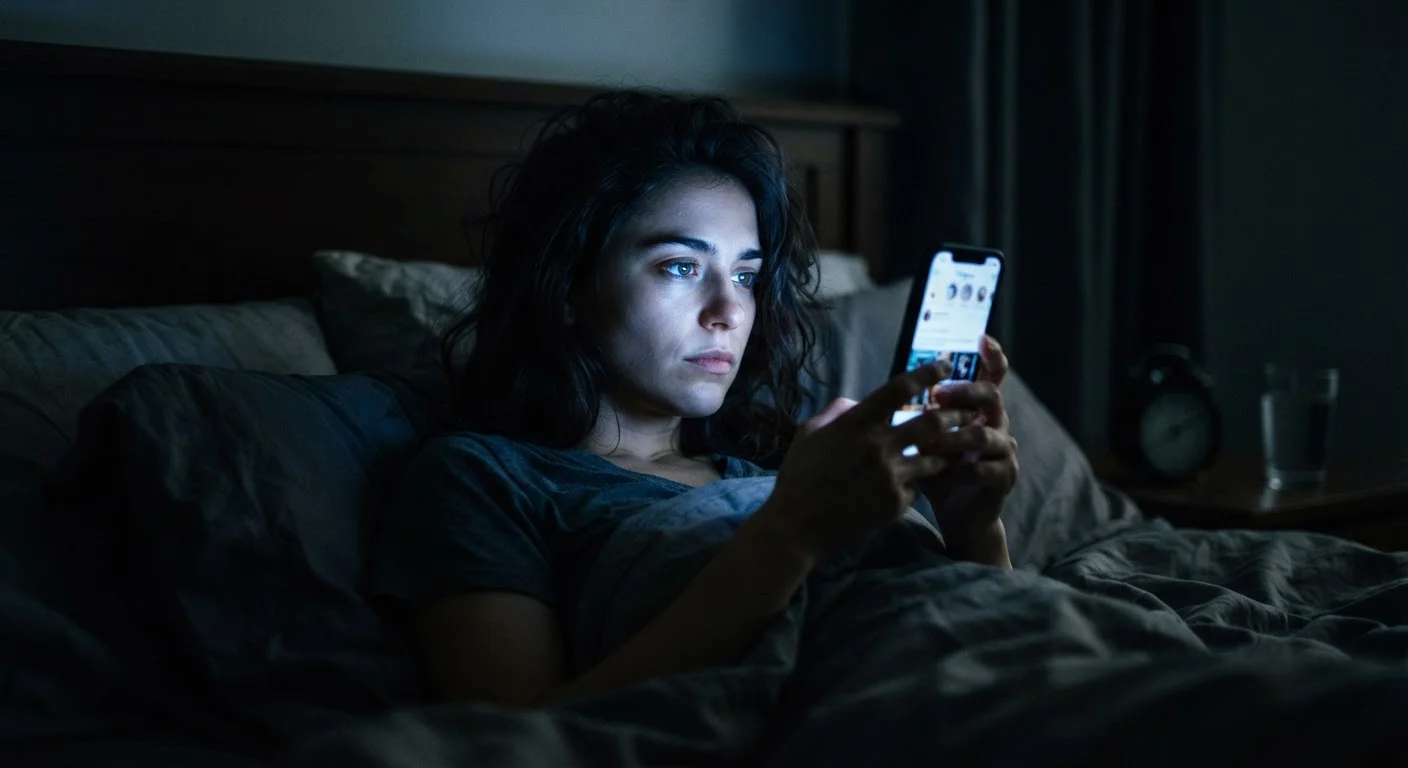
- Create physical distance where possible. Watching something on a TV in a normally lit room is categorically different from holding a phone screen inches from your face in total darkness.
- Protect the last 30 minutes as a screen-free buffer if you can. This remains the most consistent recommendation across sleep medicine guidelines.
These same principles are explored in more depth in our guide to building a sustainable sleep schedule. And because poor sleep and emotional health are deeply interconnected, it's worth understanding how disrupted rest can compound over time - our article on sleep and emotional health explores that two-way relationship.
Small adjustments to evening device habits also sit within a broader category of modest daily habits with well-documented long-term health impact.
This article is for general informational purposes only and is not a substitute for professional medical advice. If you have concerns about sleep quality or a sleep disorder, consult a qualified healthcare provider.