

Key Takeaways
Demonstrates resilience and self-awareness
Candidates who can clearly explain a difficult period-and what they learned from it-often come across as more self-aware than those who have never had to navigate uncertainty.
Time for genuine skill development
Many people use career gaps to complete certifications, take courses, or develop freelance experience. These additions can make a resume stronger, not weaker.
Stigma has meaningfully decreased
Post-pandemic workforce shifts have normalized career breaks. Most major employers and many HR professionals now explicitly state they welcome returning workers.
Caregiving gaps signal real-world competence
Managing a household, caring for a child or aging parent, or handling a health crisis builds planning, coordination, and problem-solving skills that employers value.
Longer gaps invite harder questions
Gaps of a year or more require a clearer, more detailed explanation. Without one, some interviewers may assume the worst-skill atrophy, performance issues, or disengagement.
Some industries are less forgiving
Fast-moving fields like software engineering, finance, or clinical healthcare can be harder to re-enter after a significant break, particularly if core skills or certifications have a shelf life.
Automated screening may flag unexplained gaps
Applicant tracking systems (ATS) often scan for employment continuity. A gap with no context may cause an application to score lower before a human reviewer ever sees it.
Requires confident, prepared communication
Candidates who seem evasive or apologetic about a gap can create more concern than the gap itself. Effective handling takes deliberate preparation, which is an extra burden during an already stressful job search.
Our Verdict
A gap in your work history is rarely the dealbreaker job seekers fear it is-but it does require deliberate handling. Most employers today understand that careers aren't perfectly linear, especially after widespread layoffs and a global pandemic reshaped the labor market. The key is to address your gap clearly, connect it to what you learned or accomplished during that time, and pivot back to your readiness for the role.
Job seekers returning to work after caregiving, health, education, layoff, or any other pause who want to approach interviews with confidence rather than anxiety.
Why Employment Gaps Are More Common Than You Think
At some point, a large share of American workers experience a stretch of time between jobs-whether from a layoff, a family obligation, a health issue, or a deliberate career pause. According to LinkedIn data cited in multiple workforce reports, roughly 60% of workers have taken at least one significant career break. That's not a minority experience.
The COVID-19 pandemic accelerated this trend, pushing millions out of the workforce through no fault of their own. Mass layoffs in tech, retail, and media since 2022 added another wave. So if you're sitting on a resume with a visible gap, you're in very large company.
Understanding how the modern hiring landscape interprets these gaps is the first step. See what's actually changed in today's job search for a broader view of how hiring norms have shifted.
How Hiring Managers Actually View Gaps
The honest answer: it depends on the gap, the industry, and how the candidate addresses it. A 2023 survey by LinkedIn found that the majority of hiring managers said they would consider candidates with career gaps-and many explicitly said the reason for the gap mattered more than its length.
Short gaps of one to three months rarely raise flags at all. Longer gaps-six months or more-invite more scrutiny, but not automatic rejection. What employers are really trying to assess is whether your skills are current, whether you remained engaged with your field in some way, and whether there's a coherent, honest story behind the pause.
~60%
Workers who have taken a career break
LinkedIn workforce data cited across multiple labor market reports indicates a majority of professionals have experienced at least one significant employment pause.
Majority
Hiring managers open to gap candidates
A 2023 LinkedIn survey found most hiring managers said they would consider applicants with career gaps, prioritizing the reason over the duration.
Gaps explained poorly-or not explained at all-create more concern than the gap itself. Leaving a two-year blank with no context forces the interviewer to fill in the story themselves, which rarely goes well for the candidate.
The Real Pros and Cons of Having a Career Gap
Like most things in job searching, employment gaps carry both legitimate advantages and genuine risks. Understanding both helps you present yours strategically-and honestly.
Demonstrates resilience and self-awareness
Candidates who can clearly explain a difficult period-and what they learned from it-often come across as more self-aware than those who have never had to navigate uncertainty.
Time for genuine skill development
Many people use career gaps to complete certifications, take courses, or develop freelance experience. These additions can make a resume stronger, not weaker.
Stigma has meaningfully decreased
Post-pandemic workforce shifts have normalized career breaks. Most major employers and many HR professionals now explicitly state they welcome returning workers.
Caregiving gaps signal real-world competence
Managing a household, caring for a child or aging parent, or handling a health crisis builds planning, coordination, and problem-solving skills that employers value.
Longer gaps invite harder questions
Gaps of a year or more require a clearer, more detailed explanation. Without one, some interviewers may assume the worst-skill atrophy, performance issues, or disengagement.
Some industries are less forgiving
Fast-moving fields like software engineering, finance, or clinical healthcare can be harder to re-enter after a significant break, particularly if core skills or certifications have a shelf life.
Automated screening may flag unexplained gaps
Applicant tracking systems (ATS) often scan for employment continuity. A gap with no context may cause an application to score lower before a human reviewer ever sees it.
Requires confident, prepared communication
Candidates who seem evasive or apologetic about a gap can create more concern than the gap itself. Effective handling takes deliberate preparation, which is an extra burden during an already stressful job search.
One persistent myth is that gaps must be hidden or disguised. In reality, transparency handled well is far more effective than creative resume formatting that still gets questioned in the interview. See common job search myths that keep people stuck for more on this.
How to Address a Gap on Your Resume and in Interviews
Your goal isn't to minimize or apologize for the gap-it's to give the interviewer a complete, honest picture and then redirect to your qualifications.
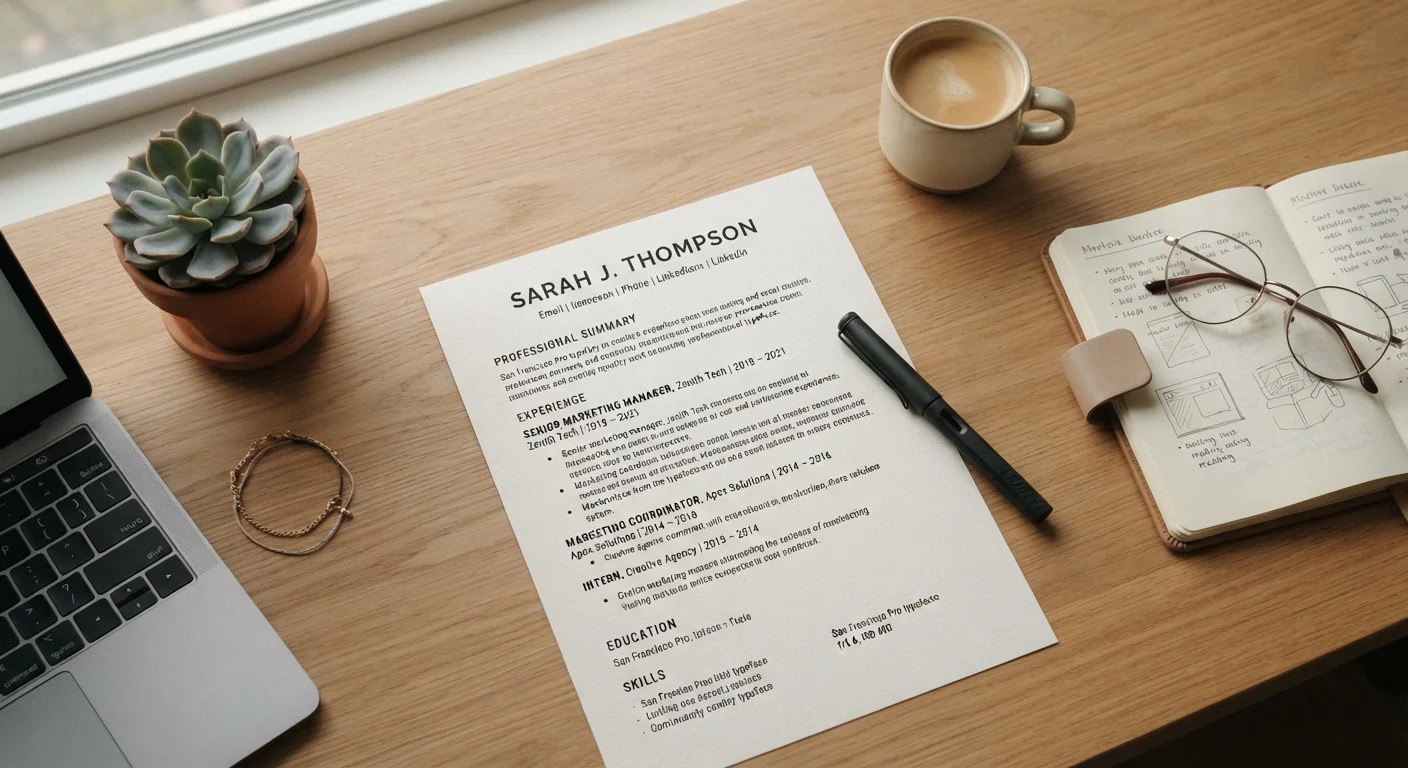
- On your resume: Use years only (not months) for employment dates when a short gap falls between jobs. For longer gaps, consider adding a brief line item-"Career Break: caregiving for a family member" or "Independent Consulting, "-rather than leaving a blank.
- In cover letters: You don't need to address every gap, but if one is obvious and significant, a single clear sentence beats leaving the reader to speculate.
- In interviews: Prepare a two-to-three sentence answer: what happened, what you did during the gap (even informally-volunteering, freelance work, skills development, caregiving), and why you're ready and motivated now.
If your gap involved developing skills that transfer to your target role, lean into that. Transferable skills don't expire during a career pause-they just need reframing.
Gaps Due to Caregiving or Health
Gaps taken for caregiving or personal health reasons are legally protected from discrimination in many contexts and are widely considered legitimate by HR professionals. You are not required to disclose a medical condition during a job interview. A simple, honest explanation-'I took time away from work to care for a family member'-is sufficient and appropriate. Focus your answer on your readiness to return, not on the personal details of why you left.
Gaps that involved stepping back to explore a new direction are also worth contextualizing. If you used the time for informational interviews or career exploration, say so-it signals intentionality rather than drift.