

Key Takeaways
Why Family Travel Is Its Own Planning Discipline
Traveling with children is not simply adult travel with smaller passengers added on. It requires a fundamentally different planning mindset - one where the needs, energy levels, and unpredictability of kids shape every decision from destination choice to daily scheduling. Understanding those differences early prevents the most common family travel frustration: a beautifully planned itinerary that collapses by day two.
The good news is that with the right framework, family trips are genuinely some of the most rewarding travel you can do. The adjustments aren't burdens - they're guardrails that make the whole trip more enjoyable for everyone involved.
What you will need
Rethink Your Itinerary From the Ground Up
The first thing to recalibrate is activity density. A well-paced adult itinerary might include three to four anchored activities per day. With children - especially under age ten - cut that to two, maximum. Kids need more transition time, tire more easily, and respond poorly to being rushed from sight to sight. If you're used to building structured day-by-day itineraries, apply the same framework but deliberately thin the activity load and add buffer time between each block.
Build in at least one completely unscheduled afternoon per two to three days. That loose time isn't wasted - it's your contingency reserve when a morning runs long, someone has a meltdown, or the kids discover an unexpected playground they refuse to leave. Overpacked days are the single biggest driver of family travel stress.
Also consider the rhythm of children's energy. Most kids have a reliable high-energy window in the morning and crash after lunch. Plan your most ambitious activities - longer walks, museum visits, transport legs - in the morning. Afternoons work better for low-key pool time, a picnic, or a nap at the accommodation.
Build Your Itinerary Backwards
Start with your must-do anchor activities and schedule them first, then fill remaining time loosely rather than building a packed schedule and trying to cut it down. This approach naturally produces a more child-friendly pace. It also makes it easier to drop lower-priority items without feeling like the trip fell apart.
Safety, Health, and Logistics Considerations
Adult-only trips rarely require pre-trip safety planning beyond travel insurance and basic health precautions. Family travel introduces a longer checklist. Before you finalize any booking, work through the following:
- Medical documentation: Carry copies of each child's vaccination records, prescription medications (with proper labeling), and your pediatrician's after-hours contact number. Research the nearest clinic or hospital to your accommodation - not as a worry exercise, but as simple preparation.
- Car seat logistics: If you're renting a vehicle, verify the rental company's car seat availability and condition in advance. Many parents bring their own for reliability. Rules on child restraints vary by country, so verify local law before you travel.
- Emergency contacts and identification: Give older children a written card with your local phone number and accommodation address. For younger kids, a temporary ID wristband can be invaluable in crowded spaces.
Entry requirements - visas, passports, parental consent letters for single-parent travel - must be verified well ahead of departure through official government and embassy sources, as these rules change and vary significantly by destination. Do not rely on third-party summaries for this information.
Verify Entry Rules for Minors Officially
Some countries require notarized consent letters when a child travels with only one parent or a non-parent guardian. Requirements change and vary significantly by destination. Always verify current rules directly through the destination country's official embassy or consulate website and your own government's travel advisory pages well in advance of your departure date - not through third-party travel blogs or forums.
Budgeting for a Family: Where the Numbers Shift
Family travel costs more, and the gap is often larger than parents expect. The principles of building a solid travel budget still apply, but several line items expand or appear for the first time:
- Accommodation: You'll likely need larger rooms or separate sleeping areas, which often means paying for a suite, connecting rooms, or an apartment rental rather than a standard hotel room.
- Food: Children's menus exist, but snack costs accumulate fast. Budget a daily snack fund - it sounds minor until you've bought airport crackers four times in one day.
- Entry fees: Many attractions charge per person, including children over certain ages. Run the math on family passes versus individual tickets; passes frequently pay off within two visits.
- Contingency: Build a larger-than-usual emergency buffer - roughly 15-20% of the total budget. Sick days, unexpected pharmacy runs, and cancelled activities are simply more likely when traveling with kids.
For a broader look at managing travel costs, the Travel on a Budget hub covers strategies that translate well to family trips with a bit of adaptation.
Choosing the Right Destination and Accommodation
Not every destination suits family travel equally well. Practicality should take priority over novelty when children are young. Consider proximity - long-haul flights with toddlers carry real logistical costs in exhaustion and disruption. For ambitious multi-stop itineraries, review how to structure multi-city trips with an eye toward keeping transit legs short and infrequent.
On accommodation, prioritize function over aesthetics. A vacation rental with a kitchen, laundry access, and outdoor space often beats a boutique hotel for families - not because it's cheaper (it may not be), but because it gives everyone room to decompress. Check the proximity to a grocery store, a pediatric clinic, and accessible parks or open spaces. Families rarely regret paying slightly more for a practical base.
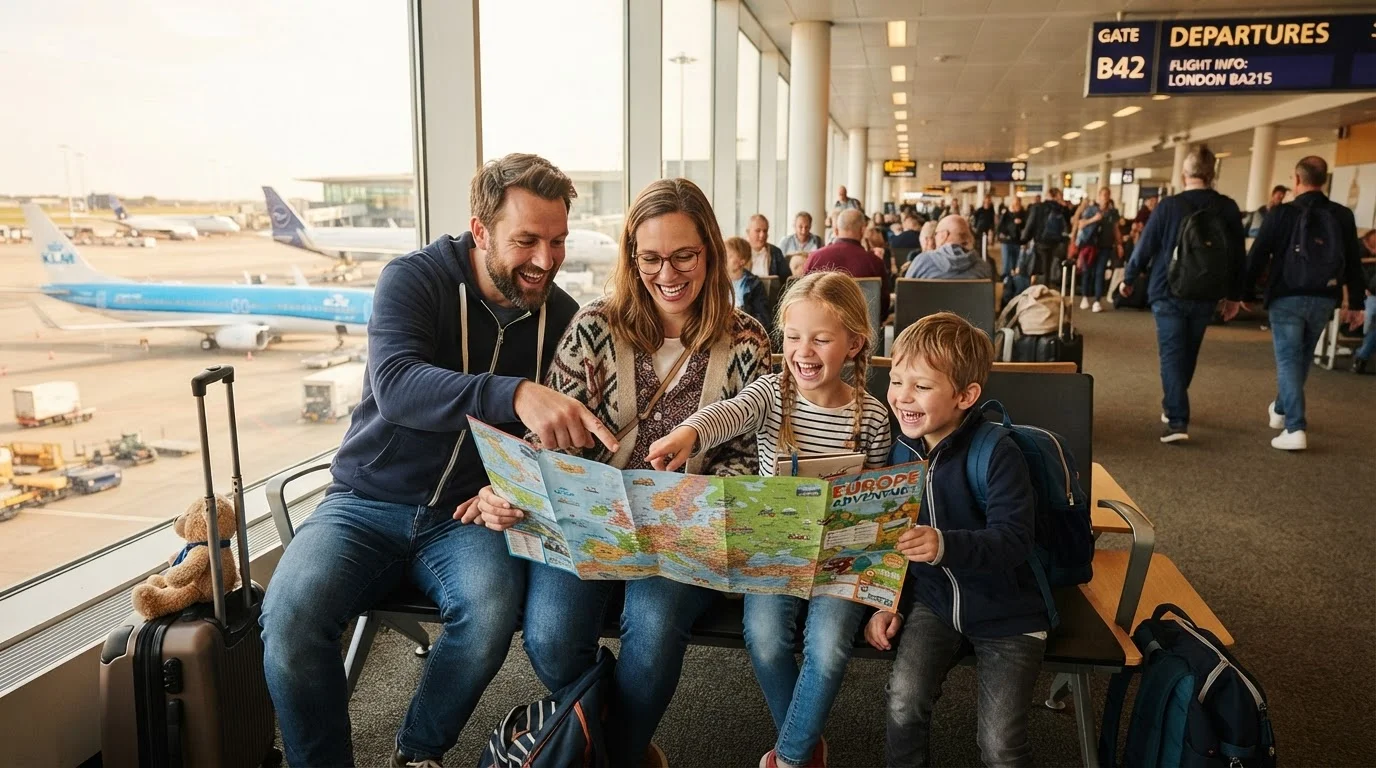
Finally, involve kids in age-appropriate planning decisions. Giving children a sense of ownership - choosing one activity, picking a restaurant one evening - reduces resistance and builds genuine excitement. Family travel at its best is a shared experience, not a logistics exercise. Start the collaboration at home, and the trip itself will feel like its natural payoff.
Don't Underestimate Jet Lag with Children
Time zone shifts hit children harder and less predictably than adults. Plan for a recovery day after any flight crossing more than four or five time zones, and schedule nothing high-stakes for the first morning at your destination. Pushing through exhaustion on day one tends to create cascading problems for the rest of the trip.