

Key Takeaways
There's a Whole Region Out There
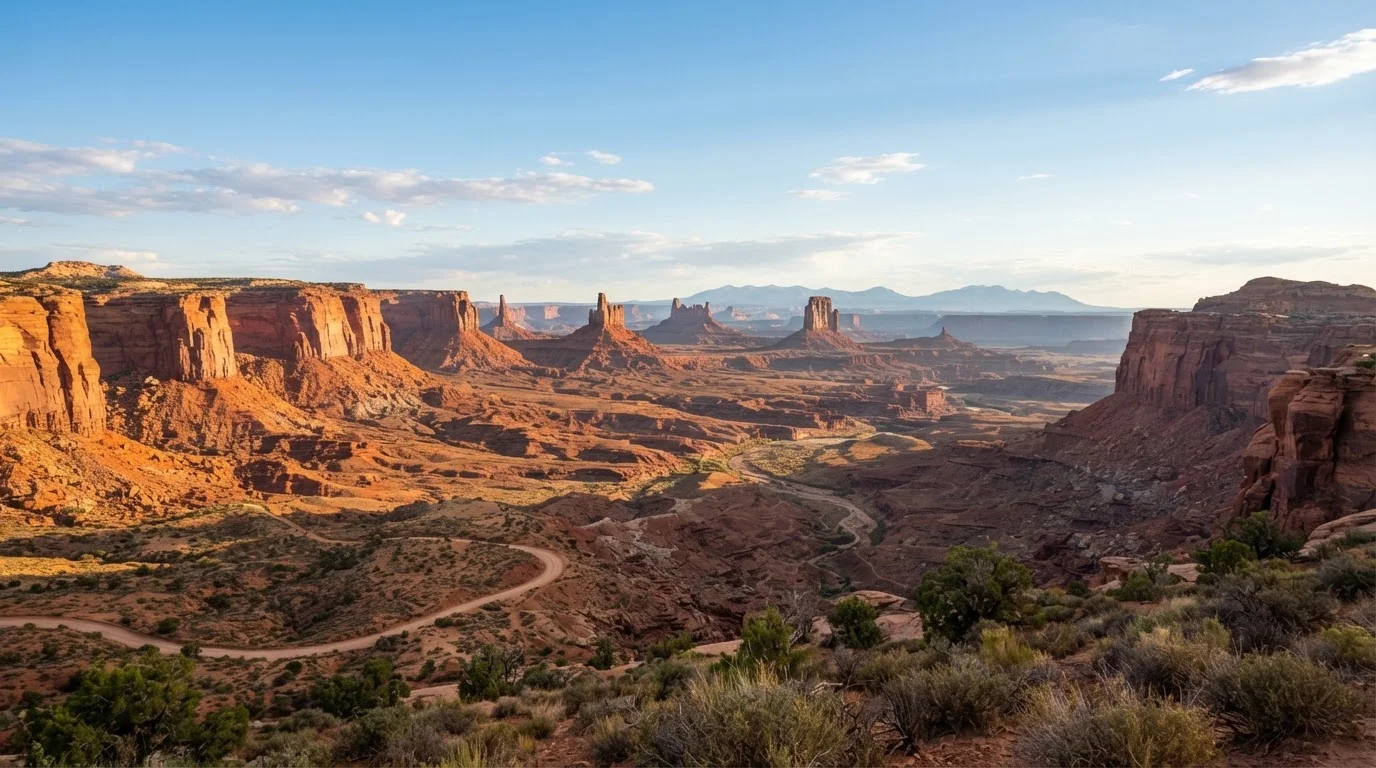
Every year, roughly six million people funnel to the South Rim of the Grand Canyon - then leave. It's understandable; the canyon earns every superlative thrown at it. But the American Southwest is an enormous, geologically absurd region, and treating the Grand Canyon as the main event means missing landscapes that are, in many cases, just as striking and far less crowded.
From ancient cliff dwellings to bioluminescent-dark skies to slot canyons you can walk through without shoulder-to-shoulder crowds, the region rewards explorers willing to look a little further down the map. If you want a fuller picture of what a place actually offers before committing, read destinations honestly - the glossy version rarely tells the whole story. The destinations below aren't secret, but they're significantly undervisited relative to their quality.
Entry Fees and Permits Vary Widely
Some sites on this list are free; others charge per-vehicle fees or require advance permits during busy seasons. The America the Beautiful annual pass covers entrance fees at all National Park Service and many Bureau of Land Management sites, which can offset costs across a multi-site trip. Always confirm current requirements directly with the managing agency before your visit, as policies change.
Seven Destinations Worth the Detour
Chaco Culture National Historical Park, New Mexico
Chaco Canyon holds the most sophisticated prehistoric architecture in North America. Between roughly 850 and 1150 CE, ancestral Puebloan peoples built massive great houses - some four stories tall - aligned precisely with solar and lunar cycles. Pueblo Bonito alone contained over 600 rooms. The site sees well under 50,000 visitors annually, a fraction of similarly significant parks, largely because the access road is unpaved and corrugated. That barrier keeps it wonderfully quiet.
The tradeoff: plan for the road conditions, bring water and food, and check the park's current access guidance before traveling. The night skies here are certified as an International Dark Sky Park - stargazing is extraordinary.
Chaco's great houses were aligned with solar and lunar cycles - and it's almost always uncrowded.
Escalante Grand Staircase National Monument, Utah
One of the largest national monuments in the contiguous U.S., Grand Staircase-Escalante covers nearly 1.9 million acres of canyon country, petrified dunes, and slot canyons. Unlike most Utah parks, it has no entrance stations and no tram lines - just a vast, poorly-marked backcountry. The town of Escalante serves as a practical base, with outfitter shops that can orient first-timers to conditions on the ground.
Slot canyon hikes in the Dry Fork of Coyote Gulch are accessible as day trips for moderately fit hikers. Flash flood risk is real in canyon country - always check weather forecasts upstream before entering a slot canyon.
Nearly two million acres of canyon country with no entrance lines and almost no crowds.
Chiricahua National Monument, Arizona
Called the "Land of Standing-Up Rocks" by the Chiricahua Apache, this southeastern Arizona monument is a geology enthusiast's dream: thousands of volcanic rhyolite columns, balanced rocks, and spires scattered across forested sky-island terrain. The elevation keeps temperatures cooler than the desert floor, and the biodiversity reflects both Rocky Mountain and Sierra Madre species - it sits at a continental crossroads for birds and wildlife.
The monument receives fewer than 100,000 visitors per year, making trailhead parking a non-issue most days. It's roughly 120 miles southeast of Tucson.
Chiricahua's volcanic spire landscapes are extraordinary - and almost nobody knows it exists.
Hovenweep National Monument, Utah/Colorado Border
Straddling the Utah-Colorado state line, Hovenweep preserves six clusters of ancestral Puebloan towers and dwellings, most of them constructed between 1200 and 1300 CE. The towers are enigmatic - archaeologists still debate whether they served as astronomical observatories, defensive structures, or both. A 2-mile loop trail passes the main Cajon and Square Tower groups with interpretive signage throughout.
Annual visitation hovers around 30,000 - which means you may well have the canyon rim trail to yourself on a weekday. No reservations required as of this writing, but verify with the National Park Service before traveling.
Hovenweep's ancestral towers are architecturally remarkable - and visited by almost no one.
White Sands National Park, New Mexico
White Sands is technically well-known, yet it still draws far fewer visitors than the big-name Utah parks. The largest gypsum dune field in the world stretches across 275 square miles of the Tularosa Basin, and the white dunes shift continuously - the landscape looks different season to season, hour to hour. Sunrise and sunset light turns the dunes from blinding white to gold and faint pink.
The park sits adjacent to White Sands Missile Range and occasionally closes for a few hours during military testing operations - check the park's closure schedule before planning an all-day visit. The nearest city with substantial lodging is Las Cruces, about 50 miles southwest.
The world's largest gypsum dune field shifts constantly - no two visits look exactly the same.
Canyon de Chelly National Monument, Arizona
Canyon de Chelly (pronounced "de Shay") is one of the most historically layered landscapes in the Southwest. It sits entirely within the Navajo Nation and has been continuously inhabited for roughly 5,000 years - an extraordinary span that produced cliff dwellings, petroglyphs, and oral histories still alive today. Most of the canyon floor is accessible only with an authorized Navajo guide, which means any visit here is inherently a cultural exchange, not just a scenic one.
The South Rim Drive offers overlooks accessible without a guide, and the White House Ruin Trail is the one permitted self-guided route to the canyon floor. Visitors should approach the monument with genuine cultural respect and follow all Navajo Nation guidelines.
Canyon de Chelly has been continuously inhabited for 5,000 years - and demands respectful engagement.
Goblin Valley State Park, Utah
Utah's state parks are often overshadowed by its five national parks, but Goblin Valley is in a category of its own. Thousands of mushroom-shaped sandstone formations called "hoodoos" or "goblins" fill a broad valley floor, and unlike most canyon country, the terrain here is relatively flat - walkable by families with young children or anyone who prefers scrambling over flat surfaces to steep trail grades.
It's about 30 miles north of Hanksville and makes a logical stop on a route connecting Capitol Reef National Park to Moab. Camping within the park is an option, with reservations typically required during peak spring and fall seasons.
Goblin Valley's bizarre hoodoo landscape is oddly accessible - and genuinely unlike anywhere else.
Combine Sites Into One Route
Several of these destinations sit within a few hours of each other. Pairing Chaco with Canyon de Chelly, or Hovenweep with Goblin Valley and Capitol Reef, can make a single trip cover remarkable ground. Sketch your route around driving distances before booking lodging - fuel and flexibility matter as much as the destination list.
Planning a Southwest Loop
The beauty of this region is that its major undervisited sites cluster reasonably well for road trips. A loop from Flagstaff, Arizona through southern Utah and into New Mexico can realistically connect several of these destinations in seven to ten days without brutal driving days. That kind of flexibility also opens up genuine travel on a budget - camping fees, public land dispersed camping, and off-peak shoulder seasons keep costs manageable in ways that crowded canyon-rim lodges simply don't.
Verify road conditions, entry fees, and permit requirements directly with each site's managing agency before you go - conditions in the desert Southwest can change quickly by season, and some areas now use timed-entry reservations. For travelers who want cultural richness on a domestic trip, the Southwest delivers in ways that feel genuinely international without leaving the country.