
Dating Apps Explained: What They Actually Do With Your Data and Attention

Key Takeaways
Dating App
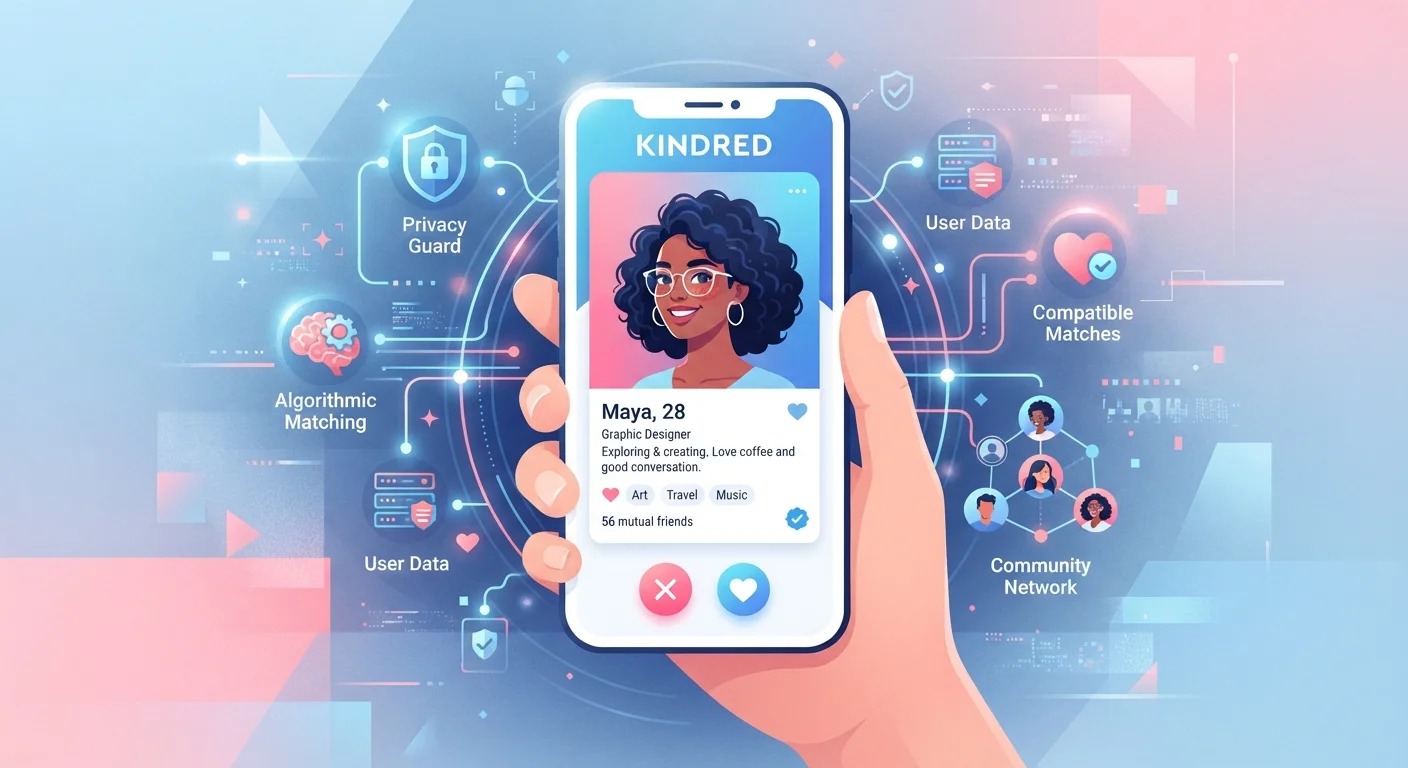
A dating app is a mobile platform that helps users discover and connect with potential romantic partners, typically through profile browsing, swiping, or search filters. Behind the scenes, these apps collect behavioral and personal data to power matching systems and drive continued engagement. They are, at their core, attention-driven businesses that generate revenue through subscriptions, in-app purchases, and advertising.
Most major dating apps use recommendation algorithms - similar in principle to those used by social media feeds - that optimize for session length and interaction frequency, not necessarily for relationship success.
What Dating Apps Are Actually Built to Do
When you open a dating app, you're stepping into a system carefully engineered to hold your attention. That's not cynicism - it's the business model. Most major dating platforms are publicly traded companies or venture-backed startups whose primary metric isn't how many users find lasting relationships; it's daily active users, session length, and revenue per user.
This doesn't mean apps are designed to keep you single on purpose. But it does mean the goals of the platform and the goals of the user aren't always perfectly aligned. The app benefits when you stay engaged; you benefit when you find someone worth logging off for.
Understanding this tension is the first step to using these tools more deliberately. For a broader look at what the tradeoff really costs, see The Trade-Offs of Dating App Convenience.
30%+
U.S. adults who have used a dating app
According to Pew Research Center surveys, roughly three in ten American adults report having used a dating app or website at some point.
~$5.6B
Global dating app revenue (annual estimate)
Industry analysts have estimated global dating app revenues in the multi-billion dollar range, driven primarily by subscription and in-app purchase models.
12%
U.S. adults who met a partner through an app
Pew Research Center data indicates roughly 12% of Americans in committed relationships say they met their current partner through a dating site or app.
Your Data: What Gets Collected and Why
Dating apps collect more data than most users realize. At the obvious end: your name, age, photos, location, and stated preferences. Less obviously, they also log how long you view each profile, which photos you linger on, when you're most active, and how quickly you swipe. This behavioral data is used to refine matching recommendations - and, in many cases, to target advertising.
Location data is particularly sensitive. Many apps request precise, continuous location access to surface nearby matches. Even when you're not actively using the app, some platforms retain location history. Most reputable apps allow you to restrict this at the OS level - through your phone's app permission settings - but defaults often favor data collection over privacy.
Your rights under privacy law may vary
Some U.S. states, including California, have enacted privacy laws that give residents specific rights to request data deletion or opt out of certain data sales. If you're concerned about your data, checking whether your state has relevant consumer privacy legislation - and whether the app has a dedicated privacy rights portal - is a reasonable starting point. These rights are not uniform across all states.
For anyone curious about how apps interact with the underlying operating system to collect this data, our Internet & Privacy hub covers those mechanics in plain language.
The Freemium Model and What It Shapes
Nearly every major dating app uses a freemium model: a free tier that's functional enough to hook you, with paid upgrades that unlock meaningful features. Common paid features include seeing who already liked your profile, unlimited swipes, the ability to 'boost' your visibility, and read receipts on messages.
This structure isn't accidental. The free tier creates enough value to attract users, but introduces enough friction - a daily swipe cap, hidden likes, limited matches - that paying feels worthwhile. Some researchers who study platform design describe this as a 'variable reward loop,' similar to mechanics used in social media and gaming: intermittent positive reinforcement (a match, a message) keeps users returning even when outcomes are unpredictable.
Knowing this won't immunize you from it entirely, but it can help you notice when you're swiping out of habit rather than genuine interest. Swiping vs. Searching explores how different app formats shape this experience differently.
Set a 'swipe budget' for yourself
Decide before you open the app how long you'll spend or how many profiles you'll review. This small act of self-determination counteracts the open-ended scroll design most apps use to extend sessions. Treating app time as a bounded activity - rather than a background habit - tends to make the experience feel less draining and more purposeful.
Using Apps More Intentionally
None of this means you should delete every app immediately. For many people, dating apps are a genuinely useful way to meet individuals they'd never encounter otherwise. The key is going in with clear eyes.
- Set your own limits on time and session frequency rather than letting notification design set them for you.
- Review privacy settings when you first download an app - location permissions, data sharing preferences, and ad targeting options are usually buried but accessible.
- Build a profile that represents you accurately. Our guide on building a profile that reflects who you actually are offers practical, honest advice.
- Treat matches as a starting point, not a destination. An algorithm can surface a face; it can't tell you whether the conversation will matter.
Dating apps are tools - powerful, data-hungry, attention-optimized tools - but tools nonetheless. The more clearly you understand what they're built to do, the better positioned you are to use them for what you actually want.