

Key Takeaways
Option A
Debt Snowball
The momentum-driven, psychology-first approach.
Best for: People who need quick wins to stay motivated and build lasting debt-payoff habits.
Option B
Debt Avalanche
The mathematically optimal, interest-minimizing strategy.
Best for: People who are disciplined and motivated primarily by minimizing total interest paid over time.
If you struggle with motivation and need early momentum
Debt Snowball
Eliminating smaller debts quickly creates a sense of progress that can keep you engaged through a long repayment journey.
If you want to minimize the total interest you pay
Debt Avalanche
Targeting high-interest balances first reduces the overall cost of your debt, which can mean significant savings over time.
If your debts have similar balances but very different interest rates
Debt Avalanche
When balances are comparable, the avalanche's interest-rate focus provides clear mathematical advantages without sacrificing much psychological benefit.
If your debts have similar interest rates but very different balances
Debt Snowball
When rates are roughly equal, quick wins from clearing small balances come at little extra cost and help sustain your commitment.
How Each Method Works
Both the debt snowball and the debt avalanche are structured repayment strategies built on the same core mechanic: you make minimum payments on every debt you owe, then direct any remaining available funds toward a single target debt until it is gone. Once that debt is eliminated, you redirect its full payment to the next target - creating a growing payment that accelerates over time.
Where the two methods diverge is in how they choose that target debt.
Debt Snowball: Smallest Balance First
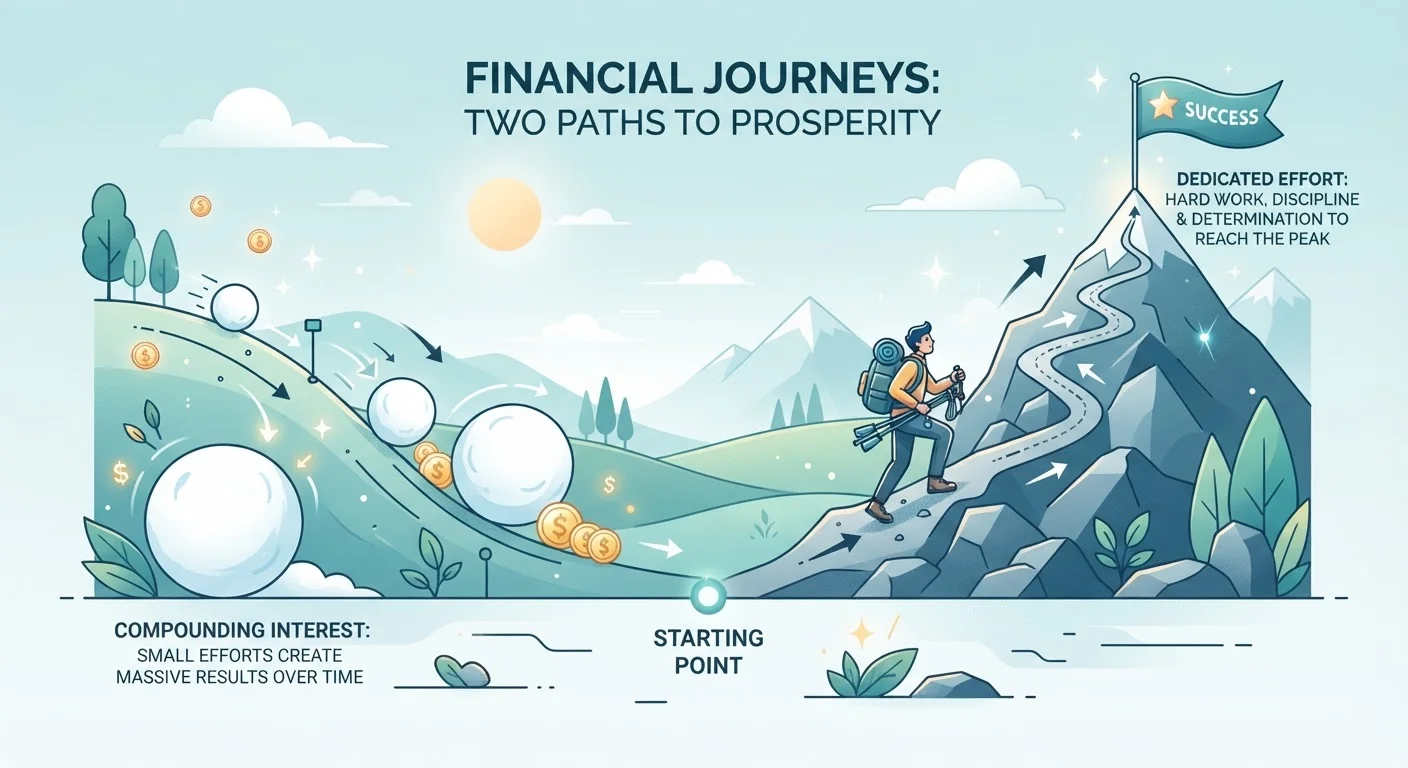
With the snowball method, you rank your debts from smallest balance to largest, ignoring interest rates. You attack the smallest balance first. When it is paid off, you roll that payment into the next smallest, and so on. The name reflects how each eliminated debt adds momentum - like a snowball growing as it rolls downhill.
Debt Avalanche: Highest Interest Rate First
With the avalanche method, you rank debts from highest annual percentage rate (APR) to lowest. You attack the costliest debt first. Because interest accrues less as high-rate balances shrink, this approach reduces the total dollar amount you pay over the life of your repayment plan.
Both methods work alongside a solid budget. See the budgeting basics hub for frameworks that can help you identify how much extra you can put toward debt each month.
| Criterion | Debt Snowball | Debt Avalanche |
|---|---|---|
| Repayment order | Smallest balance first | Highest interest rate first |
| Total interest paid | Typically higher | Typically lower |
| Speed to first payoff | Faster (small debts clear quickly) | Slower if largest debt has highest rate |
| Psychological motivation | High - frequent early wins | Lower initially - fewer early milestones |
| Best for | Motivation-driven repayors | Mathematically focused repayors |
| Complexity | Simple - rank by balance | Simple - rank by APR |
The Real Difference: Math vs. Motivation
Research in behavioral economics consistently shows that people are more likely to follow through on financial plans when they experience early, visible progress. A 2016 study published in the Journal of Marketing Research found that consumers repaying multiple debts reduced balances faster when they focused on eliminating accounts rather than minimizing interest - lending empirical support to the snowball's logic.
The avalanche, by contrast, is mathematically superior. Depending on your specific balances and rates, it can save hundreds or even thousands of dollars compared to the snowball. However, if your highest-interest debt also carries your largest balance, it may be many months before you eliminate a single account - and that wait tests resolve.
$1,000+
Potential interest savings with avalanche method
On a typical multi-debt portfolio with high-rate credit cards, the avalanche can save over a thousand dollars compared to the snowball, depending on balances and rates.
~3x
More accounts closed with snowball in early phases
Behavioral research suggests snowball users close accounts roughly three times faster in the early stage, reinforcing motivation to continue.
Neither approach is objectively "better" in absolute terms. The right strategy is the one that keeps you making extra payments consistently. A plan abandoned halfway through costs far more than the mathematically suboptimal plan that gets completed.
If you are weighing whether to pursue either method or consolidate your debts instead, read our plain-language breakdown of debt consolidation before deciding.
Practical Considerations Before You Start
Before choosing a method, take stock of your full debt picture: list every balance, its minimum payment, and its interest rate. This inventory is the foundation of either strategy.
- Emergency fund first: Most personal finance educators recommend keeping a modest emergency fund - even a small one - before aggressively paying down debt. Without it, an unexpected expense can force you to take on new debt, undermining your progress. Learn how to balance saving and debt payoff simultaneously.
- Minimum payments are non-negotiable: Missing a minimum payment triggers fees and can damage your credit score. Both methods assume all minimums are covered before extra funds are directed to the target debt.
- Windfalls accelerate either strategy: Tax refunds, bonuses, or other lump sums can be applied directly to your target debt, shortening your timeline significantly.
- Behavioral awareness matters: Be honest with yourself about what motivates you. Some people thrive on seeing a zero balance; others are driven by watching interest costs shrink each month. Exploring your money mindset can help clarify which psychological framework fits your habits.
For a deeper look at what can quietly derail even a well-structured plan, see habits that quietly undermine debt payoff progress.
This article is for general informational and educational purposes only. It does not constitute personalized financial, tax, or legal advice. Consult a qualified financial professional before making decisions specific to your circumstances.