

Key Takeaways
What Is a Sinking Fund?
A sinking fund is a dedicated pool of money you build gradually to cover a specific, predictable future expense. The term has roots in public finance - governments and corporations have long used sinking funds to set money aside for retiring debt - but the concept applies directly to household budgets. Car registration, annual insurance premiums, holiday gifts, veterinary visits, and home appliance replacement are all natural candidates.
The mechanics are intentionally simple: estimate what a future expense will cost, determine how many months you have until it arrives, divide the total by that number of months, and contribute that fixed amount each month. When the bill comes due, the money is already there - no credit card charge, no last-minute budget scramble, no stress about spending on something you should have anticipated.
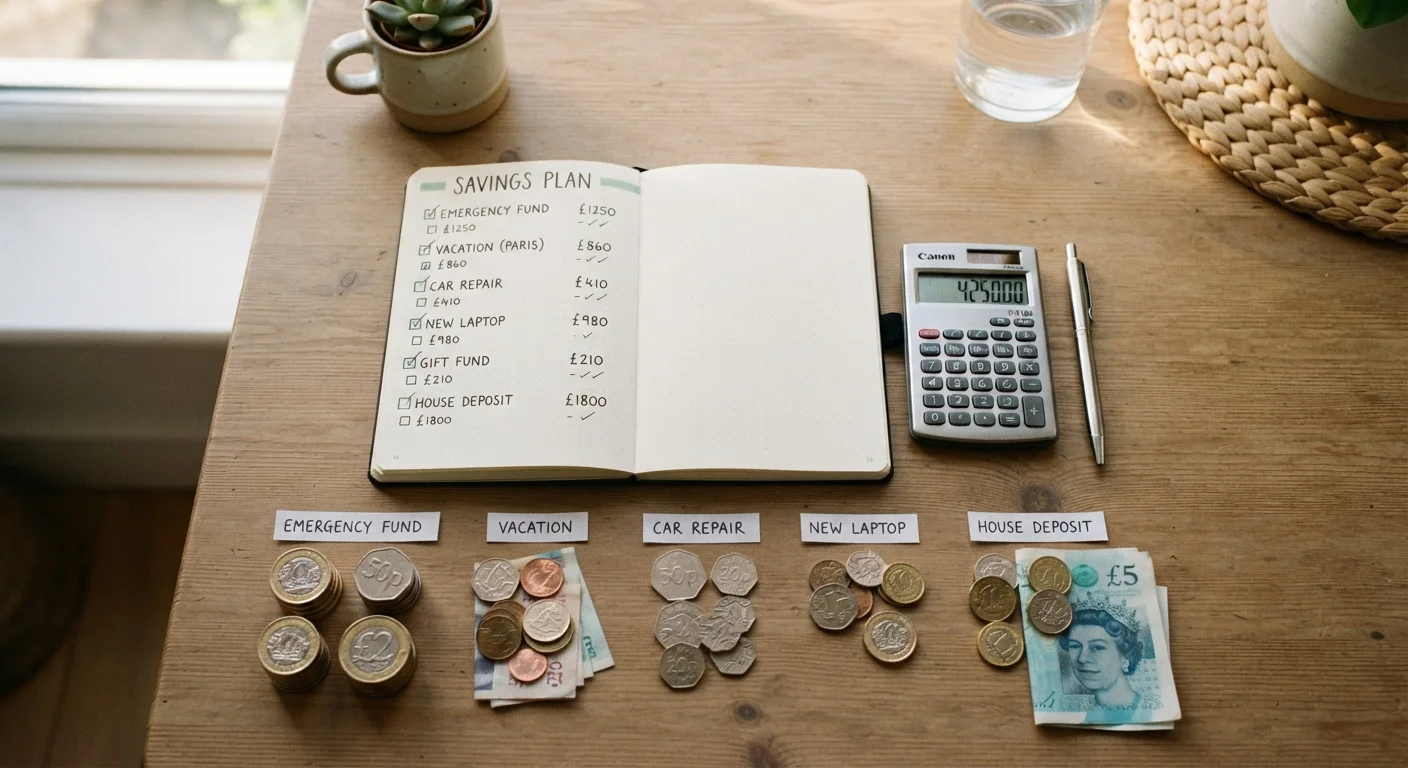
What makes a sinking fund different from general saving is its specificity. Each fund is named, sized, and targeted - which converts irregular, easy-to-forget expenses into predictable monthly line items. The result is a budget that anticipates reality rather than reacts to it. For a closer look at which irregular costs most often go unbudgeted, see spending categories most budgets underestimate.
How Sinking Funds Differ from Emergency Funds
A sinking fund and an emergency fund are often confused, but they solve fundamentally different problems. An emergency fund is a buffer against the unpredictable - sudden job loss, an unexpected medical bill, a roof failure with no prior warning. A sinking fund, by contrast, handles costs you know are coming, even when the exact timing or amount requires some estimation.
The practical consequence of conflating them is significant. When someone taps their emergency fund to cover a predictable expense - holiday shopping, annual auto registration, a scheduled appliance replacement - that buffer is depleted at exactly the moment a genuine emergency may strike next. Each dollar spent from the wrong fund is a dollar missing when it matters most. Sinking funds absorb the foreseeable; emergency reserves handle the unforeseen. Running both in parallel, they reinforce rather than compete with each other. How budgeting and emergency funds work together shows how to coordinate both within a single monthly plan.
Keep Sinking Funds and Emergency Funds Separate
Sinking fund money is designated for known, upcoming costs. Using it for unrelated emergencies leaves you underfunded when the original expense arrives. Conversely, spending emergency reserves on predictable items you could have budgeted exposes you to genuine crises down the line. If you consistently find yourself drawing from one fund to cover the other's purpose, one or both balances likely need to grow.
Building Your Sinking Fund System
Getting a sinking fund system off the ground requires three things: a clear list of predictable irregular expenses, a simple calculation to size each fund, and a reliable mechanism to move money consistently. No specialized software is needed - a basic spreadsheet and your bank's automatic transfer feature are sufficient for most people. Review the prerequisites below before beginning.
What you will need
The steps that follow walk through each stage of building and maintaining your funds, from initial list-making through annual upkeep.
List Your Known Irregular Expenses
Write down every significant expense you know is coming in the next 12 months that does not recur monthly. Common categories include vehicle registration and maintenance, homeowners or renters insurance premiums, property taxes, holiday and birthday gifts, annual subscriptions, veterinary visits, and travel. Don't aim for a perfect list on the first pass - you can add categories as you identify gaps over time.
Estimate the Annual Cost for Each Category
For each item on your list, estimate what it will cost over the next 12 months. Use past bills, renewal notices, or reasonable approximations for expenses you haven't tracked closely. When uncertain, err slightly high - a small surplus at year-end is far easier to redirect than a shortfall to absorb at the last minute.
Calculate Your Monthly Contribution
Divide each category's estimated annual cost by 12, or by the number of months remaining until the expense is due. The result is the amount you need to set aside each month for that fund. For example, if car registration costs an estimated $180 and is due in six months, you would contribute $30 per month starting now.
Choose Where to Hold the Funds
A dedicated savings account - or a savings account that allows labeled sub-accounts - keeps sinking fund money separate from everyday spending, reducing the temptation to dip into earmarked dollars. Some banks offer multiple named savings buckets within a single account; others require separate accounts for each fund. A spreadsheet can serve as a tracking layer when your bank's tools are limited. Either structure works; choose the one you'll maintain consistently.
Automate Your Transfers
Schedule a recurring transfer from your checking account to your sinking fund account on or shortly after each payday. Automation removes the monthly decision from your routine and makes saving the default rather than an afterthought. If your budget changes, adjust the transfer amount - don't simply pause it indefinitely and lose momentum.
Review and Adjust at Least Once a Year
Revisit each sinking fund category annually, or whenever a renewal notice differs significantly from your earlier estimate. Adjust monthly contributions when costs change, close categories that no longer apply, and add new ones as your life evolves. Treating each fund as a living part of your budget - rather than a one-time setup - keeps the system accurate and effective over time.
Start With Your Highest-Impact Categories
You don't need to launch sinking funds for every possible expense at once. Begin with the two or three irregular costs that have most often disrupted your budget - car maintenance, annual insurance, or holiday spending are common culprits. Once the habit is established and the results are visible, adding categories becomes straightforward.
Once your sinking funds are running steadily, pairing them with automated savings transfers makes the entire system nearly effortless. If you're also managing debt while trying to build savings, building an emergency fund while carrying debt offers strategies for making progress on both fronts at the same time.
This article is for general informational purposes only and does not constitute personalized financial, tax, or investment advice. Consult a qualified financial professional for guidance tailored to your individual circumstances.