

Key Takeaways
Why Squeaks Happen: The Anatomy of a Noisy Floor
A squeaky floor is almost always a friction problem - two surfaces rubbing against each other where they shouldn't be moving relative to one another. Understanding the three-layer system beneath your feet makes diagnosis far more effective.
Most residential floors consist of: joists (the structural framing members running beneath the floor), a subfloor (typically plywood or oriented strand board panels fastened to the joists), and the finish flooring (hardwood, engineered wood, laminate, or tile). A squeak can originate at any of these layers or at the connection points between them.
- Joist-to-subfloor gaps: When fasteners loosen over time or joists dry and shrink, the subfloor lifts slightly off the joist top, then slaps back down under foot traffic.
- Subfloor panel movement: Sheets of plywood or OSB can work loose from their fasteners, allowing edges to flex and rub against adjacent panels.
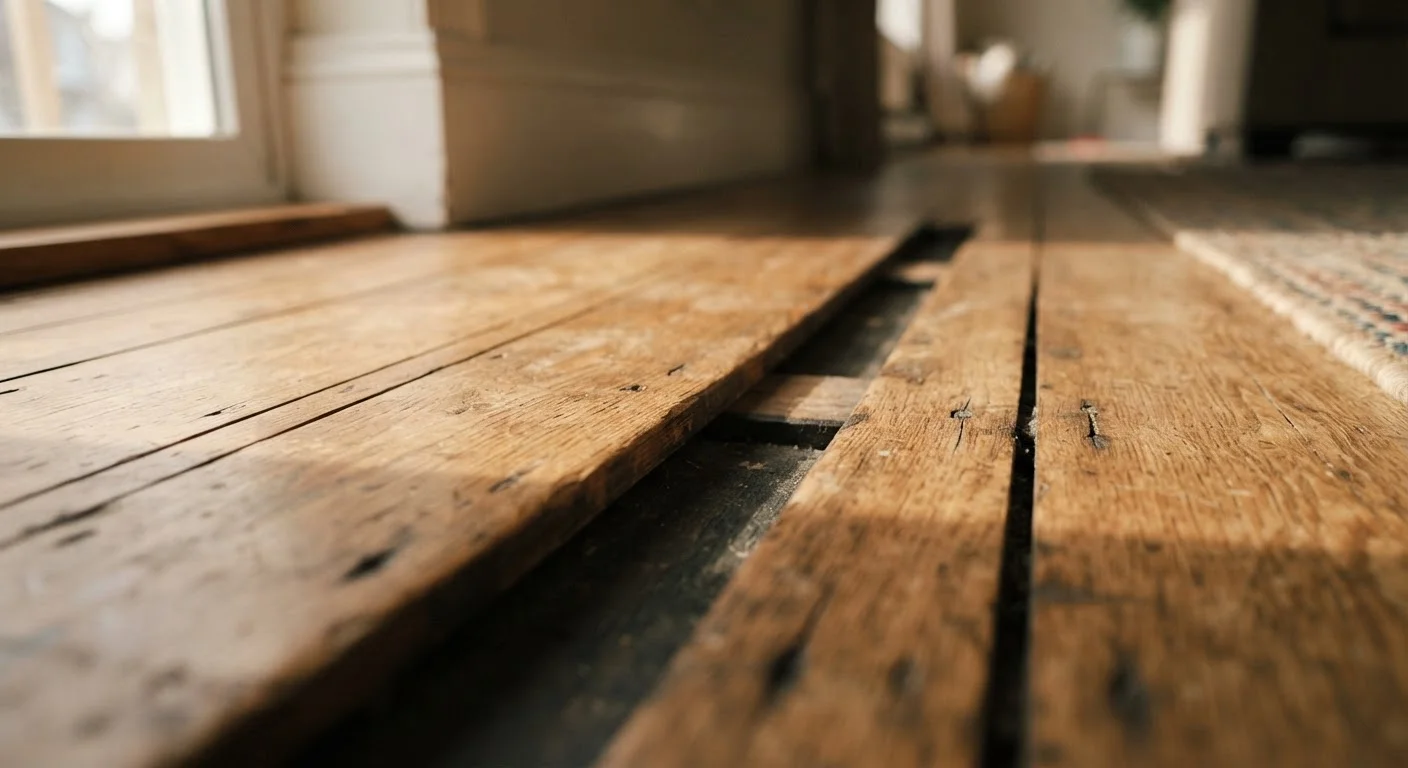
- Finish floor friction: Hardwood boards expand, contract, and eventually lose tight contact at tongue-and-groove joints, allowing boards to rub and squeak underfoot.
Knowing which layer is responsible is the entire point of diagnosis - and it's what separates a successful repair from one that silences nothing.
Flashlight or headlamp
Illuminates the underside of the floor from a crawlspace or basement to spot loose fasteners and joist gaps.
Painter's tape
Marks the exact location of squeaks on the floor surface for accurate diagnosis.
Flat pry bar
Gently lifts floor registers or transition strips if access to the subfloor edge is needed.
Stud finder
Locates joists beneath the subfloor to help identify whether a joist is contributing to the squeak.
Helper / second person
Walks the floor above while you observe from below, allowing real-time squeak localization.
Step-by-Step: Diagnosing the Squeak Source
What you will need
Clear the Area and Walk the Floor Systematically
Move furniture and rugs off the suspected area. Walk slowly across the floor in a grid pattern - heel-to-toe - and pause whenever you hear or feel a squeak. Note whether it occurs when you apply weight, when you lift your foot, or both directions. Squeaks only under load often indicate loose fasteners; squeaks in both directions suggest wood-on-wood friction.
Mark Every Squeak Location with Tape
Place a small piece of painter's tape at each squeak point. Once you have mapped the entire area, look for patterns: squeaks clustered in a line typically follow a joist, while scattered squeaks are more often related to the finish flooring layer or subfloor fasteners. A single isolated squeak near a wall may indicate a baseboard or floor register interaction rather than the floor structure itself.
Inspect from Below (If Accessible)
If you have a crawlspace or unfinished basement, use a flashlight to examine the underside of the subfloor directly beneath your tape markers. Have your helper recreate the squeak by walking on the marked spot above. Watch for visible movement in the subfloor panels, gaps between the subfloor and the top of a joist, or any fasteners that visibly flex or pull. Movement between the joist and subfloor is one of the most common squeak causes in older homes.
Check the Finish Flooring Layer
If below-floor access isn't available, focus on the finish floor surface. For hardwood floors, look for boards with visible gaps between them or boards that rock slightly underfoot - this indicates fastener failure at the tongue-and-groove joint. For engineered wood or laminate, check whether the floor feels hollow or flexible in the squeaky zone, which may point to inadequate underlayment contact or a high spot in the subfloor causing the floating floor to flex and rub against adjacent planks.
Assess for Moisture or Seasonal Movement
Run your hand along baseboards near the squeaky area and look for discoloration, soft drywall, or peeling paint - signs that moisture may have reached the floor assembly. Also consider the season: wood floors naturally expand in humid months and contract in dry months. If squeaks appear seasonally and disappear on their own, the floor may simply be responding to humidity changes rather than requiring a structural repair. Maintaining consistent indoor humidity - generally between 35% and 55% - can reduce seasonal movement-related squeaks over time.
Record Your Findings Before Starting Any Repair
Before reaching for any tool or fastener, take a moment to summarize what you observed: the squeak's location, which layer you believe is responsible (subfloor, joist connection, or finish floor), and any contributing factors such as moisture or seasonal movement. This diagnosis drives every subsequent decision. A squeak caused by a loose subfloor panel requires a different fix than one caused by tongue-and-groove friction in hardwood - and applying the wrong solution wastes time without resolving the noise.
Map the Squeak Before You Fix It
Use a piece of painter's tape to mark exactly where squeaks occur as you walk the floor. Note whether they happen under load, on release, or both - this pattern tells you whether the squeak is friction-based or fastener-based, and helps you target repairs precisely rather than guessing.
When to Call a Professional
If you notice floor flex accompanied by soft or spongy spots, visible sagging, or signs of moisture damage such as staining or mold, stop and consult a licensed contractor. These conditions may indicate structural or water damage beyond a DIY squeak repair and could require permits or professional assessment.
What Your Diagnosis Tells You Next
Once you've mapped the squeak and identified the likely layer, your findings point directly to the repair category you'll need:
- Joist-to-subfloor gap
- Typically addressed by driving construction screws through the subfloor into the joist from below, or by applying construction adhesive into the gap - both methods pull the subfloor tight against the joist top.
- Loose subfloor fasteners
- Additional screws driven from below (or carefully from above with countersinking) re-secure the panel without removing finish flooring.
- Finish floor friction (hardwood)
- Powdered graphite or talc worked into the joint can reduce friction temporarily; permanent fixes involve re-fastening boards or addressing any underlying subfloor irregularity causing board movement.
- Seasonal movement
- Often managed through humidity control rather than mechanical repair - no fastener addresses a squeak caused by wood that contracts and expands with the seasons.
Each of these repair paths is a separate project - and each one works only because the diagnosis was done first. Taking the time to locate and classify the squeak is the skill that makes every subsequent fix more effective.
Don't Skip the Crawlspace or Basement Check
If your home has a crawlspace or unfinished basement, never enter a confined space without proper ventilation and lighting. Watch for signs of pest damage, standing water, or compromised joists before attempting any work from below. If conditions seem unsafe, have a professional inspect first.